.png)


Key Takeaways
- AI is reshaping search: AI Overviews now reduce clicks to websites by 58%, but brands cited in those overviews see 35% higher organic CTR.
- Efficiency at scale: AI tools automate keyword clustering, content briefing, and topic ideation, letting teams publish more with fewer resources.
- Smarter strategy: AI uncovers keyword gaps, customer pain points, and competitive positioning by analyzing SERPs, support chats, and market data.
- Programmatic SEO: Tools like Byword enable scalable, long-tail landing page generation tailored to niche queries using structured templates and GPT.
- Human + AI = strongest results: Blending AI-generated drafts with human insight ensures high-quality, funnel-aligned, and engaging content across channels. TripleDart's AI SEO Agent is built for exactly this workflow.
You've probably noticed it already. Google is answering questions before your website even gets a chance to show up. Search results look different. User behavior looks different. And the playbook that worked in 2023? It's collecting dust.
Here's what the numbers say: AI search traffic rose 527% year-over-year when comparing January through May 2024 with the same period in 2025. Meanwhile, Gartner predicted a 25% drop in traditional search traffic by 2026 because of AI chatbots and virtual agents. This isn't a prediction anymore. AI is disrupting SEO at every level, and it's happening now.
For SEO professionals, founders, and growth teams, this creates a two-sided coin. The opportunity: use AI to work smarter and scale faster. The challenge: rethink your strategies so your content still ranks, gets cited, and drives pipeline.
This playbook is your practical, step-by-step AI SEO guide. We'll walk through proven AI-powered strategies for every phase of your SEO workflow, from a beginner AI SEO workflow covering research to publish, all the way through semantic optimization techniques with AI for SEO.
Let's get into it.
Want to see the top AI tools SEOs are using? Check out our AI SEO Tools Comparison for a roundup of the must-have tools to boost your rankings in 2026.
Why does your AI SEO tech stack matter in 2026?
AI tools have gone from "nice experiment" to "non-negotiable." Teams that build their stack early are outperforming larger competitors with a fraction of the headcount.
Here's why:
- Efficiency and scale: Tasks that used to eat hours (analyzing thousands of data points, finding broken links, clustering keywords) now take minutes. You scale your SEO output without scaling your team.
- Better insights: Machine learning spots patterns humans miss. AI can crunch search data to surface high-value long-tail keywords and content gaps your competitors haven't touched. Those insights feed a smarter content strategy.
- Adaptation to how search works now: Google's AI Overviews deliver conversational answers right in the SERP. A strong AI SEO stack makes sure your content is optimized for those AI-driven results, not just the traditional blue links.
- Staying competitive: 87% of businesses now use AI to help create SEO content. If you haven't started building your stack, you're already behind.
Agency Data Insight
Across our portfolio of 40+ B2B SaaS accounts, content pieces incorporating original data or benchmarks see 35% higher organic impression share in AI-driven searches compared to generic guides. This edge holds even amid fluctuating SERP volatility—demonstrated expertise and citable claims are what AI platforms reward.
How does traditional SEO compare to AI SEO?
AI SEO doesn't replace traditional SEO. It builds on top of it. You still need technical foundations, quality backlinks, and authoritative content. But AI SEO adds a new layer: structuring content so AI systems can parse, understand, and cite it.
Pages with structured schema and FAQ implementations achieve 28% better engagement rates in generative search results, based on our internal data across managed accounts. That tells you something about the direction things are heading: machine-readable formats over traditional keyword density.
A Reddit user in r/SaaS put it well: "AI search isn't like traditional SEO. It's all about how well your content gets cited by models trained on web data." (source)
Where does AI deliver the most ROI across your SEO workflow?
If you're looking for real return on investment, here's where AI makes the biggest difference. We've broken this into nine areas, each with tools, prompts, and workflows we use at TripleDart.
1. Product and SEO research
Every strong SEO strategy starts with understanding your product, market, and users. Large language models like ChatGPT and Claude can speed up this research phase dramatically.
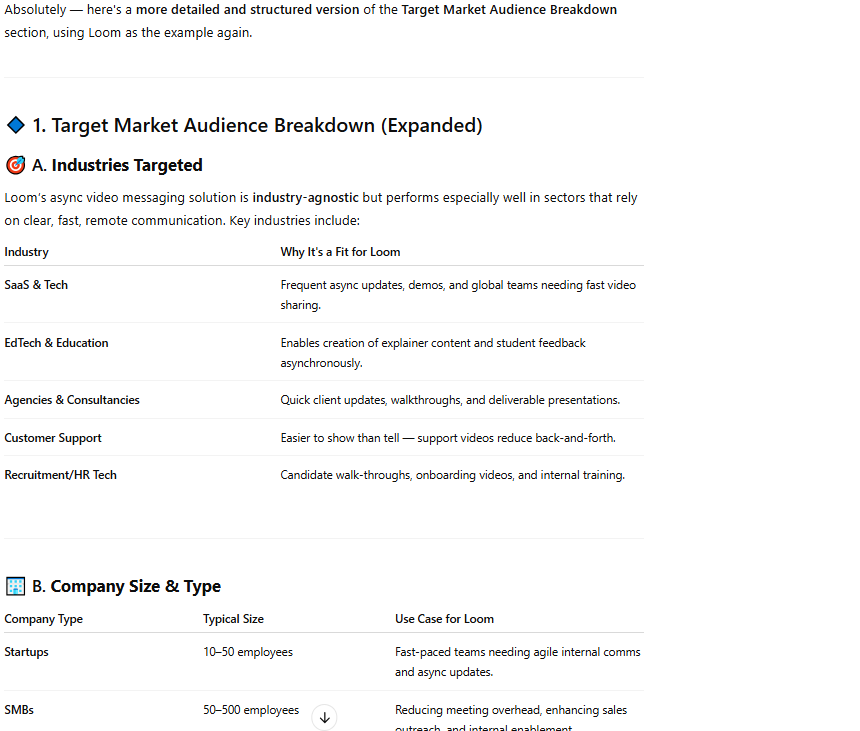
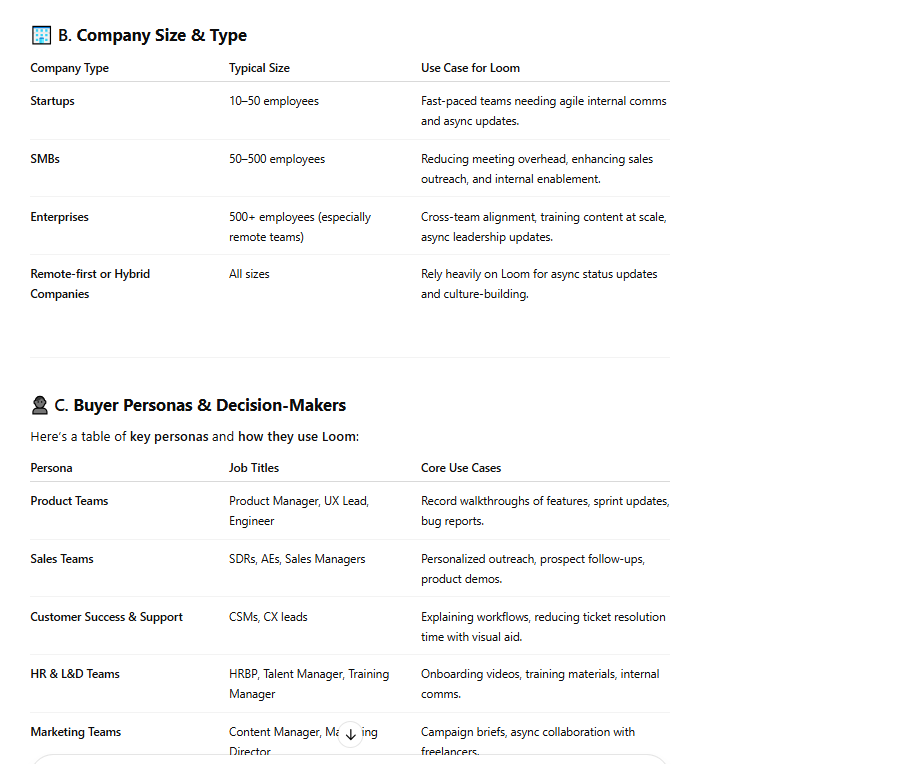
- Market and competitor analysis: Feed an LLM your competitors' homepage text or recent blog posts. Ask for a comparison of positioning, tone, features, and keyword focus.
- User persona and pain point mining: Input snippets from customer reviews, support transcripts, or sales call notes. Ask the LLM to identify common pain points. AI can also extract ideal customer profile (ICP) details from sources like LinkedIn job descriptions.
Example prompt: You are a competitive intelligence analyst for a video marketing SaaS company. Analyze Loom as a competitor using its homepage, product pages, and recent blog posts. Identify primary audience, target company types, key buyer personas, brand tone, and specific problems Loom solves.
Agency Data Insight
Across our portfolio of 40+ B2B SaaS accounts, content pieces incorporating original data or benchmarks see 35% higher organic impression share in AI-driven searches compared to generic guides. This holds even amid fluctuating SERP volatility—demonstrated expertise and citable claims are what AI platforms reward.
2. Initial topic research and ideation
Using ChatGPT for AI SEO keyword brainstorming is one of the fastest ways to build a content calendar. Here's how it works in practice:
- Seed keyword generation: Describe your product, and ChatGPT suggests relevant root keywords based on features, use cases, and industry.
- Funnel-based topic mapping: Organize topics by funnel stage (awareness, consideration, decision) so content aligns with user intent at every step.
- Content gap identification: Input your existing topics, and ChatGPT highlights missing angles, underused terms, or overlooked customer questions.
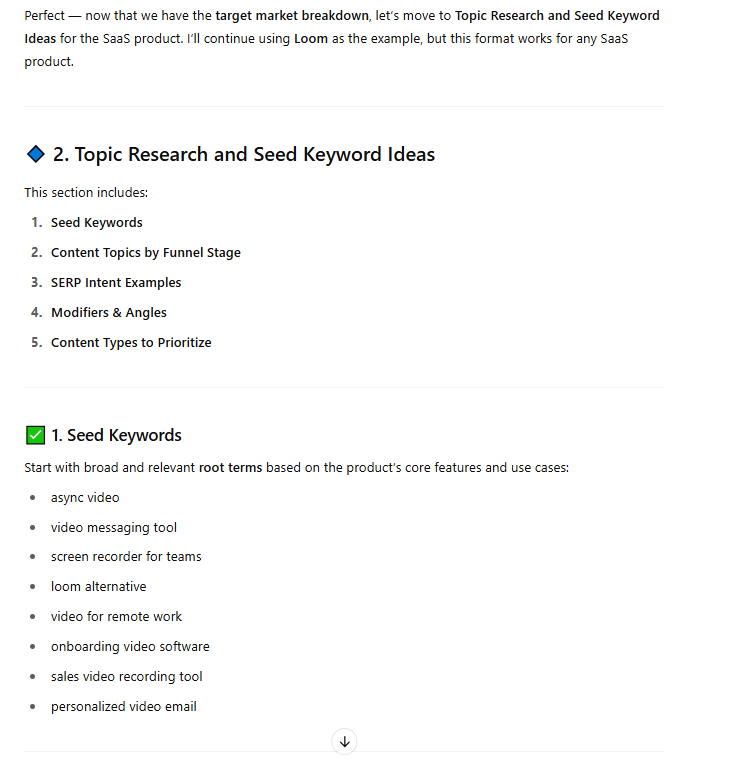
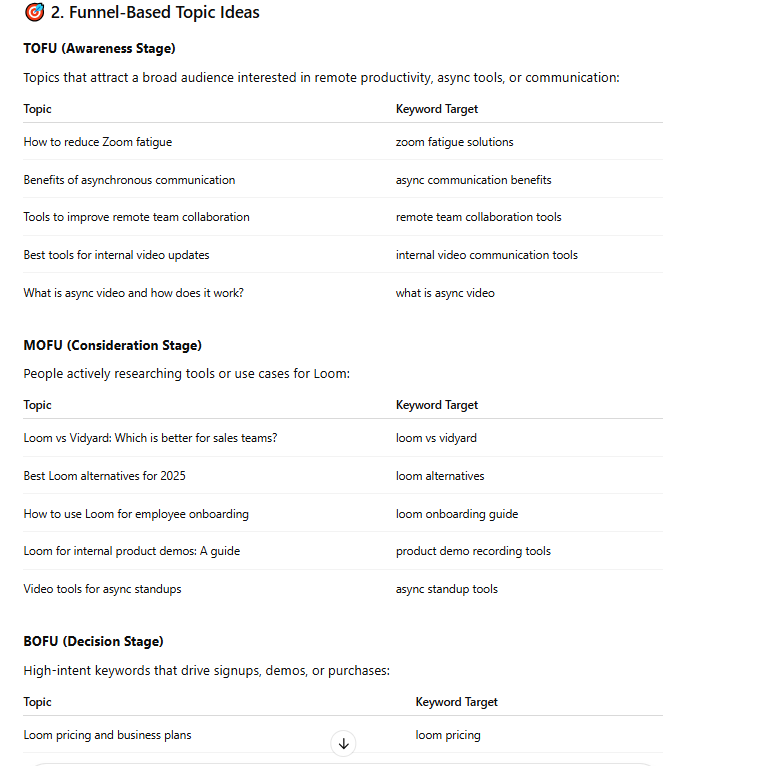
Start with a broad prompt to get high-level ideas. Then refine by asking follow-ups like: "Expand on the topic 'Why meetings are overrated.' Suggest 5 specific blog titles and the target funnel stage for each."
3. Programmatic SEO with AI
Programmatic SEO uses automation to generate hundreds (or thousands) of pages tailored to long-tail keyword variations. Think: a SaaS company creating landing pages for "[Industry] + [Use Case]," each unique enough to rank for its niche term, but created at scale.
At TripleDart, we use Byword to build programmatic SEO engines. Here's the workflow:
- Enter a site URL. Byword analyzes content, product focus, and site structure.
- Byword generates content themes and keyword templates like "Best {accounting software} for {business type}."
- It combines variable values to generate 100+ programmatic keyword variations.
- Byword's batch generator creates full articles for each keyword using GPT.
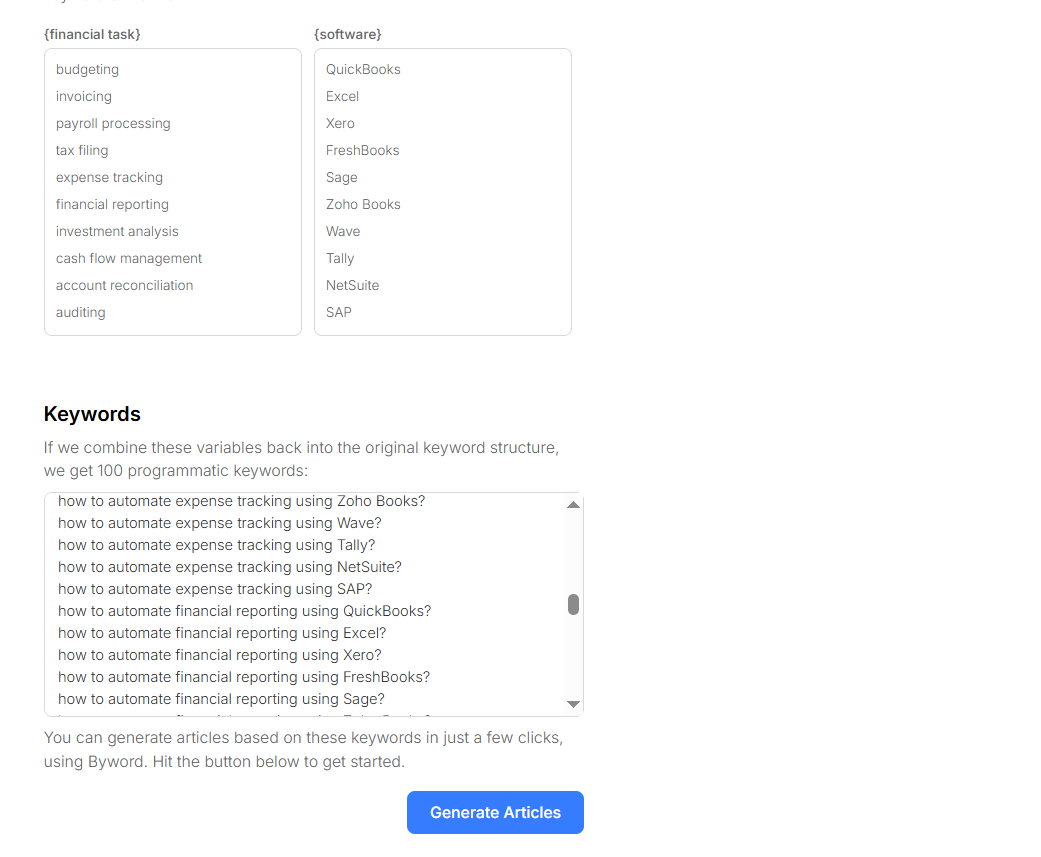
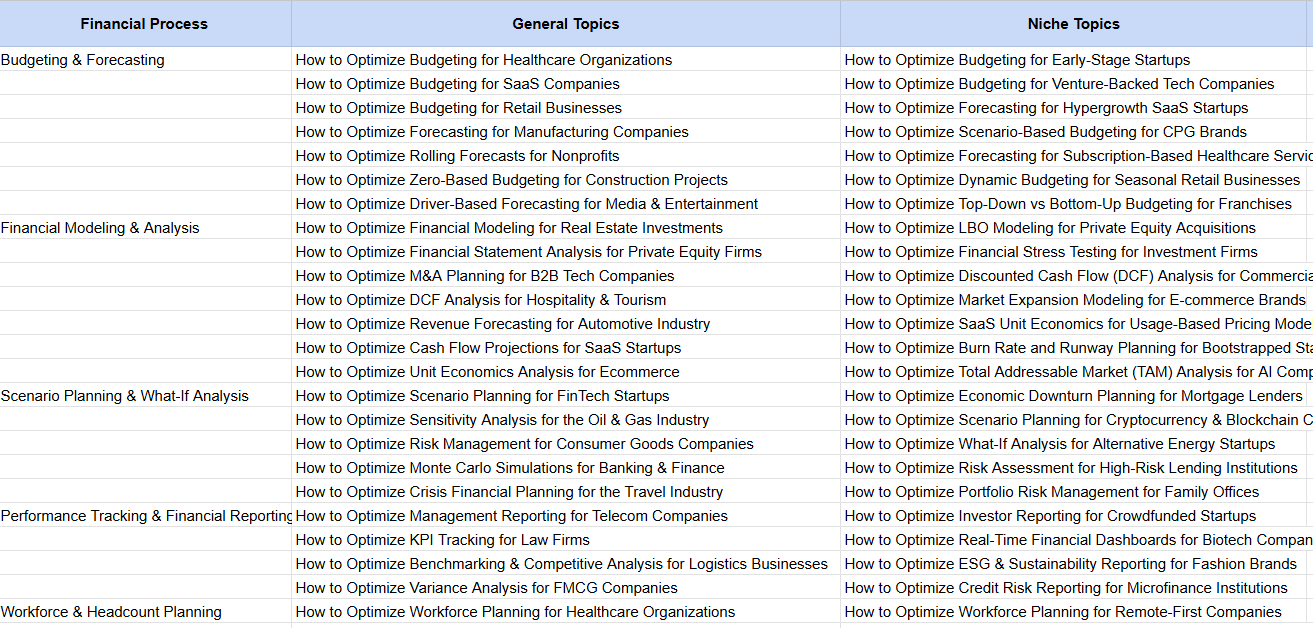
Once generated, categorize topics into general and niche buckets via Excel. Byword also helps build structured content templates with variables like {task}, {tool}, or {industry} in titles and body sections.
4. Keyword mapping and clustering
Traditionally, SEO teams exported 1,000+ keywords and spent hours manually grouping them. Tedious work. AI changes that by analyzing search intent, semantic similarities, and keyword relationships in seconds.
- AI-based clustering tools: Platforms like Keyword Insights and Surfer AI group keywords based on semantic similarity and shared SERP results.
- ChatGPT for quick clustering: For moderate keyword lists, prompt: "Group the following keywords into themes: [list]." Then validate with keyword tools.
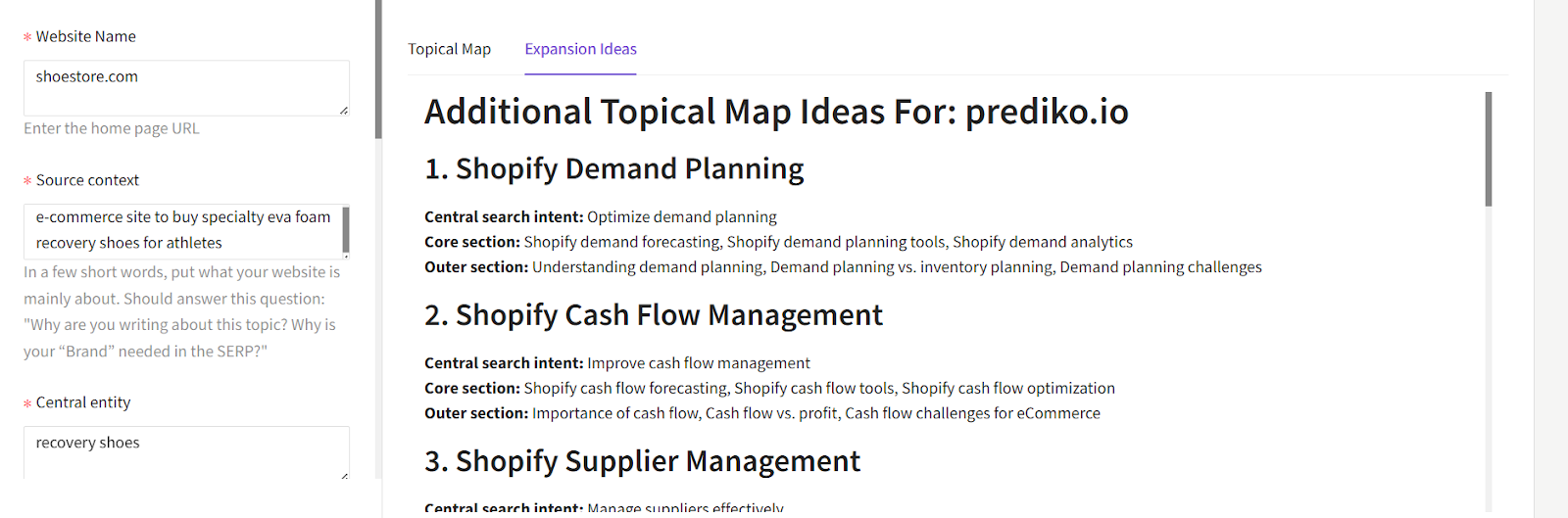
At TripleDart, we use the Moonlit platform to simplify this. Moonlit analyzes semantic relationships and search intent to group related terms into core, outer, and additional topical map sections.
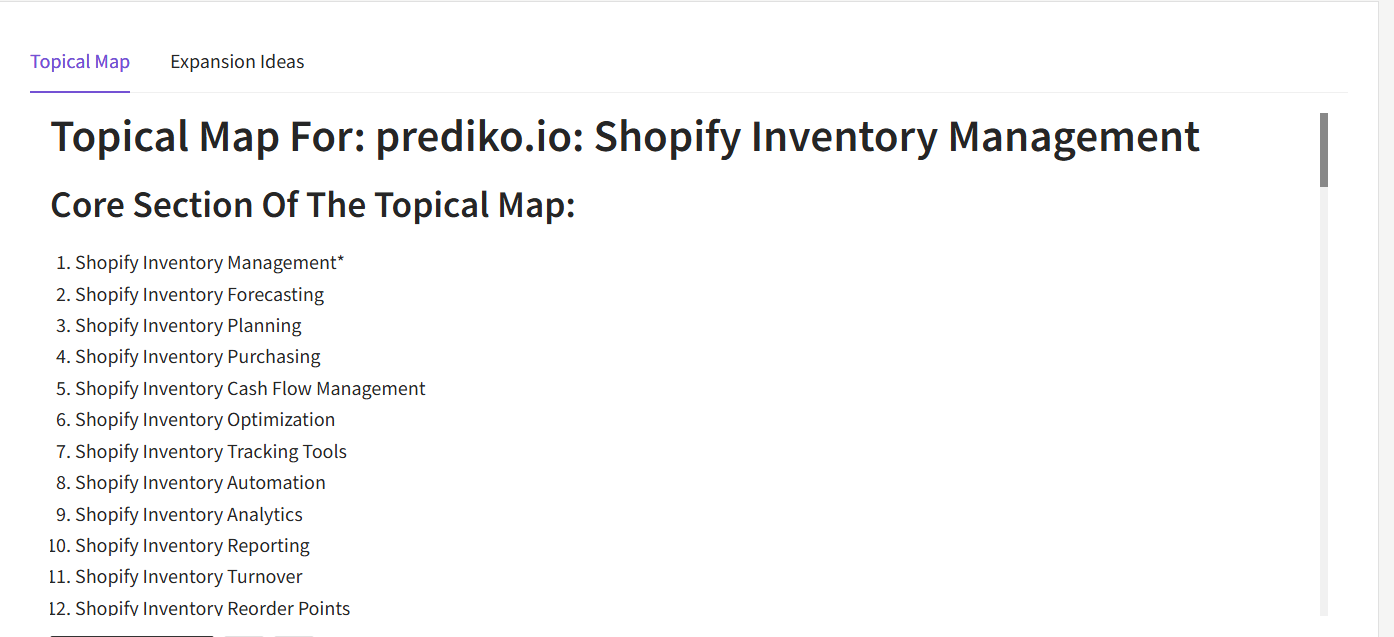
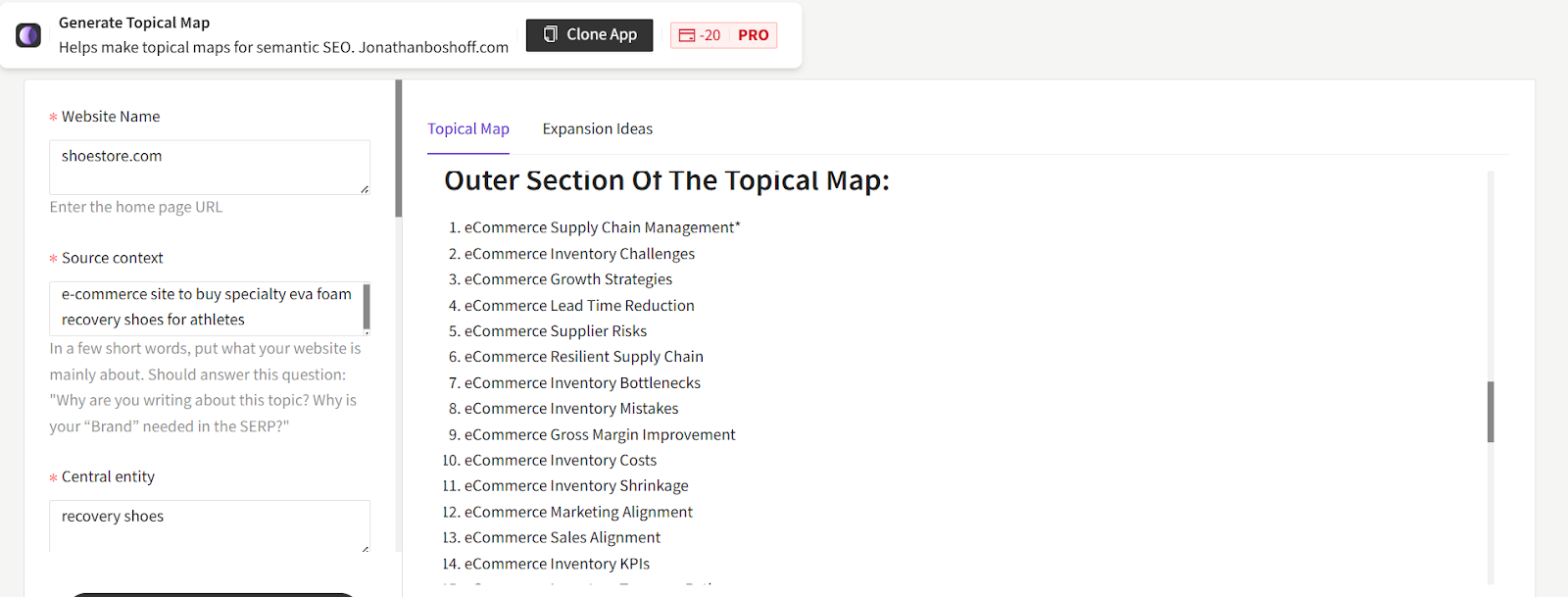
Agency Data Insight
In managing diverse SEO and paid campaigns across 40+ B2B SaaS clients, we've found that topical clusters built around 3–5 core subjects deliver 42% stronger year-over-year ranking stability. Prioritizing entity connections and authority over isolated keyword targeting mirrors proven patterns in AI visibility tracking.
5. Content briefing
AI turns content brief creation from a slow, manual grind into a five-minute workflow. It scans SERPs, pulls key subtopics, adds reference links, and builds a brief that's structured and ready to hand off.
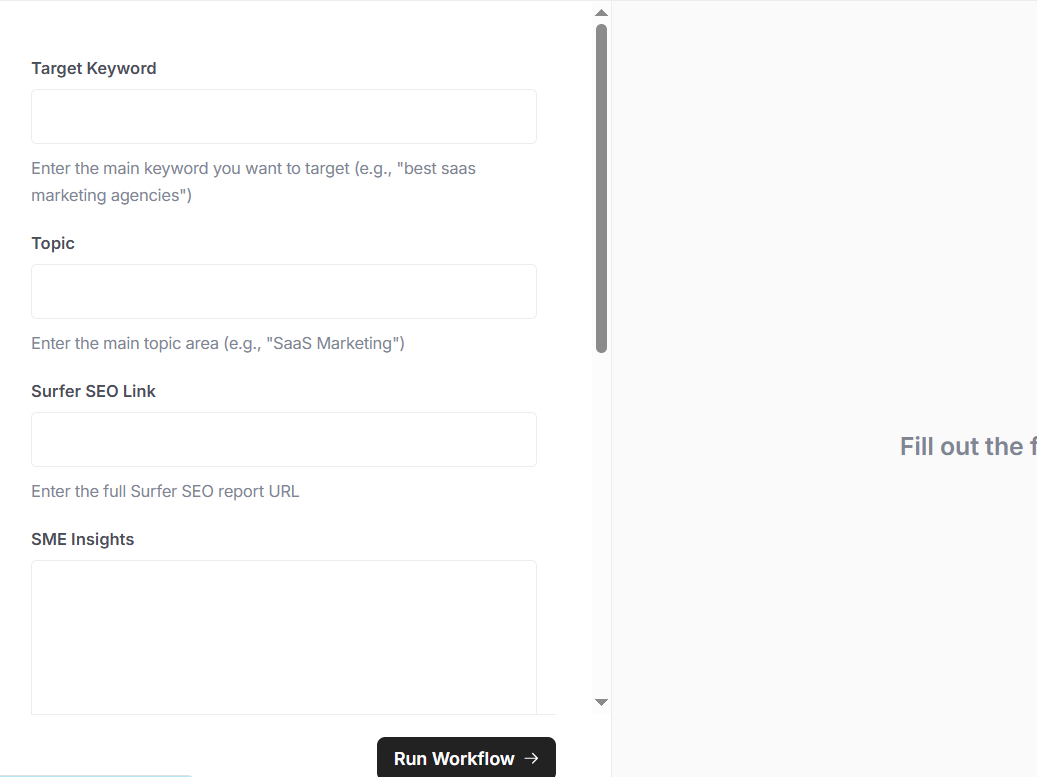
At TripleDart, we use Moonlit to automate and scale content brief creation. We enter the target keyword, topic, and a Surfer SEO link for NLP-based suggestions. SME inputs can also be added for depth.
Glean Case Study
"Glean achieved a remarkable 275% increase in monthly organic clicks, growing from approximately 18,000 to over 67,000, and saw monthly impressions surge by 365%, from around 260,000 to over 1.2 million."
Read the full Glean case study →
6. Content generation
AI can write entire articles. That's not the question anymore. The real question is how to use AI content wisely, knowing when to lean on AI, when to involve human writers, and how to blend both.
Another big win: repurposing content across formats. Feed a 2,000-word blog into ChatGPT and prompt: "Summarize this into a 5-tweet thread with catchy hooks" or "Turn this blog into a LinkedIn post targeting CMOs."
This is where implementing AI SEO content refresh for better ranks becomes practical. You're not creating new content from scratch; you're extending the life and reach of what already works.
7. Semantic optimization
Semantic optimization makes your content understandable to search engines at a conceptual level, not just based on keywords. AI-driven NLP tools like Clearscope, Surfer, MarketMuse, and NeuronWriter analyze hundreds of top-ranking pages in seconds, then extract recurring topics, entities, and semantic terms.
Two key steps:
- Entity detection: NLP tools scan top-ranking pages and give you a list of entities (people, places, concepts) associated with your topic.
- Semantic coverage: AI tools suggest semantically related terms and phrases that improve topical depth beyond exact-match keywords.
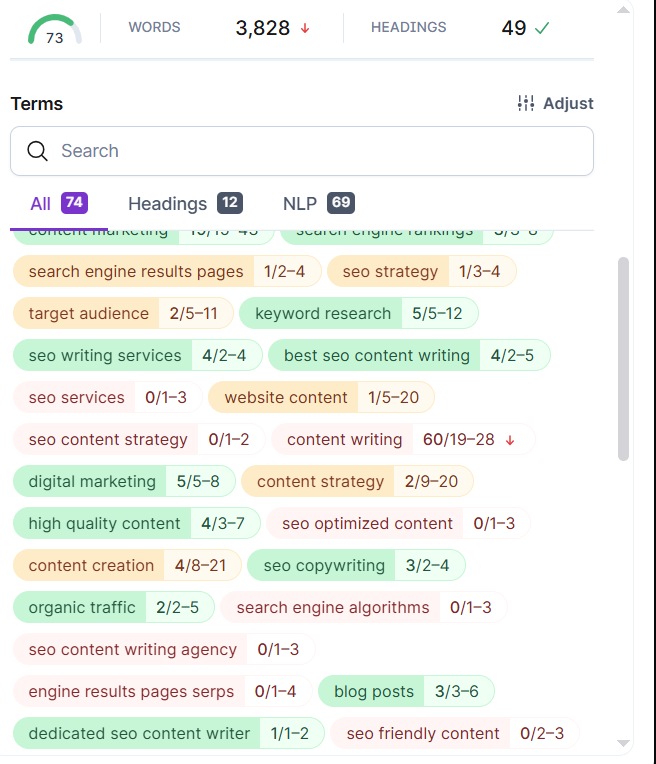
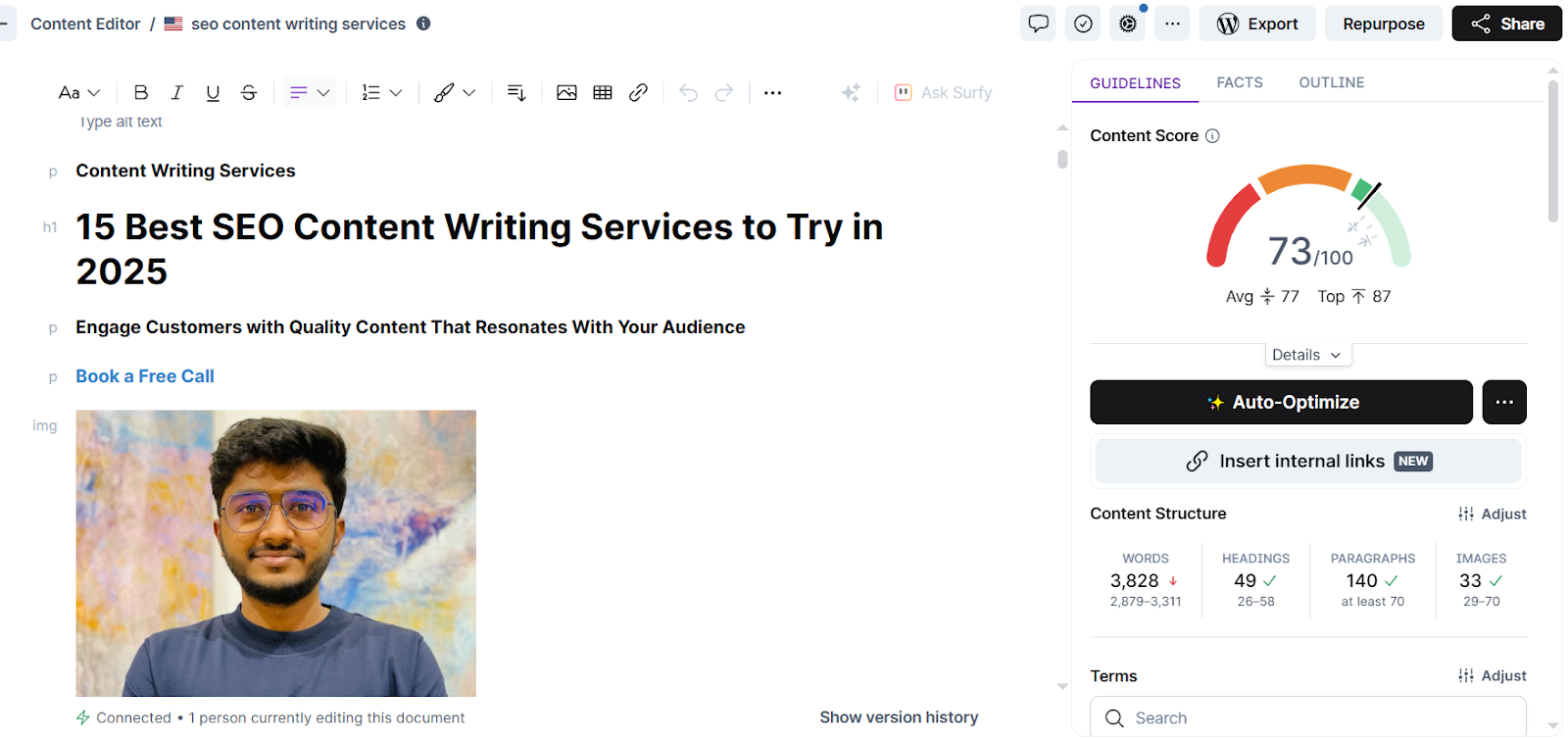
Optimizing E-E-A-T with AI help: AI tools help implement E-E-A-T by identifying what Google expects on high-ranking pages. Use AI to scan competitor content and pinpoint where to add personal insights, author bios, or hands-on examples. Tools like Surfer highlight entities and sources that appear on authoritative pages. AI can also generate structured data (like author or reviewedBy schema), FAQs, and transparency sections that build trust.
8. Link building automation
Link building involves a ton of data and repetitive tasks: prospecting, emailing, following up. AI helps at every step.
Prospecting intent mapping means identifying why a site would realistically link to your content. Use AI to group prospects by linking behavior:
Email personalization: Use AI to personalize each outreach email. Reference the target site's content or specific points of connection. The AI crafts a message that sounds tailored, not templated.
A word on ethics: Search engines and email providers detect AI-generated templates. Use AI to enhance genuine outreach, not blast generic emails. If AI helps write content for a guest post, make sure it's original and worth reading.
9. Schema markup generation
Structured data helps search engines and AI tools read your site and understand your content better. If you've got hundreds of pages (FAQs, how-tos, products, articles with authors), manually adding schema to each is overwhelming.
AI can generate schema for each page type. Create a prompt template for each schema type, feed in dynamic values, and the AI outputs the specified JSON-LD.
For blog articles: "Generate JSON-LD Article schema for the following: title = {Title}, author = {AuthorName}, date = {Date}, description = {MetaDescription}."
For FAQ pages, HowTo guides, and product pages, the same approach applies. This is one of the most overlooked AI SEO on-page elements like titles and headings; schema sits alongside meta tags as a critical technical signal.
What are the risks and limitations of AI in SEO?
AI is a powerful ally. But used blindly, it backfires. Here are the common mistakes in AI SEO to avoid starting out:
- Inaccurate or "hallucinated" information: AI models can generate incorrect facts or cite sources that don't exist. Publishing without fact-checking puts your credibility and SEO at risk.
- Generic, low-quality content: AI without guidance produces fluffy content that adds little value. If everyone in your niche churns out AI-generated articles with no differentiation, Google will filter a lot of it out.
- Over-optimization and penalties: Letting AI crank out hundreds of pages or stuff in every keyword variant can trigger spam signals. Google's webspam team flags mass-produced doorway pages and auto-generated gibberish.
- Lack of topical or brand depth: AI can mimic tone, but it doesn't understand your product, audience pain points, or positioning. The result is surface-level content with no strategic weight, and in SaaS, depth is what builds trust.
A discussion in r/DigitalMarketing highlights this: "AI SEO is starting to make sense for small businesses, but it's only worth it if you actually have clean, structured data to feed those tools." (source)
How do you overcome AI SEO limitations with best practices?
AI tools boost your SEO efforts, but only if you know where to step in. Here's how to get the most out of them without falling into the traps above.
Fact-check AI outputs
Use trusted sources to verify factual claims, stats, or quotes. Ask the AI tool for sources: "Can you provide the source for that stat?" Have a human reviewer validate critical content before it goes live.
Differentiate with human oversight
Layer human insight to add product knowledge, brand voice, and real audience context. Make sure your content provides unique value: a fresh case study, a contrarian viewpoint, or deeper expertise than what's already ranking. Train AI to match your brand's voice by feeding it past high-performing content.
Avoid mass automation
Don't blindly publish 500 AI-generated landing pages. Scale with guardrails. Introduce human review at key stages, monitor content quality, and A/B test AI-assisted strategies before going all-in.
Run an AI SEO technical audit
Before scaling AI content, make sure your technical foundation is solid. An AI SEO technical audit should cover:
- Fast page load speeds (AI crawlers favor quick-loading pages)
- Mobile-friendly responsive design
- Clean internal linking structure
- Schema markup implementation
- Regular content updates for freshness signals
These foundations ensure AI systems can efficiently crawl, parse, and cite your content.
For a deeper dive, see our SaaS SEO checklist.
FlowForma Case Study
"FlowForma improved AI-attributed traffic by 5.5x within 9 months through strategic GEO implementation and achieved consistent visibility in process automation recommendations across AI platforms like ChatGPT, Perplexity, and Gemini."
Read the full FlowForma case study →
What AI SEO trends should you prepare for in 2026 and beyond?
If 2023 through 2025 were about the breakthrough of generative AI, the late 2020s will be about maturation and deeper integration. Here's what's coming.
AI-first search engines and experiences
ChatGPT (with Bing), Perplexity, and other AI chatbots are functioning as alternative search platforms. ChatGPT makes up over 80% of all AI traffic to websites. Optimizing for these AI answer engines is becoming standard practice. For more on this, read our guide on answer engine optimization.
AI agents and automation in SEO tools
Picture this: your SEO tool reports a ranking drop, and its AI agent automatically adjusts internal links or suggests content updates to recover. AutoGPT-like agents could manage certain SEO tasks end-to-end. TripleDart's AI SEO Agent is an early example of this autonomous optimization approach.
Visitors from AI platforms engage more
Here's a stat worth paying attention to: visitors referred by AI platforms spend 68% more time on websites than those from traditional organic search. That means AI-referred traffic isn't just incremental; it's higher quality. Structuring content for AI citation isn't just about visibility. It's about attracting engaged prospects who stick around.
Voice search and conversational query optimization
To optimize for conversational queries:
- Target natural language, question-based keywords (who, what, how, why)
- Structure content with clear Q&A formats and FAQ sections
- Use concise, direct answers in the first one to two sentences of each section
- Implement FAQ and HowTo schema markup
Voice search optimization overlaps with AI SEO since both prioritize natural language and direct answers.
How can TripleDart help you scale AI SEO without scaling your team?
From faster content research and smarter briefs to scalable content creation and precision-level optimization, AI can enhance every layer of your SEO workflow. But it's not plug-and-play.
Success comes from knowing when to use AI, where to apply human oversight, and how to balance automation with intent, accuracy, and brand voice. That's the step-by-step AI SEO guide for ranking higher in practice, not theory.
As an AI SEO agency, TripleDart puts this into action daily with our AI SEO Agent. It's built to help growth teams scale SEO with workflows that are fast, informed by data, and aligned with how search is evolving. Whether you need help with the best AI tools for SEO content optimization in 2026 or a full-stack AI SEO strategy, we've built the systems to deliver.
Want to scale your SEO efforts without scaling your team? Book a discovery call today.
Frequently Asked Questions (FAQs)
Can SEO be done by AI?
Yes, AI can assist with many SEO tasks: keyword research, content optimization, link prospecting, and content generation. But it can't replace strategic thinking or human oversight. The best results come from combining AI speed with human judgment.
What is the best AI tool for SEO?
It depends on your needs. Surfer SEO and Clearscope excel at on-page optimization. Keyword Insights handles clustering. ChatGPT and Claude are strong for research and content drafting. For a full comparison, see our AI SEO tools guide.
Can ChatGPT do SEO?
Yes, but with limits. ChatGPT can generate content, outline articles, cluster keywords, rewrite meta descriptions, and help with schema markup. But it doesn't access live search data or SERP trends unless integrated with external tools or plugins.
What are the technical requirements for AI SEO?
Technical AI SEO optimization includes fast page load speeds, mobile-friendly responsive design, clean internal linking structure, schema markup implementation (FAQ, HowTo, Article schemas), and regular content updates for freshness signals. These foundations ensure AI systems can efficiently crawl, parse, and cite your content.
How do I optimize for voice search and conversational queries?
Target natural language, question-based keywords. Structure content with clear Q&A formats and FAQ sections. Use concise, direct answers in the first one to two sentences. Implement FAQ and HowTo schema markup. Focus on local SEO for "near me" voice queries.
How does TripleDart help with AI SEO?
TripleDart's AI SEO Agent automates research, briefs, and optimization at scale, while our team layers in strategic oversight, brand voice, and E-E-A-T signals. We've helped B2B SaaS companies like FlowForma grow AI-attributed traffic by 5.5x and Glean increase organic clicks by 275%. Book a call to see how we can do the same for you.



.webp)
.webp)

.png)


.png)




.webp)





.webp)

.webp)






%20(1).png)


.webp)
.webp)
.webp)





%20Ads%20for%20SaaS%202026_%20Types%2C%20Strategies%20%26%20Best%20Practices%20(1).webp)







.png)


.png)





.webp)


![Creating an Enterprise SaaS Marketing Strategy [Based on Industry Insights and Trends in 2026]](https://cdn.prod.website-files.com/632b673b055f4310bdb8637d/6965f37b67d3956f981e65fe_66a22273de11b68303bdd3c7_Creating%2520an%2520Enterprise%2520SaaS%2520Marketing%2520Strategy%2520%255BBased%2520on%2520Industry%2520Insights%2520and%2520Trends%2520in%25202023%255D.png)




.png)
















.webp)




%20Agencies%20for%20B2B%20SaaS%20Compared%20(2026).webp)

.webp)
%20with%20Hubspot.webp)








.png)


.png)

.png)
.png)
.png)
.png)

















.webp)

.webp)
.png)
.png)



.webp)


.png)


















.webp)

![How to Measure AEO Success: 12 Metrics Beyond Clicks [2026 Framework]](https://cdn.prod.website-files.com/632b673b055f4310bdb8637d/6a0d664b326187e99b3d5960_6%20-%20The%20Ultimate%20Guide%20to%20Measuring%20AEO%20Success%20in%202026.png)
![7-Step Workflow for AEO-Ready Content [2026 Framework]](https://cdn.prod.website-files.com/632b673b055f4310bdb8637d/6a0d55ea88913ede1d3a7123_5%20-%20Workflows%20for%20Optimized%20AEO-Ready%20Content%20Creation.png)
.png)
![How to Structure Content for AEO and GEO [With Templates]](https://cdn.prod.website-files.com/632b673b055f4310bdb8637d/6a0c6a56eb700472e635ff33_1%20-%20How%20to%20Structure%20%20Content%20for%20AEO%20and%20GEO%20%20Summaries%20(2026).png)


.png)
.png)









.png)


.png)





%2520Agencies%2520(2025).png)

![Top 9 AI SEO Content Generators for 2026 [Ranked & Reviewed]](https://cdn.prod.website-files.com/632b673b055f4310bdb8637d/6858e2c2d1f91a0c0a48811a_ai%20seo%20content%20generator.webp)



.webp)
.webp)













.webp)