.png)


Key Takeaways
- Enterprise SEO is a revenue channel, not a traffic channel. The real benefits show up in pipeline and closed deals, not organic sessions.
- Technical optimization drives the majority of gains. For large sites, URL consolidation, internal linking, and crawl budget management often outperform net-new content.
- SEO and paid work better together. Shared keyword intelligence reduces CPC and improves conversion rates across both channels.
- Algorithm resilience comes from breadth. Enterprise strategies that diversify across content types, link sources, and technical foundations withstand updates that crush single-tactic approaches.
- Sales alignment multiplies ROI. Programs that share definitions and attribution with sales teams see 2-3x more qualified opportunities from organic.
- AI search is an enterprise SEO priority now. Optimizing for AI Overviews, ChatGPT, and Perplexity is no longer optional for companies that want to maintain visibility.
- The right partner accelerates everything. TripleDart is an AI-native SaaS marketing agency that builds and runs full-funnel inbound GTM engines for B2B Tech and SaaS companies. We've managed enterprise SEO programs across 250+ accounts, delivering a median 38-45% lift in organic pipeline within 12 months - led by senior experts and powered by AI workflows that enhance speed, quality, and performance. If you need a team that connects SEO to predictable pipeline and revenue, book a call with TripleDart.
You're managing a site with thousands of pages, multiple subdomains, and five teams that all have opinions on what "SEO" means. Someone suggests scaling the same playbook that worked when you had 200 pages. That's where things fall apart.
Enterprise SEO is a different discipline. It's built for complexity, cross-functional coordination, and the kind of scale where a single missed redirect during a migration can wipe out six months of organic growth. And the benefits? They show up in pipeline, not pageviews. For B2B SaaS companies competing in crowded categories, that distinction is everything.
In this guide, we break down the eight core benefits, walk through the strategy pillars that make enterprise SEO programs work, and share first-party data from managing 250+ B2B accounts. Whether you're evaluating an enterprise SEO agency or building a case internally, this is the playbook.
Let's get into it.
What Are the Top 8 Benefits of Enterprise SEO?
Enterprise SEO delivers compounding returns across visibility, revenue, and operational efficiency. Standard SEO programs can't match this for large, complex websites.
Enterprise SEO services help large B2B SaaS businesses hit marketing goals by providing the specialized knowledge and tooling required at scale. We're talking about site architecture, cross-team alignment, and revenue attribution, not just keyword targeting.
Here are the eight benefits that matter most.
1. Increased Visibility Across Thousands of Pages
More businesses are investing in online visibility. But enterprise SEO differs from regular SEO because it accounts for the unique needs of sites with 10,000+ indexed URLs. Product pages, documentation, blog content, regional subdomains - when every section of the site is properly optimized, the number of qualified visitors compounds.
Organic search drives 300% more traffic than social media to websites. For enterprise companies managing complex sites with multiple product lines, that advantage only grows when optimization covers the full site.
2. Stronger Brand Reputation and Authority
Even if your company has a strong reputation today, that standing erodes without consistent proof points in search results. You can't coast on brand recognition alone.
Enterprise SEO helps you earn links from authoritative, independent websites. That improves credibility and establishes your brand as a trusted voice in your category. This matters especially for enterprise SEO for managing complex sites where brand reputation needs to stay consistent across regions and product lines.
Think about it from the prospect's perspective. They search your category and find your content ranking alongside (or above) established competitors. Trust is reinforced before they ever talk to sales.
3. Lower Cost-Per-Click on Paid Campaigns
Pages optimized for organic search can reduce cost-per-click rates on paid campaigns. When your site already ranks organically for high-value terms, your Quality Score in Google Ads improves. You pay less per click for the same keywords.
For enterprise companies spending six or seven figures monthly on paid search, even a small CPC reduction translates to serious savings. SEO leads close at 14.6%, compared to 1.7% for outbound leads. The organic channel isn't just cheaper; it converts better.
4. Improved Website Usability and Technical Health
Enterprise SEO is inseparable from technical health. Optimizing for search engines means improving site speed, mobile responsiveness, crawlability, and navigation structure. All of which directly improve user experience.
For B2B SaaS companies, this means:
- Faster page loads that reduce bounce rates
- Cleaner URL structures that help both users and crawlers
- Logical internal linking that guides prospects through the buyer journey
- Structured data that improves how your pages appear in search results
These improvements benefit every marketing channel. A technically sound site converts better from paid ads, email campaigns, and direct traffic too.
5. Higher ROI Than Most Marketing Channels
This is one of the most compelling enterprise SEO advantages for multi-location companies and large SaaS platforms. Unlike paid channels where spend stops the moment budget runs out, organic rankings continue delivering traffic and leads month after month.
Organic search captures 94% of clicks in search engine results. When you rank in the top positions for high-intent keywords, you're capturing demand that would otherwise require paid spend to reach.
6. Paid Advertising Becomes More Effective
People often think of paid advertising as separate from SEO. Or even as an alternative. The truth is they work far better together. A strong SEO strategy directly improves paid ad performance.
Here's how: all the keyword research done when building an enterprise SEO strategy can be reused for ad targeting. This lets you focus paid spend on terms where organic coverage is weak, and reduce spend where organic already dominates.
There's also a trust signal at play. If a prospect sees your ad and then searches for your brand, finding you in the top three organic results reinforces credibility immediately. If you're buried on page two, that trust evaporates.
PPC and SEO data create a feedback loop. Paid campaigns reveal which keywords convert at the highest rate, and that intelligence feeds back into your organic content priorities. We've seen this approach reduce wasted ad spend by 15-25% across enterprise accounts.
This Reddit thread captures the dynamic well:
If you were an enterprise SEO with a big budget, what would your team look like?
7. Highly Targeted Local and Regional Marketing
More than half of all searches happen on mobile devices, and local searches remain among the fastest-growing search categories. For B2B SaaS companies with regional presences or location-specific offerings, enterprise SEO for technical scalability means building location-aware content that ranks in each target market.
Enterprise SEO bridges the gap between brand-level objectives and local market demand. Region-specific landing pages, optimized Google Business Profiles, locally relevant backlinks - all of it feeds into this.
ServiceTitan example: ServiceTitan, a cloud-based service management software provider, built an extensive content library and developed open-source tools and templates that generate backlinks organically, without labor-intensive manual link building. This link-building flywheel helped them dominate local and category-specific search results.
The takeaway: to scale link building, you need to create content and linkable assets that attract links on their own. That's how enterprise SEO improves brand visibility at the local level while supporting global authority.
8. Resilience Against Algorithm Updates
The Google Panda update in 2011 made keyword stuffing counterproductive. Subsequent updates (RankBrain in 2015, BERT in 2019, the Helpful Content updates in 2022-2023, and the March 2025 core update) have continued raising the bar.
When major algorithm changes hit, websites relying on a single tactic get penalized. Enterprise SEO strategies are built to withstand these because they employ a wide range of methods.
Instead of trying to game the system, enterprise SEO focuses on:
- Producing genuinely useful, high-quality content
- Building diverse, authoritative backlink profiles
- Maintaining strong technical foundations
- Aligning content with user intent
This holistic approach means algorithm updates often help well-optimized enterprise sites by clearing away weaker competitors. That resilience is a serious benefit for large businesses that cannot afford traffic volatility.
How Does Enterprise SEO Differ From Traditional SEO?
Understanding the enterprise SEO benefits over traditional SEO is critical before investing. The two operate at different scales and demand different levels of coordination.
Here's what separates them:
For global brands and multi-product SaaS companies, the coordination challenge alone justifies a dedicated enterprise approach. A single missed redirect during a site migration can wipe out months of organic growth.
How Can You Make Your Enterprise SEO Strategy Successful?
We've established that enterprise SEO involves far more than adding keywords to pages. Here are the strategy pillars that separate programs delivering pipeline from those generating traffic reports.
Start With a Comprehensive Audit
A content and technical audit should be the first step in any enterprise SEO program. Trying to improve a website without understanding its current state is like optimizing a product without user feedback.
These audits should evaluate:
- Content volume, quality, and topical coverage
- Technical requirements (crawlability, indexation, Core Web Vitals)
- Off-site authority and backlink profile health
- Mobile experience and page speed
- Keyword targeting gaps and cannibalization issues
- Duplicate content across subdomains or regions
A professional enterprise SEO audit brings an objective perspective. External auditors see the site as it exists today, not through a filter of past decisions or internal assumptions.
Check for penalties: If engagement rates suddenly dropped or your site disappeared from key SERPs, investigate whether a manual action or algorithmic penalty is the cause. Identifying and resolving penalties is a prerequisite before any optimization work can take hold.
Build a Keyword Strategy That Covers the Full Funnel
Keyword research at the enterprise level isn't about finding a handful of targets. With Google's natural language processing capabilities, context matters as much as individual terms. Enterprise keyword strategies must cover every stage of the buyer journey.
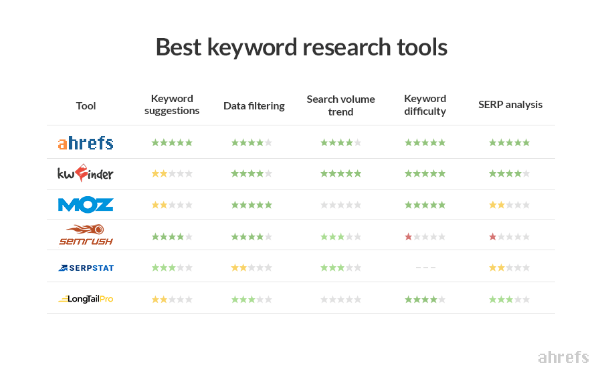
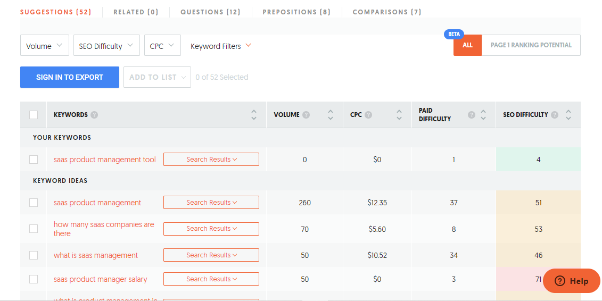
Branded keywords are the most visible and straightforward to optimize. They reach users already familiar with your brand - think "Zoho software" or "Agile CRM contact management." You want to own the top result for your own brand name, and ensure off-site pages linking back to you also rank on page one.
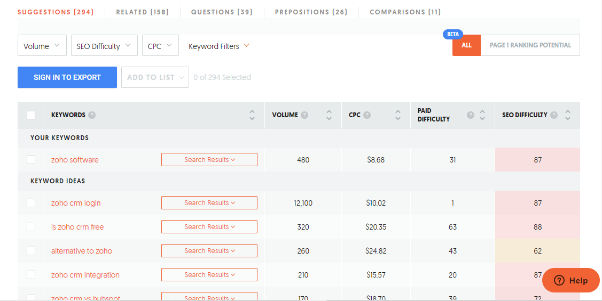
Non-branded keywords are where the real growth happens. Head terms like "CRM software" are competitive, but long-tail variations like "free CRM software for SMEs" have lower competition and higher intent.
Informational keywords are where enterprise SEO supports revenue growth indirectly. Answering frequently asked questions about your category demonstrates E-E-A-T (Experience, Expertise, Authoritativeness, Trustworthiness) and draws in prospects at the awareness stage. These keywords feed your content marketing strategy and build topical authority over time.
For a deeper dive into keyword strategy, see our guide on SaaS keyword research.
Automate Repetitive SEO Workflows
Manual analysis works for small sites. At enterprise scale, it becomes a bottleneck. Automation isn't optional here; it's a requirement for how enterprise SEO helps content teams stay productive.
Key areas to automate in your enterprise SEO workflow:
- Backlink analysis - Flag new and lost links automatically
- Content publishing - Template-driven workflows for consistent on-page optimization
- SEO reporting - Scheduled dashboards tied to pipeline metrics, not traffic
- A/B testing - Automated split tests on title tags, meta descriptions, and CTAs
- Technical monitoring - Real-time alerts for crawl errors, indexation drops, and Core Web Vitals regressions
Tools like Zapier connect disparate systems into unified workflows. For enterprise SEO specifically, platforms like Screaming Frog, Ahrefs, and Semrush offer API access that enables custom automation. We cover the full stack in our enterprise SEO tools guide.
Setting up report templates and automating delivery ensures your team acts on data instead of spending hours compiling it.
Align SEO With Sales Operations
This is the benefit most enterprise SEO programs miss entirely. When SEO operates in a silo, it optimizes for traffic. When it integrates with sales ops, it optimizes for revenue.
This Reddit discussion highlights the challenge many enterprise SEO teams face when trying to tie their work to revenue:
How to tie technical SEO to revenue?
- Define what a "qualified organic lead" looks like with your sales team
- Set up closed-loop attribution from first organic touch to closed deal
- Prioritize content that maps to high-LTV customer segments
- Share search intent data with sales to improve outreach messaging
This alignment is what separates enterprise SEO programs that get renewed from those that get cut. For more on building this connection, explore our enterprise SEO metrics guide.
What Does Enterprise SEO Cost and Is It Worth the Investment?
45% of enterprise companies invest over $20,000 monthly on SEO, and 75% outsource SEO tasks to specialized agencies. Those numbers reflect the reality that enterprise SEO requires dedicated resources. But the ROI justifies the spend.
Consider the math: if your average deal size is $50,000 ARR and enterprise SEO generates even ten additional qualified opportunities per quarter, that's $500,000 in potential pipeline from a channel with compounding returns. Unlike paid ads, organic rankings don't disappear when you pause spending.
For a detailed breakdown, see our enterprise SEO pricing guide.
How Is AI Changing Enterprise SEO in 2026?
Google's AI Overviews, ChatGPT search, and Perplexity are changing where and how users find information. Enterprise SEO programs now need to optimize for both traditional search rankings and AI search visibility.
Here's what we're seeing across enterprise accounts:
- Content must be citation-worthy. AI models pull from authoritative, well-structured content. Generic pages get ignored.
- Technical SEO matters more. Schema markup, clean HTML, and fast-loading pages make it easier for AI crawlers to parse and cite your content.
- E-E-A-T signals are non-negotiable. AI platforms prioritize content from recognized experts and trusted domains.
- Answer-first formatting wins. Content structured with clear definitions, data points, and direct answers gets surfaced in AI Overviews and LLM responses.
For enterprise companies, this means your SEO program needs to account for generative engine optimization alongside traditional search. The companies that adapt now will capture demand from both channels.
This Reddit thread from an enterprise SEO consultant captures the current landscape well:
I'm an enterprise SEO consultant; happy to answer any questions
Frequently Asked Questions
What is enterprise SEO and how is it different from regular SEO?
Enterprise SEO is a specialized approach to search optimization for large websites with thousands or millions of pages. It differs from regular SEO in scale (multi-domain, multi-region), team structure (cross-functional coordination), and measurement (pipeline attribution rather than traffic). Learn more in our enterprise SEO guide.
How long does it take to see results from enterprise SEO?
Most enterprise SEO programs begin showing measurable impact within three to six months, with pipeline contributions appearing at the six to twelve month mark. Technical fixes and content consolidation often deliver faster wins than net-new content creation.
What enterprise SEO tools should we use?
The core stack typically includes Ahrefs or Semrush for keyword and backlink analysis, Screaming Frog for technical audits, Google Search Console for indexation monitoring, and a BI tool for revenue attribution. See our full enterprise SEO tools comparison.
Should we outsource enterprise SEO or build an in-house team?
Both approaches work, but 75% of enterprise companies outsource at least some SEO tasks. The decision depends on your internal expertise, budget, and how quickly you need results. Our guide on outsourcing enterprise SEO covers the tradeoffs in detail.
How does enterprise SEO impact organic traffic for large websites?
Enterprise SEO improves organic traffic by addressing issues unique to large sites: crawl budget waste, duplicate content across subdomains, keyword cannibalization, and thin pages that dilute domain authority. Fixing these structural problems often produces larger traffic gains than publishing new content.
How does TripleDart help with enterprise SEO?
TripleDart is an AI-native SaaS marketing agency that acts as an extended GTM team for B2B Tech and SaaS companies. We build and operate revenue-driven enterprise SEO engines, integrating organic discovery with paid acquisition and RevOps infrastructure, with full accountability for pipeline and revenue. Our programs connect SEO with sales ops for closed-loop attribution, powered by AI workflows that enhance research quality, iteration speed, and performance across the entire GTM engine. We've delivered measurable pipeline growth for companies like Glean, Meegle, Sprinklr, and SentinelOne. Book a free strategy call to see what enterprise SEO can do for your business.
Ready to Capture the Full Benefits of Enterprise SEO? Talk to TripleDart
Building an enterprise SEO program that drives revenue (not rankings) takes specialized expertise, cross-functional coordination, and a clear connection to pipeline.
TripleDart is an AI-native SaaS marketing agency that builds and runs full-funnel inbound GTM engines for B2B Tech and SaaS companies. We act as your extended GTM team, executing integrated programs across SEO, content, paid media, and RevOps, with full ownership of pipeline and revenue results. Led by senior experts who've built marketing engines at companies like FreshWorks, Zoho, and Remote, and powered by AI workflows that enhance speed, quality, and performance across the entire GTM engine.
No two businesses are the same, and their strategies shouldn't be either. Whether you need a full technical SEO audit, help recovering from algorithm penalties, or a complete content and link building overhaul, we'll find the approach that fits.
Book a free call with TripleDart and let us show you what enterprise SEO looks like when it's built for predictable pipeline and revenue.



.webp)
.webp)
.png)


.png)




.webp)





.webp)


.webp)






%20(1).png)


.webp)
.webp)
.webp)





%20Ads%20for%20SaaS%202026_%20Types%2C%20Strategies%20%26%20Best%20Practices%20(1).webp)







.png)


.png)





.webp)


![Creating an Enterprise SaaS Marketing Strategy [Based on Industry Insights and Trends in 2026]](https://cdn.prod.website-files.com/632b673b055f4310bdb8637d/6965f37b67d3956f981e65fe_66a22273de11b68303bdd3c7_Creating%2520an%2520Enterprise%2520SaaS%2520Marketing%2520Strategy%2520%255BBased%2520on%2520Industry%2520Insights%2520and%2520Trends%2520in%25202023%255D.png)




.png)













.webp)




%20Agencies%20for%20B2B%20SaaS%20Compared%20(2026).webp)

.webp)
%20with%20Hubspot.webp)






.png)


.png)

.png)
.png)
.png)
.png)

















.webp)

.webp)
.png)
.png)



.webp)


.png)



















.webp)

![How to Measure AEO Success: 12 Metrics Beyond Clicks [2026 Framework]](https://cdn.prod.website-files.com/632b673b055f4310bdb8637d/6a0d664b326187e99b3d5960_6%20-%20The%20Ultimate%20Guide%20to%20Measuring%20AEO%20Success%20in%202026.png)
![7-Step Workflow for AEO-Ready Content [2026 Framework]](https://cdn.prod.website-files.com/632b673b055f4310bdb8637d/6a0d55ea88913ede1d3a7123_5%20-%20Workflows%20for%20Optimized%20AEO-Ready%20Content%20Creation.png)
.png)

![How to Structure Content for AEO and GEO [With Templates]](https://cdn.prod.website-files.com/632b673b055f4310bdb8637d/6a0c6a56eb700472e635ff33_1%20-%20How%20to%20Structure%20%20Content%20for%20AEO%20and%20GEO%20%20Summaries%20(2026).png)


.png)
.png)








.png)

.png)



%2520Agencies%2520(2025).png)

![Top 9 AI SEO Content Generators for 2026 [Ranked & Reviewed]](https://cdn.prod.website-files.com/632b673b055f4310bdb8637d/6858e2c2d1f91a0c0a48811a_ai%20seo%20content%20generator.webp)


.webp)
.webp)









.webp)