.png)

.webp)
Key Takeaways
- GEO optimizes content for AI-driven search engines like ChatGPT, Gemini, Perplexity, and Google's AI Overviews so your brand gets cited in AI-generated answers.
- Zero-click searches hit nearly 60% of all Google searches in 2024. Users are getting answers without clicking through.
- GEO focuses on user intent, content structure, entity authority, and machine readability - not keywords alone.
- GEO complements traditional SEO. You unify content strategy, build question-based headings, add structured data, and track AI engagement.
- 56% of marketers already use generative AI in their SEO workflows. If you haven't started, you're behind.
It's Monday morning. Your team just shipped a major product update. You search for the feature name on Google, and instead of your blog or landing page, there's an AI summary at the top explaining the feature in plain English.
No link. No credit. Just a direct answer.
This is the new reality of search. Generative AI is turning Google from a search engine into an answer engine, and Gartner predicts search volumes could drop by 25% by 2026 as more users turn to zero-click answers.
For SaaS companies that rely on organic traffic to drive demos, signups, or content-led growth... that's a problem. This guide breaks down what generative engine optimization is, how it works, and the specific steps you need to take to stay discoverable.
Let's get into it.
What exactly is generative engine optimization (GEO)?
GEO adapts your digital content so it appears in AI-generated results, not traditional blue links. When someone asks ChatGPT, Gemini, Perplexity, or Google's AI Overviews about your product category, GEO determines whether your brand gets cited.
Here's a quick example: search "What is SEO" on Google. The AI Overview pulls from Semrush's article as a top source. Users who want more detail click through. That citation? The result of GEO-ready content.
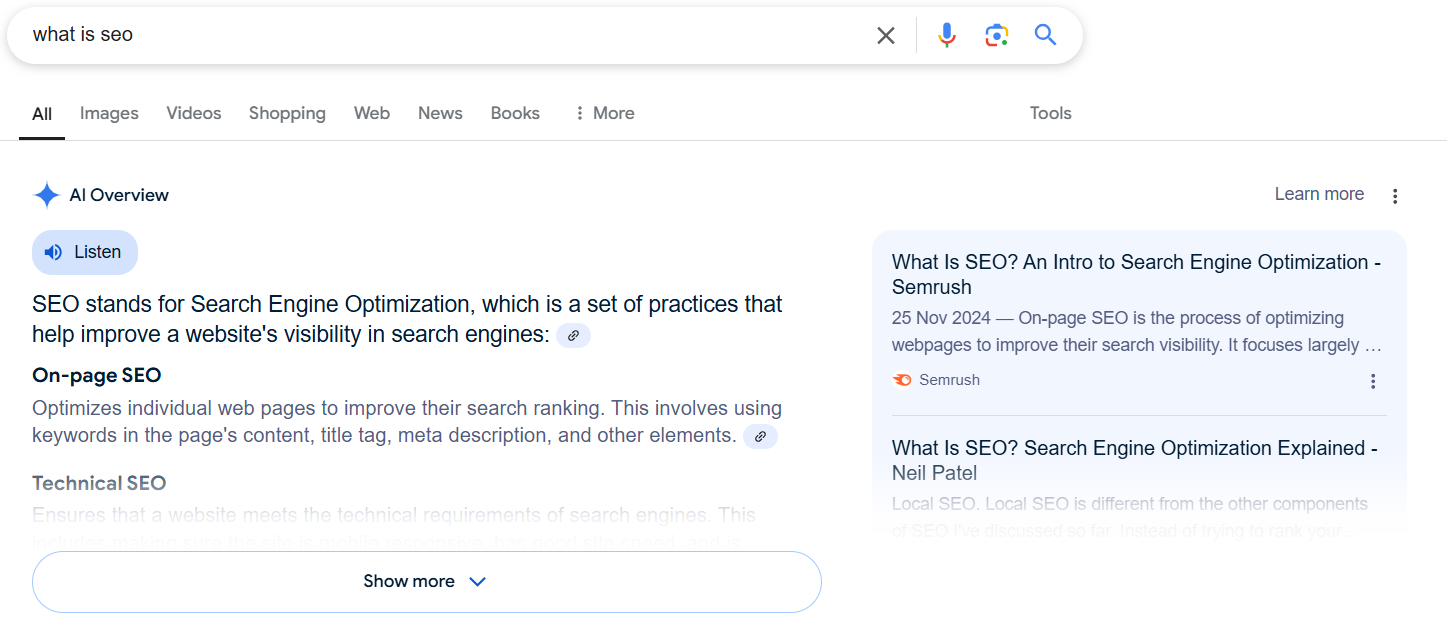
As search behavior changes, your visibility in AI-generated responses puts you directly in front of people who are ready to take action. And unlike traditional SEO (which focuses on ranking pages in a list of links), GEO focuses on making your content the source AI models pull from when synthesizing answers.
That means structuring content for answer engine optimization, building entity authority, and ensuring your pages are machine-readable.
Why does GEO matter for B2B SaaS in 2026?
AI chatbots and answer engines are pulling users away from traditional search results. If your content isn't structured for AI citation, you lose visibility at the exact moment buyers are researching.
Browsing behaviors have changed
A study by Surge evaluated ChatGPT and Google search across 500 queries and found them in close competition. ChatGPT was preferred for 42% of queries, Google for 40%. Google declared ChatGPT's emergence as Code Red back in 2023 and has since accelerated AI product development, including AI Overviews on many search queries.
Meanwhile, AI-generated answers cause CTRs for informational queries to drop from 1.41% to 0.64%. That's more than half. Traffic your SaaS blog used to capture.
AI adoption is accelerating
42% of users agree to use AI tools to improve their research skills. And the 2024 Consumer Study from IBM shows 86% of people who haven't used AI yet would like to experience how it can help research products.
For B2B buyers, this means product research increasingly starts in ChatGPT or Perplexity, not Google. If your brand isn't mentioned in those AI responses, you're invisible during the consideration phase.
GEO strengthens your SEO strategy
Implementing GEO techniques enhances your SEO best practices. As search engines integrate AI models, adapting becomes necessary, not optional.
Glenn Gabriel Bona, Growth Manager (Organic) at TripleDart, explains:
"While AI chatbots may not significantly impact Google's search dominance in the near future, it's still important to optimize for the changing landscape. You also need to get your brand and company out there on other websites. AI chatbots and agents can start making recommendations based on all of their inputs. So if your brand is mentioned positively more times than your competitors, you should be able to land in AI recommendations."
A Reddit thread in r/SEO echoes this. One user noted: "GEO isn't a new skill, it's a reprioritization. Structure, credibility, and distribution now matter as much as keywords if you want AI to use your content." (Source)
What are the core benefits of GEO?
GEO ensures your content reaches users who rely on AI-driven searches, not only those scrolling traditional SERPs. Here's what it delivers.
Faster, more precise user experiences
GEO focuses on understanding the deeper intent behind a user's search query and providing precise, easy-to-read information in one place. By aligning content with user intent, GEO delivers answers directly from your brand or product pages.
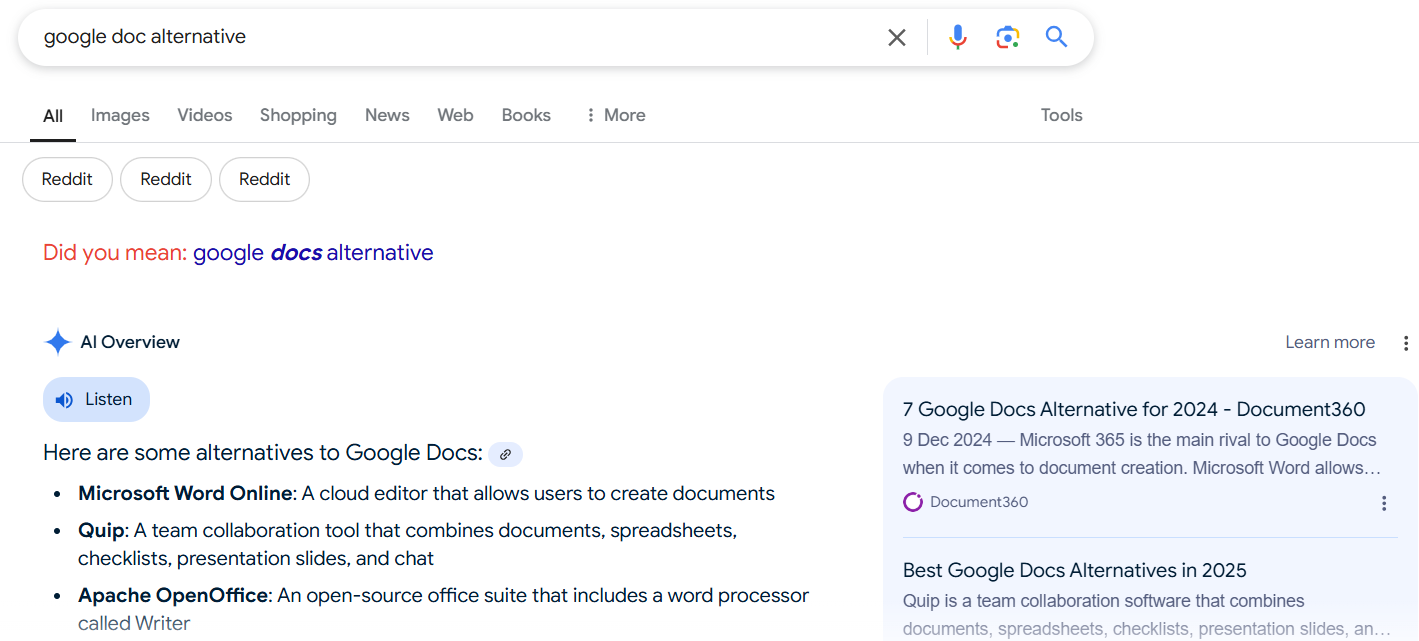
For example, Document 360 appears as one of the alternatives for Google Docs in AI Overviews. A user can check the first link to learn more about the product while also discovering other options, all without navigating multiple tabs.
Greater website reach and visibility
A Surfer SEO study reveals that 52% of sources in Google AI Overviews are among the top 10 organic results. So organic ranking on SERPs and appearance in AI answers combine to improve overall website visibility.
83% of users find AI-powered search tools more efficient than traditional engines. If your content appears in both channels, you capture attention at multiple touchpoints.
Competitive advantage for early adopters
GEO-ready content is discovered up to 10x faster by generative engines compared to organic SEO alone. Combining SEO with GEO ensures your products rank well on both traditional SERPs and AI-based searches.
Data-driven content decisions
GEO gives brands a broader opportunity to align with user intent. Use keyword research tools to identify the questions your target audience asks. Research related topics, validate queries in Google, and determine the likelihood of users asking similar questions to AI-based search engines.
FlowForma — GEO/AEO Case Study
"FlowForma improved AI-attributed traffic by 5.5x within 9 months through strategic GEO implementation and achieved consistent visibility in process automation recommendations across AI platforms like ChatGPT, Perplexity, and Gemini."
Read the full FlowForma case study →
How does GEO compare to traditional SEO?
GEO and traditional SEO share the same goal (visibility) but they operate on different mechanics. Understanding both helps you build a flexible marketing plan.
Where GEO and SEO overlap
- Keyword strategy: Both use keywords strategically to improve discoverability.
- Content quality: Both prioritize high-quality content following E-E-A-T principles (experience, expertise, authoritativeness, trustworthiness).
- Technical optimization: Speed, mobile-friendliness, and crawlability matter for both.
- Authority building: Trust through credible content and meaningful relationships across platforms.
Where GEO differs from SEO
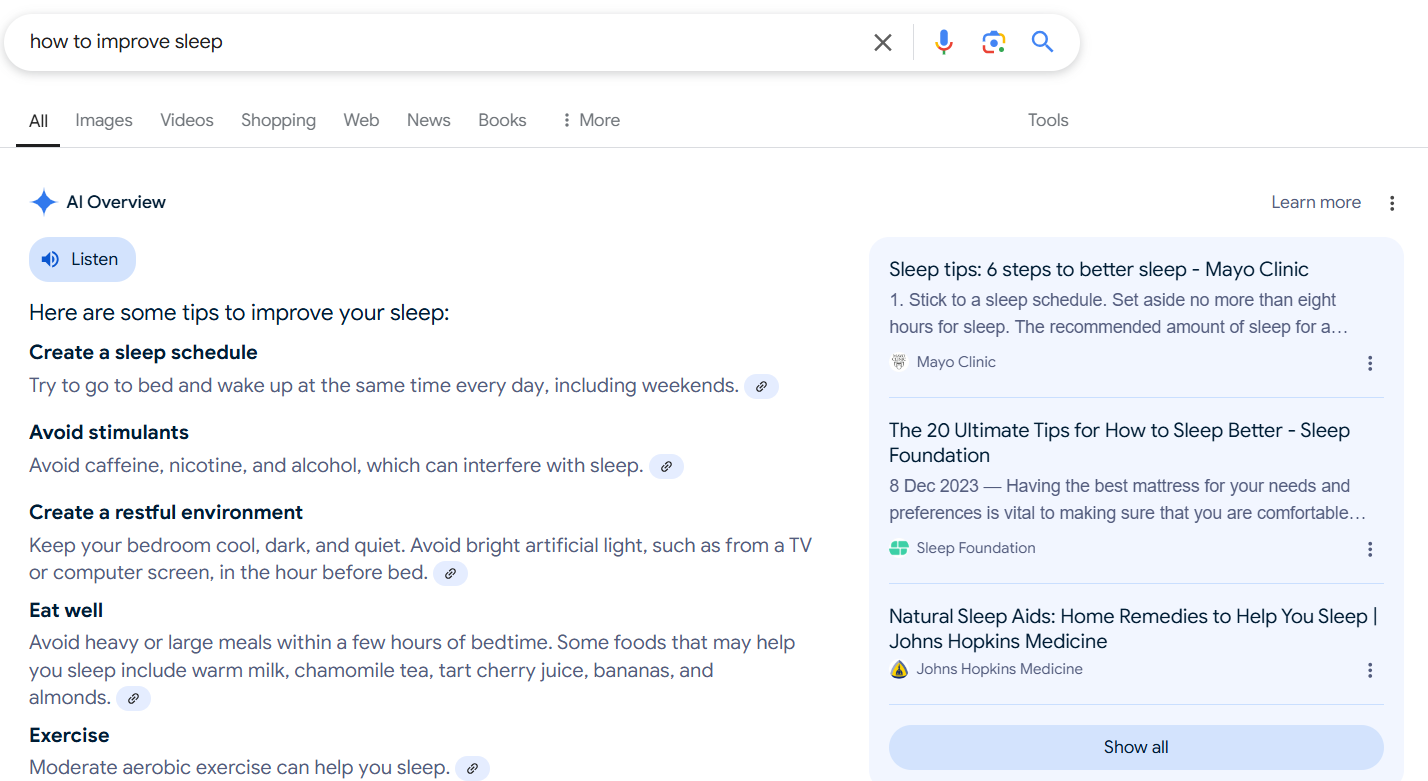
For a deeper comparison, see our full guide on SEO vs GEO differences.
Agency Data Insight
Across our portfolio of 40+ B2B SaaS accounts, content optimized with structured data like FAQ and Organization schema sees 25% higher impression share in AI-driven search queries compared to non-optimized pages. AI engines prioritize machine-readable authority signals for citations.
How can you integrate GEO with your existing SEO strategy?
Traditional SEO alone won't get your content in front of every buyer. 8% of people now rely on ChatGPT as their primary search engine. That number is smaller than Google's share, but the trend is accelerating.
Here's how to implement GEO alongside your current SEO work.
1. Unify your content strategy
When planning content, consider both SEO and GEO requirements. Create a unified brand voice, use a conversational approach, and build question-based headings that match how users phrase queries to AI.
Lead with quick answers in every section. AI engines extract the first clear statement that directly addresses a query.
2. Perform semantic keyword research
Go beyond traditional search terms. Cover long-tail words, conversational searches, and contextual phrases that matter to AI algorithms. Test your target queries in ChatGPT and Perplexity to see what content currently gets cited, then build content that fills the gaps.
3. Implement schema markup for GEO visibility
Add FAQ schema, Organization schema, and HowTo schema where appropriate. These structured data formats help AI engines parse your content faster and cite it more accurately. For implementation details, see our guide on technical SEO for SaaS.
4. Focus on user experience
While GEO makes content AI-friendly, the real consumer is a human. Engaging content, readability, and accuracy make the search experience worth returning to. Mobile optimization, loading speed, and content presentation all need monitoring.
5. Track AI engagement and iterate
Use SEO and GEO research insights together. Monitor referral traffic from AI engines in GA4 (learn how in our guide to tracking AI and LLM chatbot traffic). Track which queries trigger AI citations of your content, and iterate based on what works.
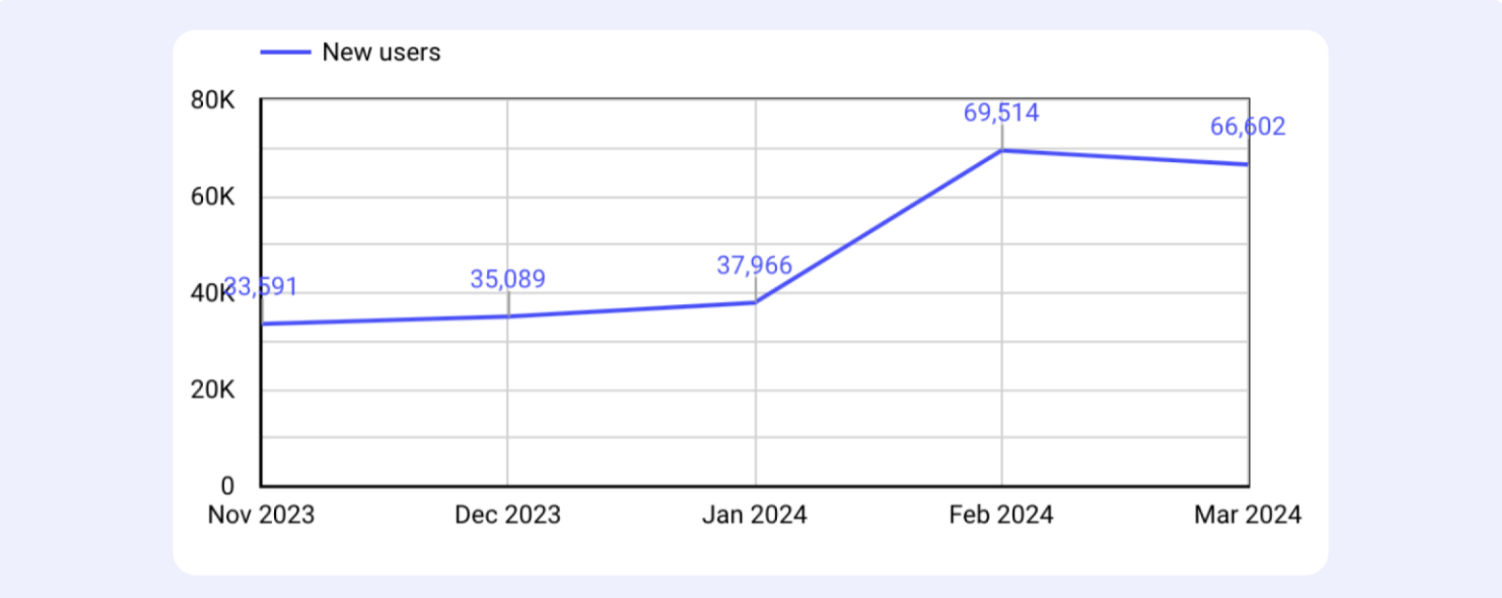
One example of this hybrid approach: Glean, an enterprise AI search platform, partnered with TripleDart Digital to scale high-quality, SEO-optimized content while ensuring technical site health. Through a product-led strategy and consistent publishing cadence, Glean nearly doubled new users and saw a sustained rise in organic traffic within months.
Daniel Henderson, Glean
"TripleDart is a super helpful team, tremendously aiding in SEO enhancements from blog topics to technical recommendations."
Read the full Glean case study →
How do generative AI and answer engines actually work?
Understanding the mechanics helps you structure content that AI models prefer to cite. So let's break it down.
Generative AI uses large language models (LLMs) that process billions of words from websites, articles, books, and online conversations. When a user types a query, the model breaks it down to understand meaning, intent, and context. It then generates a direct answer by pulling from learned patterns, not by returning a list of links.
Platforms like ChatGPT and Perplexity respond with complete answers drawn from internal models. Google's AI Overviews scan fresh web content as part of their process. Both prefer sources that show authority, cover the topic in depth, and follow a clean, easy-to-parse structure.
Based on extensive research from Princeton University, here's how generative engines evaluate content:
- Response generation: The engine takes a user's query, rephrases it for clarity, summarizes key points from retrieved sources, and turns the summary into a reader-friendly answer.
- Source selection: Every response depends on the sources analyzed. The primary source providing the most information gets credited as a citation. Length, word count, and presentation quality all factor into visibility.
- Quality evaluation: Does the content directly answer the query? Is it unique or generic? Does it provide additional context? A citation is judged on how well it answers the question and adds useful, varied information.
Here's a stat worth noting: adding statistics to content boosts visibility scores from a baseline of 19.3 to 25.4, a 31% improvement. This is why data-backed content consistently outperforms opinion-only pieces in AI citations.
In a Reddit discussion in r/SaaS, one user confirmed: "Structured, chunkable content wins. Unlike Google's full-page index, AI engines retrieve and synthesize 'chunks' of content. Every section needs to stand on its own." (Source)
What does a GEO workflow look like in practice?
GEO uses machine learning, user intent analysis, and AI-focused content optimization to improve visibility in AI-generated results. Here's the operational breakdown.
Research and analysis
You can't build a GEO strategy without understanding how AI interprets content. Study how users interact with AI platforms. Analyze real user prompts, topic intent, and common language patterns.
Test your target queries directly in ChatGPT, Gemini, and Perplexity to see what gets cited. And what doesn't.
At TripleDart, we provide insights into how AI tools parse your content and help strengthen your technical SEO foundation to align with these needs.
Content quality and relevance
In generative AI SEO, relevance carries more weight than keyword repetition. AI models look for value, not volume. You increase your chances of getting featured when your content includes:
- Real problems and answers to actual user queries
- Brand mentions and topical depth that signal authority
- Original insights, examples, and straightforward explanations
- Statistics with hyperlinked sources (AI models favor data-backed claims)
Across GEO-optimized campaigns for SaaS clients, we've observed that content incorporating authoritative statistics and fresh benchmarks achieves 18% higher CTR than standard keyword-targeted content, reflecting AI's growing role in blending paid and organic discovery.
Content structure and clarity
AI doesn't read like a human. It breaks down information into patterns, structure, and semantic meaning. Your content needs clear headers, subheadings, bullet points where needed, and short, declarative sentences. Build topic clusters so AI systems can easily extract and present answers.
Models reward clarity. Avoid vague generalities. Every section should be able to stand alone as a complete answer to a specific question.
Brand authority and technical SEO
You can't skip technical SEO to rank in generative engines:
- Improve page speed across all devices
- Fix crawl errors so AI systems can index your content correctly
- Structure internal links to guide both search engines and users through a logical content journey
- Add strong, descriptive metadata
- Use clean code and secure domains
Build your brand's authority by publishing consistently, driving repeat traffic, and earning mentions on third-party sites. AI tends to pull results from credible sites with visibility, so your trust signals matter as much as your content. Learn more about building topical authority for SaaS.
Continuous experimentation
You won't get GEO right the first time. Test content formats, experiment with structure, and track what AI platforms cite.
How frequently you update pages matters too. AI engines favor fresh, recently updated content over stale articles. Monitor how AI features your content, then use that data to adjust your next round.
Agency Data Insight
B2B SaaS accounts testing multimodal content—adding transcripts, alt text, and video schema—report 32% improved engagement rates in paid social funnels, as AI answer engines increasingly synthesize cross-format assets for personalized recommendations.
What GEO trends should you prepare for next?
Generative SEO will keep changing as AI gets better at interpreting user intent, context, and behavior across digital channels. Here's what to watch.
- More sophisticated AI capabilities: Advanced AI won't just answer direct questions. It'll anticipate follow-up queries based on user behavior and context. Refined natural language processing will deliver highly accurate, context-aware responses.
- Voice and visual search adoption: As users increasingly rely on voice and image-based queries, AI needs optimized content for both formats. Tips to structure content for AI search engines like Perplexity apply equally to voice interfaces.
- Multimodal content optimization: With AI integrating data from text, images, audio, and video, the focus moves to creating content that works across multiple channels. Optimizing for multimodal queries becomes essential.
- Entity-centric content: AI models increasingly prioritize entities (brands, people, products) over keywords. Building a strong entity graph through consistent naming, schema markup, and cross-platform mentions will drive citation frequency.
Another Reddit thread in r/digital_marketing captured the practitioner perspective well: "SEO focuses on ranking in search engines, while GEO optimizes for AI-generated answers. Some argue SEO principles—like clarity, authority, and structure—are the foundation of GEO." (Source)
How can TripleDart help you get GEO right?
As more users turn to AI tools for answers, your brand needs to meet them across search engines, chatbots, and voice assistants. With TripleDart Digital's GEO services, we put your brand at the forefront of AI searches and chatbot responses.
We start by evaluating your site's AI compatibility: checking content depth, structure, and crawlability to ensure smooth AI parsing. Our SEO specialists analyze trending search patterns, high-intent queries, and conversational phrases to build a targeted keyword map that aligns with how users search.
We bring precision to every step of your SEO strategy. Whether it's winning competitive keywords, adapting to niche SaaS trends, or balancing on-page quality with GEO readiness, we don't settle for generic.
Atlas HXM — RevOps Case Study
"Atlas HXM improved deal volume by 4x through an inbound engine rebuild, while the MQL-to-Opportunity rate climbed from 41% in Q2 to 55% by Q4, and the Cost per Opportunity dropped by 30%."
Read the full Atlas HXM case study →
Rahul Mantena, CleverTap
"TripleDart is our trusted partner for paid marketing, bringing invaluable insights and best practices to maximize paid campaigns."
Read the full CleverTap case study →
Book a demo call today and put your SaaS business in front of the right audience, across both traditional search and AI-driven discovery.
FAQs
Will GEO replace SEO?
No. Generative SEO supports and expands traditional SEO. You still need technical optimization, backlinks, and a human-driven strategy to build long-term authority. GEO adds a new layer that ensures your content gets cited in AI-generated answers alongside your organic rankings.
How can you measure the success of GEO content?
Track impressions, clicks, and overall traffic for GEO-optimized content. Check if your content appears in AI Overviews for relevant search terms. Monitor referral traffic from ChatGPT, Perplexity, and other AI platforms in GA4. Also track brand mention frequency across AI responses using tools like Otterly or GrackerAI.
What are the key technical considerations for GEO?
Structure data for AI readability using FAQ, Organization, and HowTo schema. Optimize for mobile devices. Improve website speed for faster loading. Analyze engagement metrics to refine user experience. Ensure your robots.txt doesn't block AI crawlers from accessing key content.
What are the best practices for generative engine optimization in 2026?
Lead with quick answers under every heading. Build question-based headings that match conversational queries. Include authoritative statistics with source links. Update content frequently. Test GEO effectiveness by querying ChatGPT and Gemini directly. Structure content in chunkable sections that can stand alone as complete answers.
Do you need technical skills to use generative SEO tools?
No. Most tools come with simple interfaces. You can research, create, and publish optimized content without coding or advanced technical knowledge. The key skill is understanding user intent and structuring content clearly.
How does TripleDart help with generative engine optimization?
TripleDart runs GEO as an integrated part of our AI SEO services. We audit your site's AI compatibility, build entity-centric content strategies, implement structured data, and track AI citation performance across ChatGPT, Perplexity, Gemini, and Google AI Overviews. Our team manages GEO for 40+ B2B SaaS accounts, giving us first-party data on what drives AI visibility at scale. Book an intro call to see how we can help.



.webp)
.webp)

.png)


.png)





.webp)





.webp)


.webp)






%20(1).png)


.webp)
.webp)
.webp)





%20Ads%20for%20SaaS%202026_%20Types%2C%20Strategies%20%26%20Best%20Practices%20(1).webp)








.png)


.png)





.webp)


![Creating an Enterprise SaaS Marketing Strategy [Based on Industry Insights and Trends in 2026]](https://cdn.prod.website-files.com/632b673b055f4310bdb8637d/6965f37b67d3956f981e65fe_66a22273de11b68303bdd3c7_Creating%2520an%2520Enterprise%2520SaaS%2520Marketing%2520Strategy%2520%255BBased%2520on%2520Industry%2520Insights%2520and%2520Trends%2520in%25202023%255D.png)




.png)
















.webp)






%20Agencies%20for%20B2B%20SaaS%20Compared%20(2026).webp)

.webp)
%20with%20Hubspot.webp)








.png)


.png)

.png)
.png)
.png)
.png)


















.webp)

.webp)
.png)
.png)



.webp)


.png)




















.webp)

![How to Measure AEO Success: 12 Metrics Beyond Clicks [2026 Framework]](https://cdn.prod.website-files.com/632b673b055f4310bdb8637d/6a0d664b326187e99b3d5960_6%20-%20The%20Ultimate%20Guide%20to%20Measuring%20AEO%20Success%20in%202026.png)
![7-Step Workflow for AEO-Ready Content [2026 Framework]](https://cdn.prod.website-files.com/632b673b055f4310bdb8637d/6a0d55ea88913ede1d3a7123_5%20-%20Workflows%20for%20Optimized%20AEO-Ready%20Content%20Creation.png)
.png)
![How to Structure Content for AEO and GEO [With Templates]](https://cdn.prod.website-files.com/632b673b055f4310bdb8637d/6a0c6a56eb700472e635ff33_1%20-%20How%20to%20Structure%20%20Content%20for%20AEO%20and%20GEO%20%20Summaries%20(2026).png)


.png)
.png)









.png)


.png)





%2520Agencies%2520(2025).png)

![Top 9 AI SEO Content Generators for 2026 [Ranked & Reviewed]](https://cdn.prod.website-files.com/632b673b055f4310bdb8637d/6858e2c2d1f91a0c0a48811a_ai%20seo%20content%20generator.webp)




.webp)














.webp)