.png)

.png)
Key Takeaways
- ChatGPT prioritizes authoritative sources, structured content, and data-backed claims when recommending brands.
- Content in Bing's top 20 results has an 87% higher chance of being cited by ChatGPT.
- Schema markup, FAQ structures, and brand knowledge graphs form the technical foundation for AI visibility.
- Third-party mentions on G2, Capterra, Clutch, Reddit, and high-authority publications directly influence AI recommendations.
- A combined SEO + GEO approach - not one or the other - is the most reliable path to appearing in both search results and AI responses. TripleDart builds both channels in parallel for B2B SaaS brands.
Organic click-through rates are dropping. AI overviews now consume 40% of SERP real estate, and the traffic is going somewhere else entirely. ChatGPT surpassed 800 million weekly active users in early 2026. AI platforms generated 1.13 billion referral visits in June 2025 alone, a 357% year-over-year increase.
So here's the question B2B SaaS marketers need to sit with: are brand mentions inside ChatGPT a vanity metric, or a new pipeline channel?
Here's what we know. Getting ChatGPT and other AI models to mention your brand when prospects ask industry or product questions is the new "success." You gain a massive advantage before prospects even visit your website. B2B SaaS companies already report 6x to 27x higher conversion rates from AI traffic versus traditional search.
Traditional content optimization alone won't get you there. You need a strategic blend of SEO fundamentals and GEO techniques. This guide covers content formatting, authority building, technical optimization, and measurement... everything you need to build your ChatGPT optimization playbook.
Let's get started.
How does ChatGPT recommend brands?
Unlike Google's well-documented ranking factors, ChatGPT's recommendation system is still partially opaque. But research and testing have revealed confirmed signals worth understanding, along with a few speculative ones.
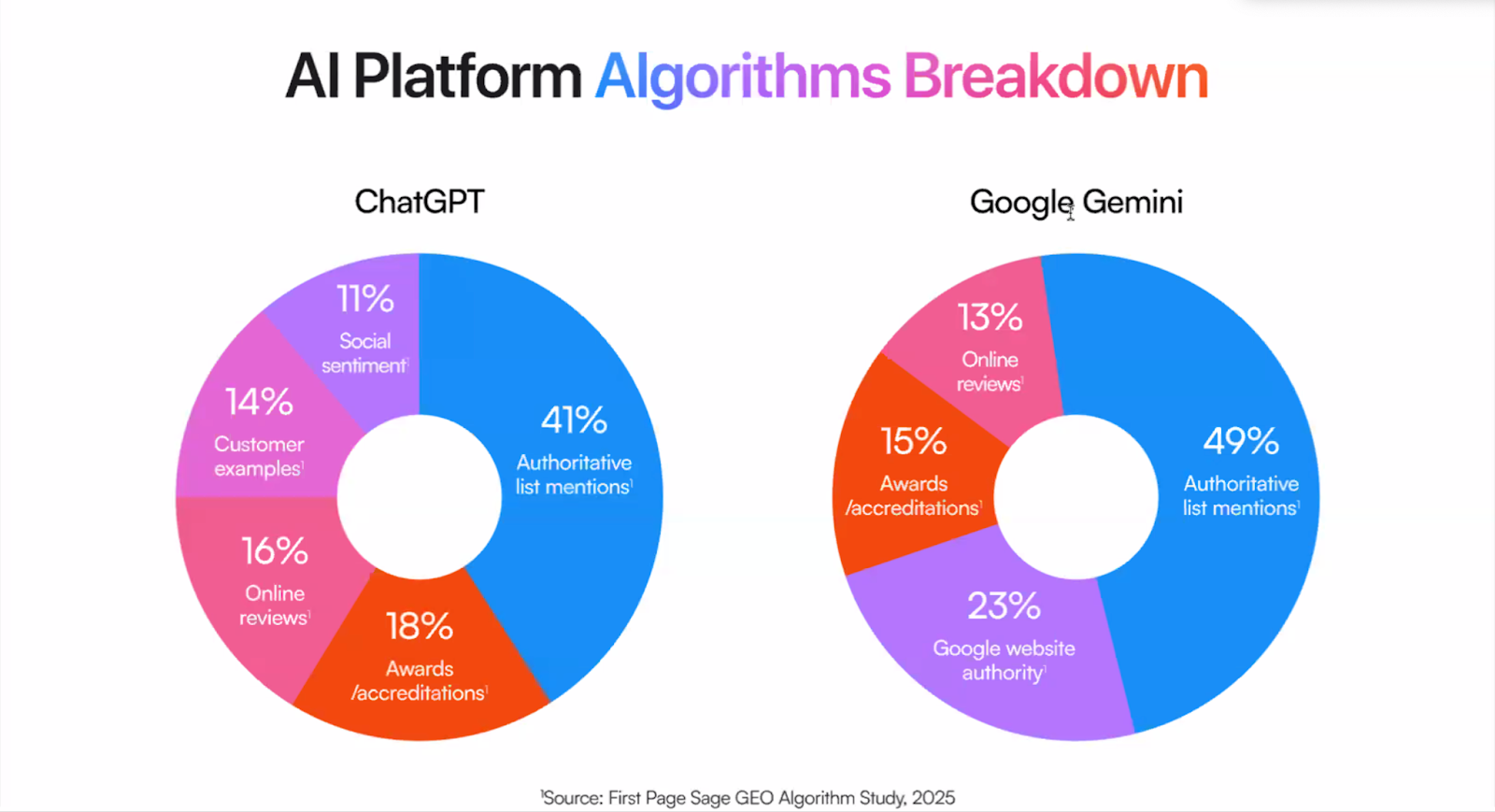
ChatGPT vs. Gemini algorithms breakdown
Confirmed factors:
- ChatGPT heavily prioritizes content from authoritative sources, accounting for 41% of its algorithm weighting.
- The model prefers content structured in direct question-answer format.
- Statistical data and expert quotes increase content visibility by 40% in AI responses.
- Content appearing in the top 20 Bing results has an 87% higher chance of citation.
Still speculative:
- Exact weighting of social signals and brand sentiment.
- How quickly the model incorporates new brand information.
- Precise impact of backlink quality vs. quantity on AI citations.
ChatGPT's approach is different from traditional search in one key way. SEO focuses on driving traffic to your site. Generative engine optimization aims to get your brand mentioned in AI responses, even if users never click through.
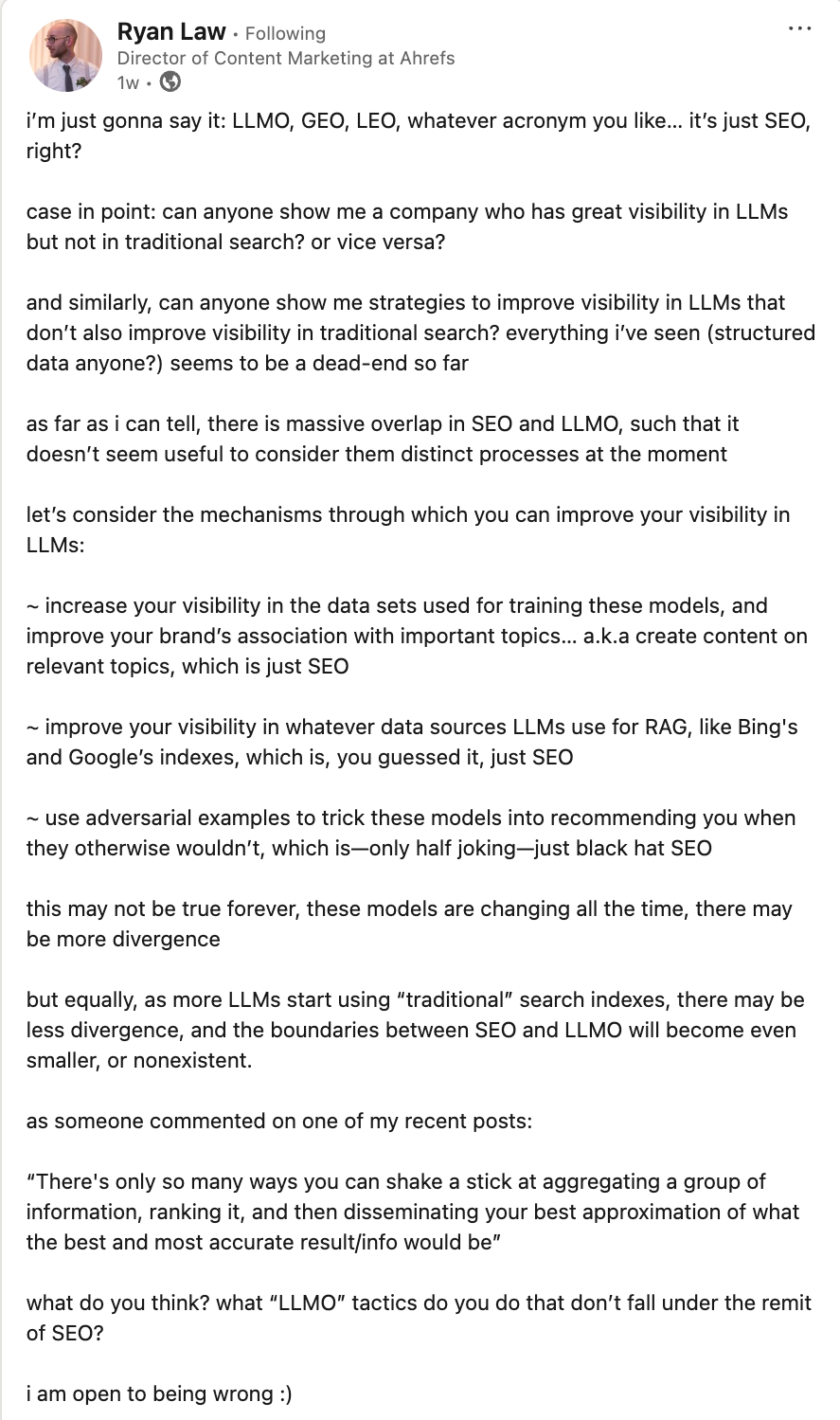
That said, there's real overlap. E-E-A-T content, optimized media, and content structuring work for both SEO and GEO. Ryan Law, Director of Content Marketing at Ahrefs, kicked off this interesting discussion on where the two intersect:
What are the key factors that influence ChatGPT brand recommendations?
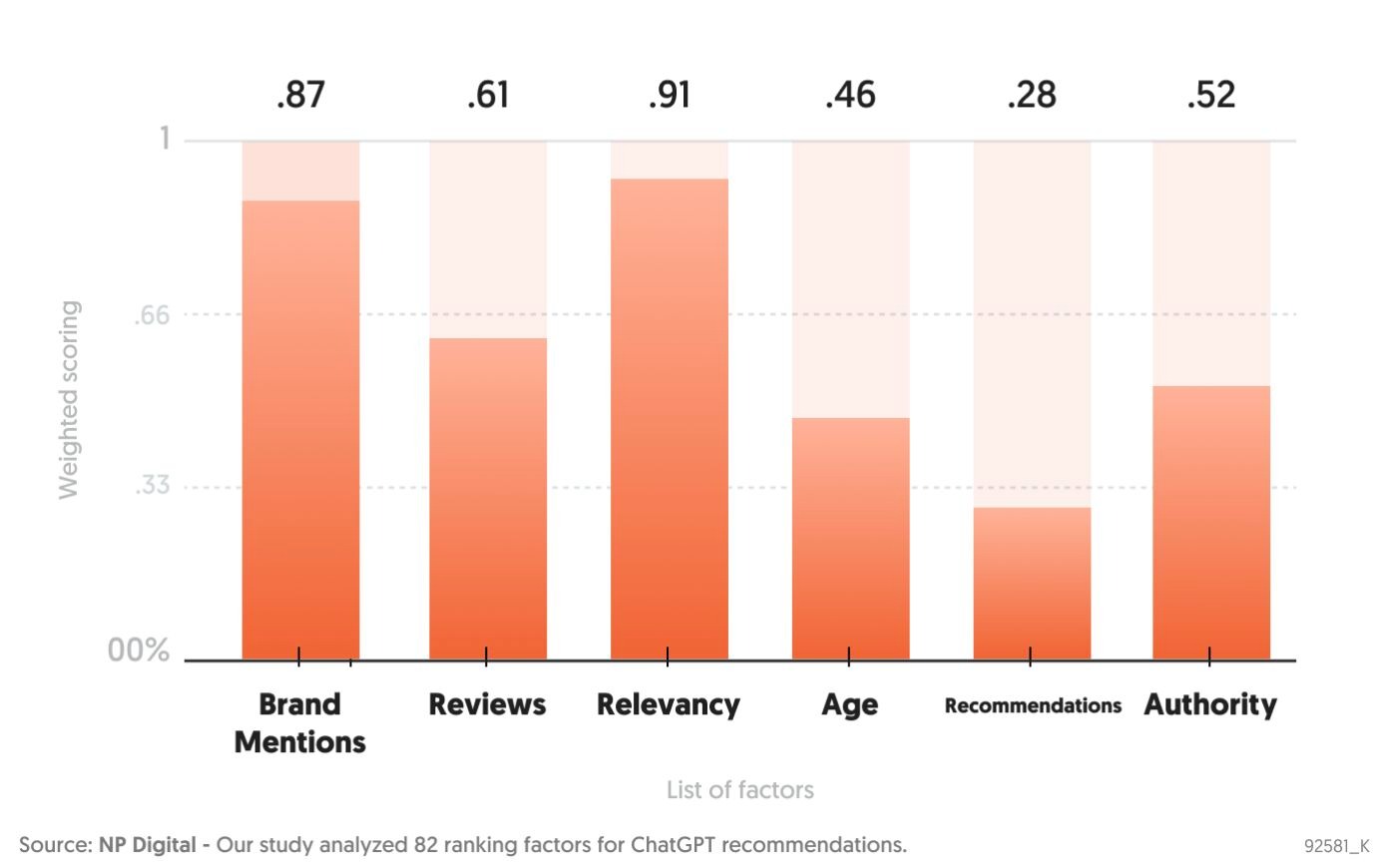
NP Digital's study on ChatGPT brand recommendations
Relevancy. Your brand needs strong topical association with keywords your audience uses. Rand Fishkin, Cofounder of SparkToro, discovered his company ranked first for "fine audience research software" but not for "best audience research software." The exact phrase appeared in his website bio and across various industry sources, which is what triggered the ranking. Specific phrasing matters.
Brand mentions. The frequency, context, and authority of sources mentioning your brand all impact visibility. A mention in TechCrunch carries more weight than one on a low-authority blog.
Reviews. Positive reviews across platforms like G2, Capterra, Clutch, TrustPilot, TrustRadius, and Reddit influence how AI models perceive your brand's reputation. For B2B SaaS specifically, G2 and Clutch carry outsized weight because ChatGPT associates these platforms with verified buyer feedback.
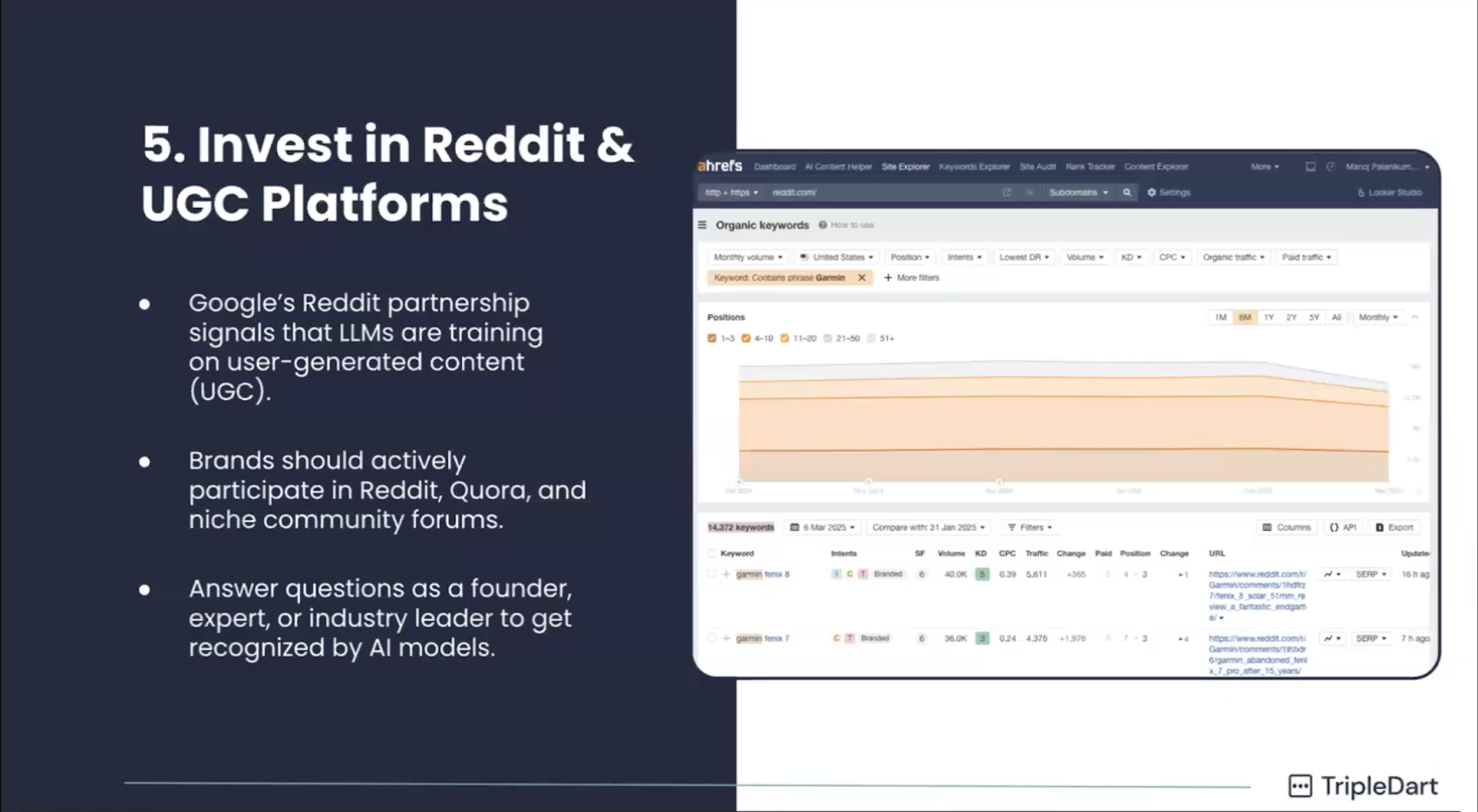
Agency Data Insight
Across our portfolio of 40+ B2B SaaS accounts, brands prioritizing review aggregation from 5+ platforms (e.g., G2, Clutch, Capterra, TrustPilot, TrustRadius) alongside authority signals achieve 15–20% lower CPAs in PPC funnels. More importantly, their content earns more AI citations due to enriched trust signals that LLMs can verify across multiple sources.
Customer examples and usage data. This is a signal competitors often overlook. ChatGPT uses product usage statistics (active user counts, retention rates, customer base size, growth metrics) as signals for recommending scalable B2B products. Anonymized metrics like "10K+ monthly active users" or "30% YoY growth" from case studies enhance AI trust.
Authority. Domain credibility still matters, but differently than in SEO. It's less about raw domain authority scores and more about being recognized as a thought leader in specific topic areas.
Awards and accreditations. ChatGPT distinguishes between popular awards (consumer-facing, like "Product of the Year") and industry-specific awards (B2B-focused, like G2 Leader badges or SaaS Awards). Industry awards signal expertise for B2B intent queries. Popular awards boost broad consumer recommendations.
Recommendations. Third-party endorsements create a network effect. When industry experts recommend your brand in their content, AI models are more likely to include you in responses.
How should you measure your current ChatGPT presence?
Before optimizing, understand where you stand.
- Audit your visibility. Ask ChatGPT 10-15 industry-related questions your customers are likely to ask. Document when your brand appears and which competitors show up instead.
- Analyze competitors. Compare your performance against three to five key rivals. Identify queries where they outperform you and the content they have that your website lacks.
- Set benchmarks. Track your appearance rate, identify the most mentioned products, and analyze the sentiment surrounding your brand.
- Use specialized tools. Try Otterly.AI to track mentions, the Semrush AI toolkit for competitive analysis, and Clandera to see which GenAI models mention your brand for specific keywords.
This data gives you a clear starting point and metrics to track progress over time.
Reddit users are actively discussing this challenge. In r/DigitalMarketing, one marketer shared: "Optimizing for ChatGPT recommendations without killing your SEO" - highlighting that the two strategies need to work in tandem, not compete.
What technical foundations drive AI visibility?
Generative AI tools like ChatGPT use Retrieval-Augmented Generation (RAG) to answer queries. For your content to be mentioned, it needs to exist in connected knowledge bases and have strong semantic alignment with likely user queries.
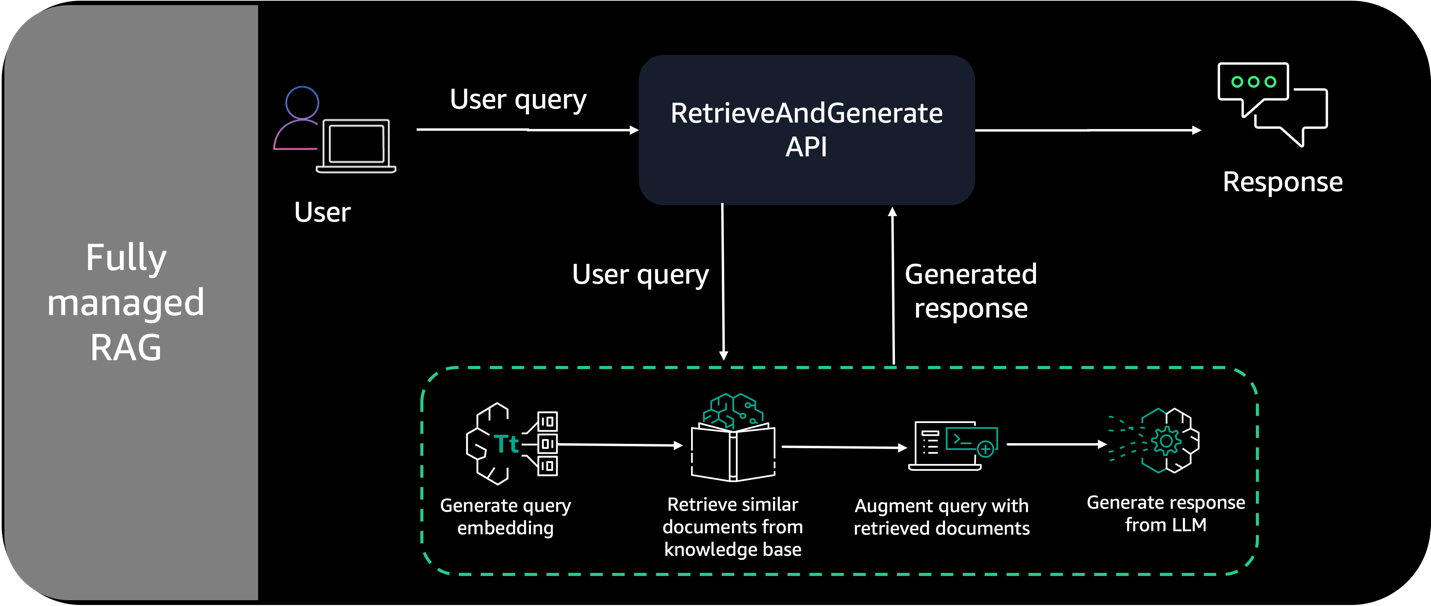
Flowchart demonstrating the RAG process
Here's how RAG works in practice:
- When a user asks a question, the system converts it into a numerical embedding representing its semantic meaning.
- It retrieves relevant information from external knowledge bases and the LLM's static training data.
- It places both the original query and retrieved documents into the LLM's context window.
- It generates a response by combining retrieved information with its parametric knowledge.
SEO basics that feed AI visibility
Before diving into ChatGPT-specific tactics, make sure your traditional SEO fundamentals are solid. AI models rely heavily on the same signals search engines use.
- Keyword research: Target long-tail, conversational queries that mirror how people prompt ChatGPT.
- Mobile-friendliness and site speed: AI crawlers analyze your site differently than traditional search engines, but crawlability still matters.
- AI crawler indexing: Ensure your robots.txt doesn't block key information from AI crawlers. Keep important information within three clicks of the homepage.
Schema markup and structured data
Schema helps AI systems during the retrieval phase by making your content easily identifiable and categorizable. Focus on Product, Organization, FAQPage, and HowTo schemas.
Schema markup isn't mandatory. But implementing it gives you a competitive edge because AI can extract and present your information with greater clarity.
For a deeper dive, see our guide on technical SEO for SaaS.
Content structure AI models understand
A clear content structure helps AI process and rank your pages. Use a single H1, structure H2s as questions, break down with H3s, and maintain logical nesting. This hierarchy helps AI understand content relationships during the augmentation phase.
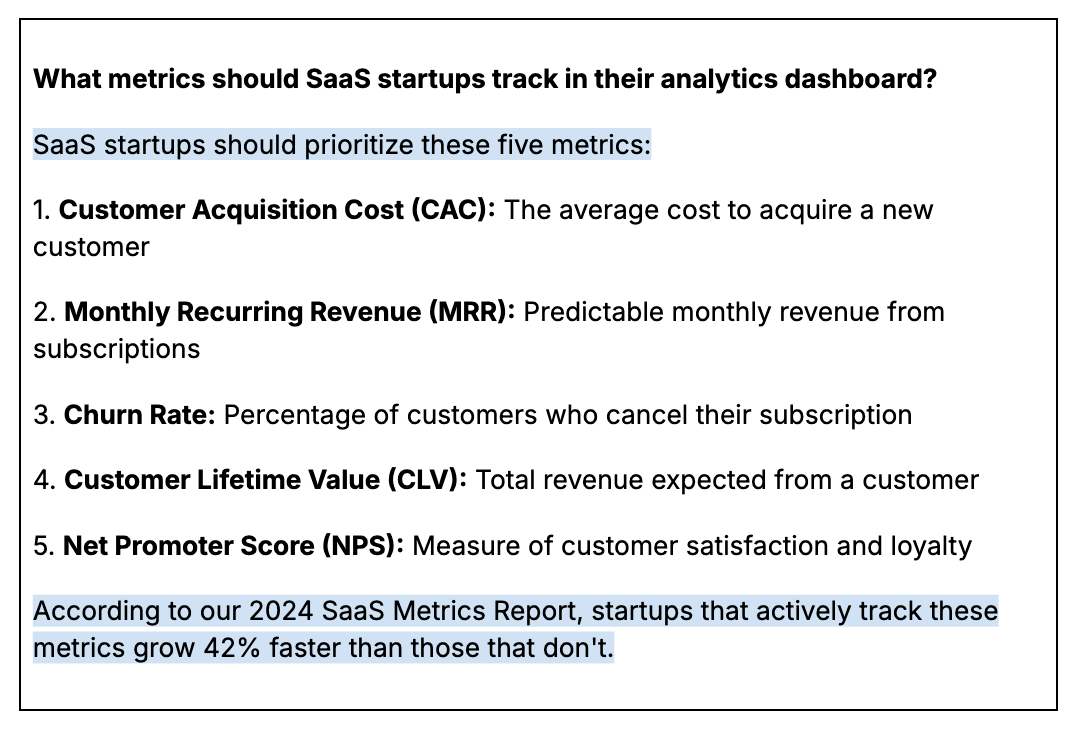
Structure content in clear Q&A format where the question is stated directly and answered concisely with supporting facts. This format mirrors how ChatGPT delivers information to users, making your content more likely to be retrieved and presented verbatim.
A few formatting best practices:
- ✅ Break long-form content into digestible chunks
- ✅ Use bulleted and numbered lists for easy information extraction
- ✅ Include TL;DR summaries at the top of each section
Creating an AI knowledge graph for your brand
A brand knowledge graph creates a structured representation of facts about your company that AI can confidently reference.
- Identify core entities: Products, team members, company history.
- Define relationships: How products solve problems, what distinguishes your approach.
- Document terminology: Create a consistent brand glossary.
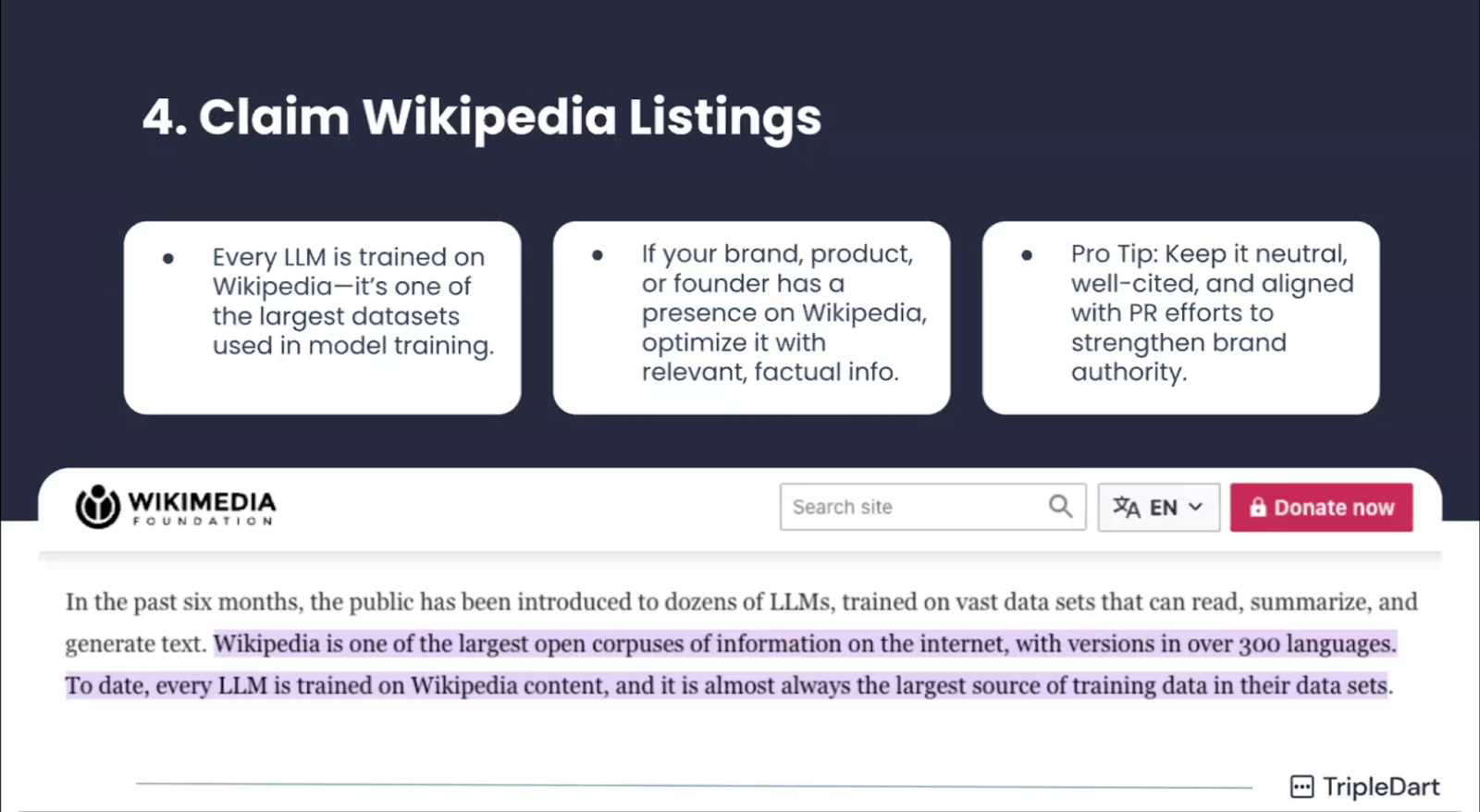
You should also aim for inclusion in primary knowledge bases (Encyclopedia Britannica, literary canon) for foundational authority and secondary knowledge bases (Wikipedia, Hoovers, Bloomberg) for business verification. For B2B SaaS, claiming and updating listings on Hoovers and Bloomberg enriches the data AI models pull from.
Helpful tools: Knowledge graph schema generator, Lucidchart, Wikidata
FlowForma - GEO Case Study
"FlowForma improved AI-attributed traffic by 5.5x within 9 months through strategic GEO implementation and achieved consistent visibility in process automation recommendations across AI platforms like ChatGPT, Perplexity, and Gemini."
Read the full FlowForma case study →
What content strategies boost ChatGPT visibility?
Technical foundation is in place. Now, the content itself needs to be the kind ChatGPT wants to cite.
Based on the GEO study from Princeton and other research, certain content approaches dramatically increase your chances of appearing in AI responses. "Fact density" (authoritative citations, statistics, quotations) can boost visibility by up to 40% for lower-ranked websites.
Developing authoritative content that earns citations
If bulk-generating content has been your 2026 marketing plan... rethink it. ChatGPT takes contextual relevance into account when responding.
Build interconnected topic clusters that thoroughly cover specific topics relevant to your audience and establish domain expertise:
- Place emphasis on natural language that addresses user intent.
- Use key terms where they make logical sense.
- Incorporate synonyms and related concepts where relevant.
- Prioritize clarity and readability over keyword density.
For example, if you sell marketing automation software, create clusters around "email marketing automation," "social media automation," and "lead nurturing workflows."
One more thing worth noting: the GEO study confirmed that keyword stuffing decreased visibility by 10%. Focus on fact density and topical authority instead.
Agency Data Insight
Across our portfolio of 40+ B2B SaaS accounts, workflows blending AI-generated content variants with human-edited E-E-A-T elements yield a 35% uplift in organic CTR for educational guides. AI models prioritize comprehensive, fresh signals over generic outputs - which is why we treat AI as an enabler in the content process, never the sole driver.
Data-backed content that AI models prioritize
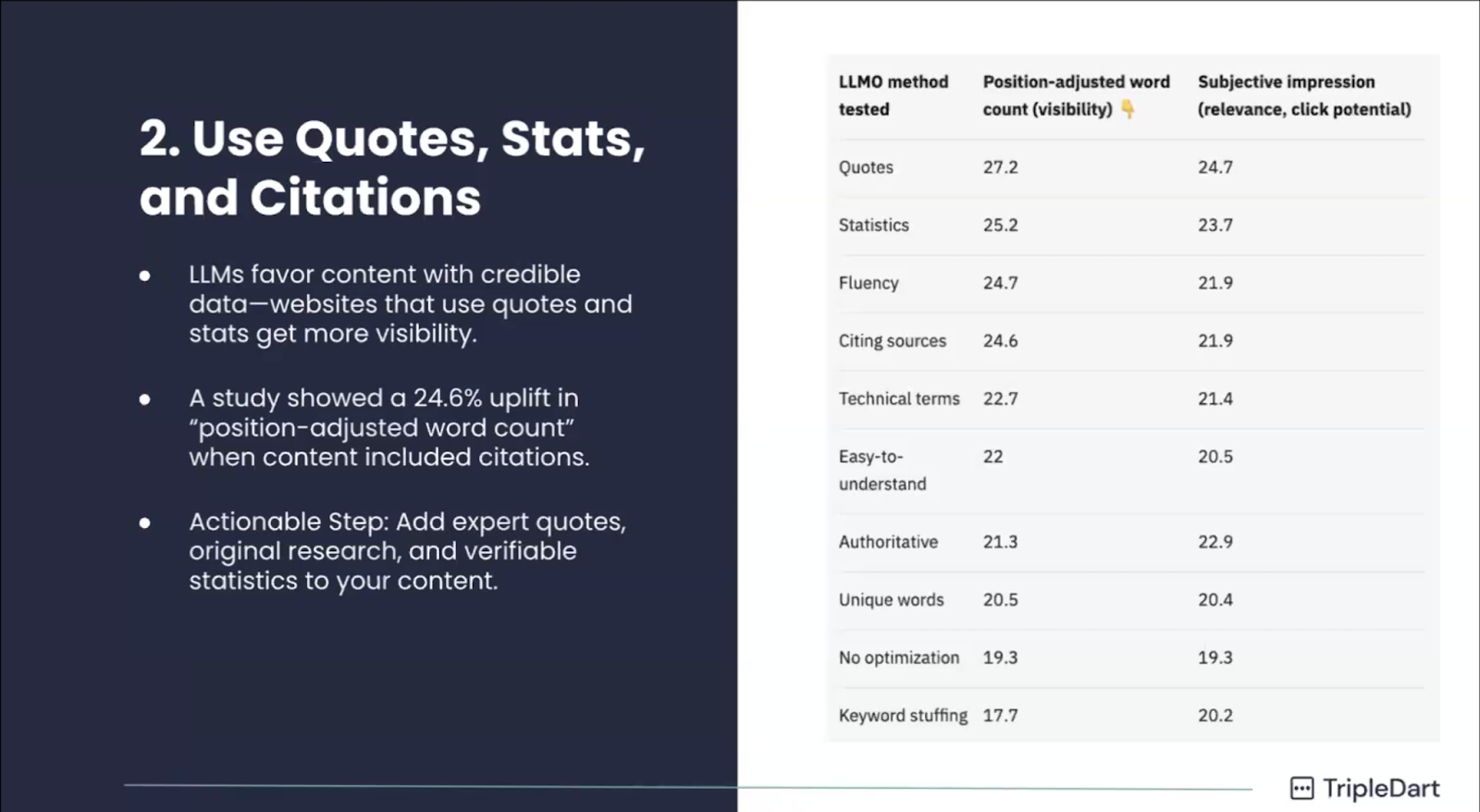
AI favors content supported by data and credible sources:
- Include original research whenever possible (surveys, case studies, industry reports).
- Back up claims with specific numbers and percentages.
- Update statistics regularly to ensure relevance.
- Present data in easily digestible formats (charts, tables, and infographics with proper alt text).
Conversational content and voice search optimization
AI models are trained on natural language patterns that mirror how people ask questions. ChatGPT prompt volume jumped nearly 70% from January to June 2025, and many of those prompts read like voice search queries.
Use this to your advantage:
- Structure content as direct answers to questions people ask.
- Phrase headings as complete questions (e.g., "How does project management software improve team productivity?").
- Answer the user's search intent completely in the first paragraph, then expand with supporting details.
- Target long-tail, question-based queries that overlap with how people prompt both ChatGPT and voice assistants.
This approach to content structure also improves your chances of appearing in AI Overviews.
Using ChatGPT as an SEO tool
Beyond optimizing for ChatGPT, you can also use it as a keyword research strategy for ChatGPT optimization:
- Content generation: Generate meta descriptions, blog outlines, and FAQ sections based on target keywords.
- Keyword research: Prompt ChatGPT for long-tail keyword ideas and semantic variations.
- Competitive analysis: Ask it to analyze SERPs and identify content gaps.
- A/B testing ideas: Generate multiple headline and CTA variants for testing.
When we asked ChatGPT directly how to optimize for its own recommendations, it responded: "Focus on authoritative sources, structured data, and comprehensive answers to specific questions." That aligns with everything the research confirms.
In r/AISEOforBeginners, one practitioner shared their AI SEO guide, noting: "Major deliverables are traffic from ChatGPT and Google AI Overviews" - confirming that the two channels compound when optimized together.
Industry-specific content optimization for B2B SaaS
For B2B brands, establishing thought leadership is non-negotiable:
- Publish detailed case studies with specific results and methodologies.
- Create comparison content that fairly evaluates multiple products (including competitors).
- Develop executive insights that demonstrate industry expertise.
- Participate in industry conversations on platforms like LinkedIn and Reddit.
How do you build authority signals that AI models trust?
For ChatGPT to recommend your brand with confidence, you need strong authority signals from across the web. Here's a strategic approach to building brand authority for ChatGPT recommendations:
Glean - SEO Case Study
"Glean achieved a remarkable 275% increase in monthly organic clicks, growing from approximately 18,000 to over 67,000, and saw monthly impressions surge by 365%, from around 260,000 to over 1.2 million."
Read the full Glean case study →
Agency Data Insight
Across our portfolio of 40+ B2B SaaS accounts, pages updated with structured data and long-tail conversational keywords see 28% higher impression share in Google Ads for query types mirroring ChatGPT prompts. AI favors scannable, intent-matched formats - which is why we align paid and organic keyword strategies around the same conversational queries.
What does a 90-day ChatGPT optimization roadmap look like?
Here's a practical plan for building your brand's AI visibility in 90 days. This roadmap applies whether you're focused on generative engine optimization GEO vs traditional SEO, or ideally, both.
First 30 days: foundation
- Begin with a technical audit. Implement FAQ schema on top pages, fix header hierarchies, and add clear Q&A sections.
- Conduct a content gap analysis by comparing what ChatGPT says about your industry versus what content you have.
- Start building your brand's knowledge graph with consistent descriptions across all platforms.
- Quick wins: add statistics to key pages and create direct answers to top customer questions.
- Claim and update profiles on secondary knowledge bases (Hoovers, Bloomberg, Wikipedia).
Days 31-60: authority development
- Create a content calendar focused on guides, FAQs, and comparison content that offer real value.
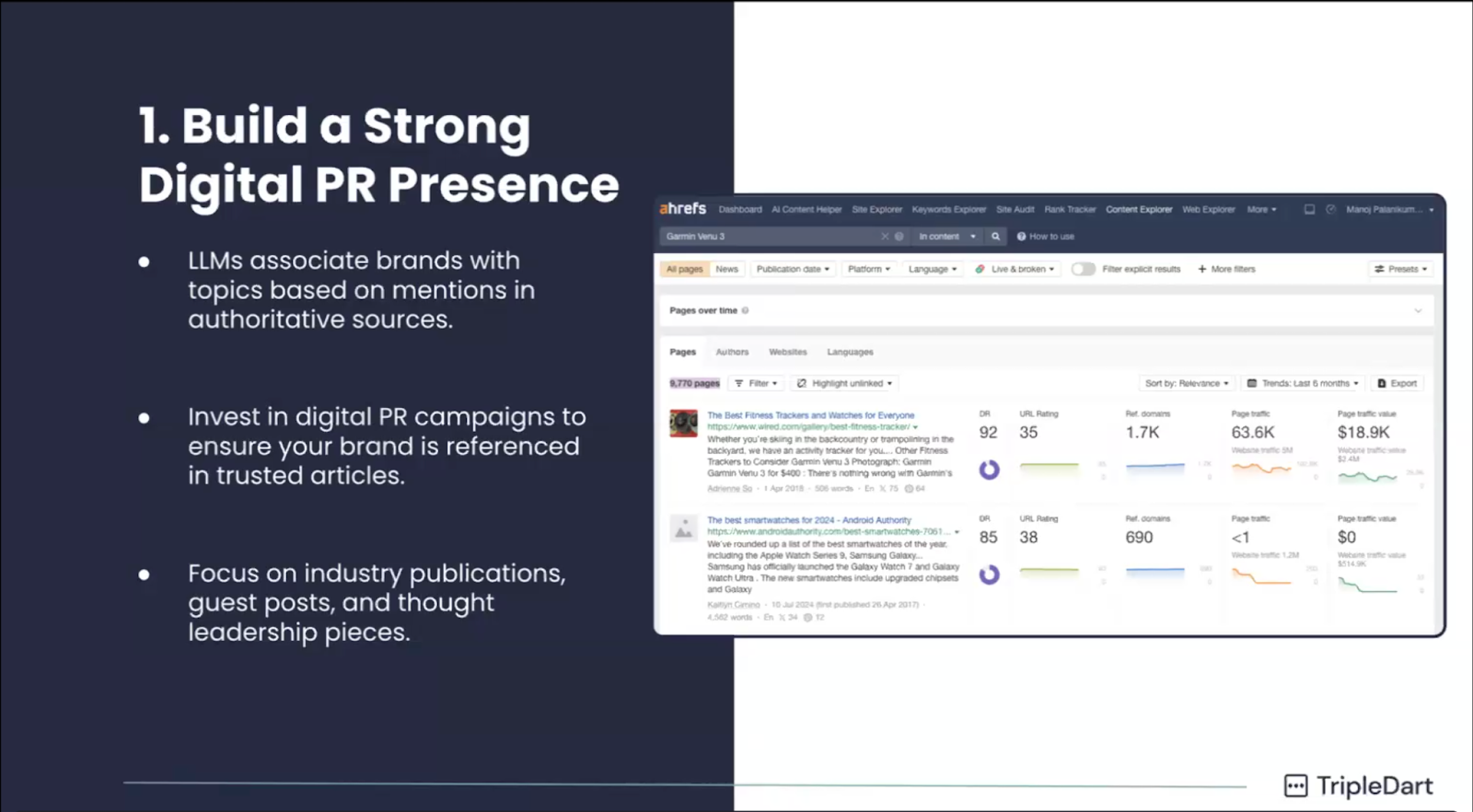
- Launch a targeted digital PR campaign to increase authoritative mentions across credible industry publications.
- Implement a systematic review acquisition process on platforms like G2, Capterra, Clutch, and TrustPilot.
- Set up a measurement system with weekly ChatGPT visibility testing to track progress.
- Begin contributing expert answers on Reddit and industry forums.
Days 61-90 and beyond: continuous improvement
- Establish a regular testing cycle for different content formats and Q&A structures.
- Monitor competitors to analyze their successful AI visibility strategies.
- Stay adaptable as AI platforms evolve. Scale what works by doubling down on your highest-performing content types.
- Track meta descriptions and schema markup performance for AI search specifically.
One thing to keep in mind: ChatGPT optimization is newer than SEO, with real opportunity for early adopters. Start small, measure carefully, and view this as an ongoing process rather than a one-time project.
In r/DigitalMarketingHack, one marketer shared their approach: "I optimize for AI search by focusing on answer-first content. I give a clear, direct answer at the top, then support it with structured data." That mirrors exactly what the research supports.
How can TripleDart help you win visibility across AI and search engines?
The AI search era is here. Brands that adapt will capture pipeline while others become invisible.
Success with ChatGPT optimization combines technical foundations, strategic content creation, and authority building, all working together to position your brand as the go-to product in your niche. The core principles remain: provide value, establish expertise, and earn trust.
The good news? You don't have to figure this out alone.
At TripleDart, we implement a combined approach covering technical foundations, strategic content, and authority building for both channels. We don't believe in choosing between SEO and GEO. Our methodology ensures your brand appears both in search results and AI recommendations, because that's where pipeline comes from.
Book your free consultation with TripleDart to learn how we can help you build visibility across both traditional search and AI engines.
FAQs
How does ChatGPT select websites for recommendations?
ChatGPT prioritizes authoritative sources with clear structured data (schema markup), conversational keyword alignment, and content that addresses user queries directly. Brand mentions across high-authority publications, review platforms, and knowledge bases also play key roles. Content in Bing's top 20 results has an 87% higher chance of being cited.
Is ChatGPT optimization different from traditional SEO?
Yes. ChatGPT optimization focuses on natural language queries, Bing visibility (ChatGPT's search partner), and structured data over traditional backlinks alone. Both require quality content, but ChatGPT emphasizes conversational clarity, fact density, and third-party validation. The best approach combines both SEO and GEO strategies.
What content types perform best for ChatGPT visibility?
FAQs, how-to guides, comparison pages, and data-backed listicles perform best. Include semantically related keywords and direct answers to common industry questions. Structure content with clear headers, Q&A formatting, and supporting statistics.
Does Bing optimization affect ChatGPT visibility?
Yes. ChatGPT uses Bing's index for real-time information retrieval. Fix crawl errors in Bing Webmaster Tools, optimize for mobile, and use schema markup to improve cross-platform visibility. Pages ranking well on Bing have a higher chance of being cited in ChatGPT responses.
Can small brands compete in ChatGPT recommendations?
Yes. Focus on niche expertise via detailed FAQs, local schema markup, and earning mentions on industry forums and AI-training sources like Reddit. Small brands that build deep topical authority in specific areas can outperform larger competitors who spread their content too thin.
How does TripleDart help with ChatGPT optimization?
TripleDart builds both SEO and GEO strategies in parallel for B2B SaaS brands. We handle technical audits, schema implementation, content strategy, digital PR for authority signals, and ongoing AI visibility tracking. Our approach ensures your brand appears in both traditional search results and AI-generated recommendations, driving pipeline from every channel where your buyers are looking. Book a call to see how we can help.



.webp)
.webp)
.png)


.png)




.webp)



.webp)

.webp)





%20(1).png)


.webp)
.webp)
.webp)



%20Ads%20for%20SaaS%202026_%20Types%2C%20Strategies%20%26%20Best%20Practices%20(1).webp)







.png)


.png)





.webp)


![Creating an Enterprise SaaS Marketing Strategy [Based on Industry Insights and Trends in 2026]](https://cdn.prod.website-files.com/632b673b055f4310bdb8637d/6965f37b67d3956f981e65fe_66a22273de11b68303bdd3c7_Creating%2520an%2520Enterprise%2520SaaS%2520Marketing%2520Strategy%2520%255BBased%2520on%2520Industry%2520Insights%2520and%2520Trends%2520in%25202023%255D.png)




.png)














.webp)


%20Agencies%20for%20B2B%20SaaS%20Compared%20(2026).webp)

.webp)
%20with%20Hubspot.webp)







.png)


.png)

.png)
.png)
.png)
.png)
















.webp)

.webp)
.png)
.png)



.webp)


.png)


















.webp)

![How to Measure AEO Success: 12 Metrics Beyond Clicks [2026 Framework]](https://cdn.prod.website-files.com/632b673b055f4310bdb8637d/6a0d664b326187e99b3d5960_6%20-%20The%20Ultimate%20Guide%20to%20Measuring%20AEO%20Success%20in%202026.png)
![7-Step Workflow for AEO-Ready Content [2026 Framework]](https://cdn.prod.website-files.com/632b673b055f4310bdb8637d/6a0d55ea88913ede1d3a7123_5%20-%20Workflows%20for%20Optimized%20AEO-Ready%20Content%20Creation.png)
.png)
![How to Structure Content for AEO and GEO [With Templates]](https://cdn.prod.website-files.com/632b673b055f4310bdb8637d/6a0c6a56eb700472e635ff33_1%20-%20How%20to%20Structure%20%20Content%20for%20AEO%20and%20GEO%20%20Summaries%20(2026).png)


.png)
.png)








.png)






%2520Agencies%2520(2025).png)

![Top 9 AI SEO Content Generators for 2026 [Ranked & Reviewed]](https://cdn.prod.website-files.com/632b673b055f4310bdb8637d/6858e2c2d1f91a0c0a48811a_ai%20seo%20content%20generator.webp)


.webp)
.webp)












.webp)