.png)


SaaS Pricing Methods & Strategies for 2026
You've spent months building your SaaS product. The features are sharp, the demo is polished, and paid ads are driving clicks. Prospects land on your site, nod along at the feature list, and then… freeze at the pricing page.
None of the plans make sense for them. They bounce. Your marketing spend evaporates.
This happens more often than most founders admit. A SaaS pricing strategy isn't some back-office decision you make once and forget about. It's a growth lever that directly shapes conversion rates, average revenue per account, and long-term retention. Get it wrong, and no amount of product polish or ad budget will compensate.
And here's what makes this harder in 2026: SaaS price inflation is running at 8.7% year-over-year, with businesses now spending an average of $7,900 per employee annually on software. Buyers are scrutinizing every line item. Your pricing page isn't just a conversion point; it's a trust signal.
This guide covers the pricing models, psychological tactics, segmentation approaches, and iterative testing frameworks that B2B SaaS companies need to get pricing right. We'll break down what's working for companies like Slack, Canva, and HubSpot, along with what we've seen across hundreds of SaaS accounts at TripleDart.
Let's get into it.
What Is SaaS Pricing and Why Does It Matter?
Your pricing model determines how much you charge, who you attract, and how predictably your revenue grows. Getting this right is the single most impactful decision for SaaS unit economics.
SaaS pricing is how a software company decides what to charge customers for ongoing access to its product. Unlike traditional software with a one-time perpetual license fee, SaaS pricing is subscription-based (monthly or annual).
Roughly 42% of SaaS companies offer both monthly and annual subscriptions. Another 26% offer only monthly plans, and 18% stick to yearly pricing.
This recurring model creates predictable revenue streams that fund product development, support, and infrastructure. But it also means your pricing page is a living asset. Every prospect evaluates it against their budget, their perceived ROI, and your competitors' alternatives.
Subscriptions change the relationship dynamic, too. Both provider and customer commit to an ongoing partnership. The provider must continuously deliver value to justify renewal. The customer expects the product to improve over time.
This creates a feedback loop worth paying attention to: retained customers fund further development, which makes the product more competitive, which drives more retention.
Yet here's the uncomfortable truth: more than 40% of SaaS companies never test their pricing strategy. Roughly 55% never conduct pricing research at all. That's a massive missed opportunity sitting right on the table.
Your pricing isn't just about the numbers on a page. It signals your product's value, your understanding of your market, and your commitment to a fair exchange. For more on building a complete SaaS marketing strategy, pricing is the foundation everything else rests on.
How Does Customer Segmentation Impact SaaS Pricing?
A one-size-fits-all price leaves money on the table with high-value accounts and prices out budget-conscious buyers. Segmentation lets you match price to perceived value for each group.
Segmenting your customers by usage patterns, company size, feature needs, industry, or job role is the foundation for pricing that converts, retains, and grows revenue.
Here's what segmentation enables:
- Targeted messaging: You can tailor pitches to the specific pain points of each customer group rather than writing generic copy that resonates with no one.
- Smarter resource allocation: Focus engineering and support resources on the features that matter most to each segment, driving higher ROI.
- Stronger retention: When customers feel a plan was designed for their specific situation, satisfaction and adoption increase.
- Competitive differentiation: A sharp view of varied needs makes your product highly relevant versus generic competitors.
Segmentation also enables tiered pricing, which helps SaaS companies increase accessibility across varied budgets, encourage upgrades as needs grow, and capture a wider customer range.
To build effective segments, collect and analyze user behavior and preference data. Categorize customers into groups with shared characteristics. Build detailed profiles exploring each group's priorities. And keep refining; gather customer feedback regularly to stay aligned as needs evolve.
This is closely tied to building a strong ideal customer profile. The more precisely you define who you're selling to, the more precisely you can price for them.
Agency Insight
When clients move from pure per-seat pricing to a hybrid metric (seat + a usage or feature threshold that maps to value), we see discounting pressure in sales cycles fall by 20–25% and average realized price land 12–16% closer to list. Buyers perceive the model as more "fair" to different team sizes.
Why Is Value-Based Pricing the Key to SaaS Success?
Customers don't pay based on your costs. They pay based on what your product is worth to them. Value-based pricing closes the gap between what you charge and what buyers would willingly spend.
Here's a story from Khadim Batti, co-founder and CEO of Whatfix, shared on the 100x Entrepreneur podcast:
Before Dreamforce, our annual sales were $2,000-$3,000. We decided to offer a higher-priced product at Dreamforce, settling on $8,000-$10,000. A potential customer visited our booth, expressed interest, and asked about pricing. We quoted $8,000 annually. The customer assumed it was monthly and approved what amounted to $96,000 annually. This startled us, as we expected to sell at $8,000 maximum yearly. Yet to the customer, $96,000 was negligible compared to the $20 million they were investing in Salesforce, so they wanted our product to boost their ROI.
The prospect perceived the value of the product differently from the seller. This difference highlights perceived value - how much a customer believes a product is worth based on its expected benefits and importance to them.
Value-based pricing means setting prices based on this perceived value rather than just costs or competitor benchmarks. When customers see their money's worth, they're happier, more likely to stick with the product, and become repeat buyers.
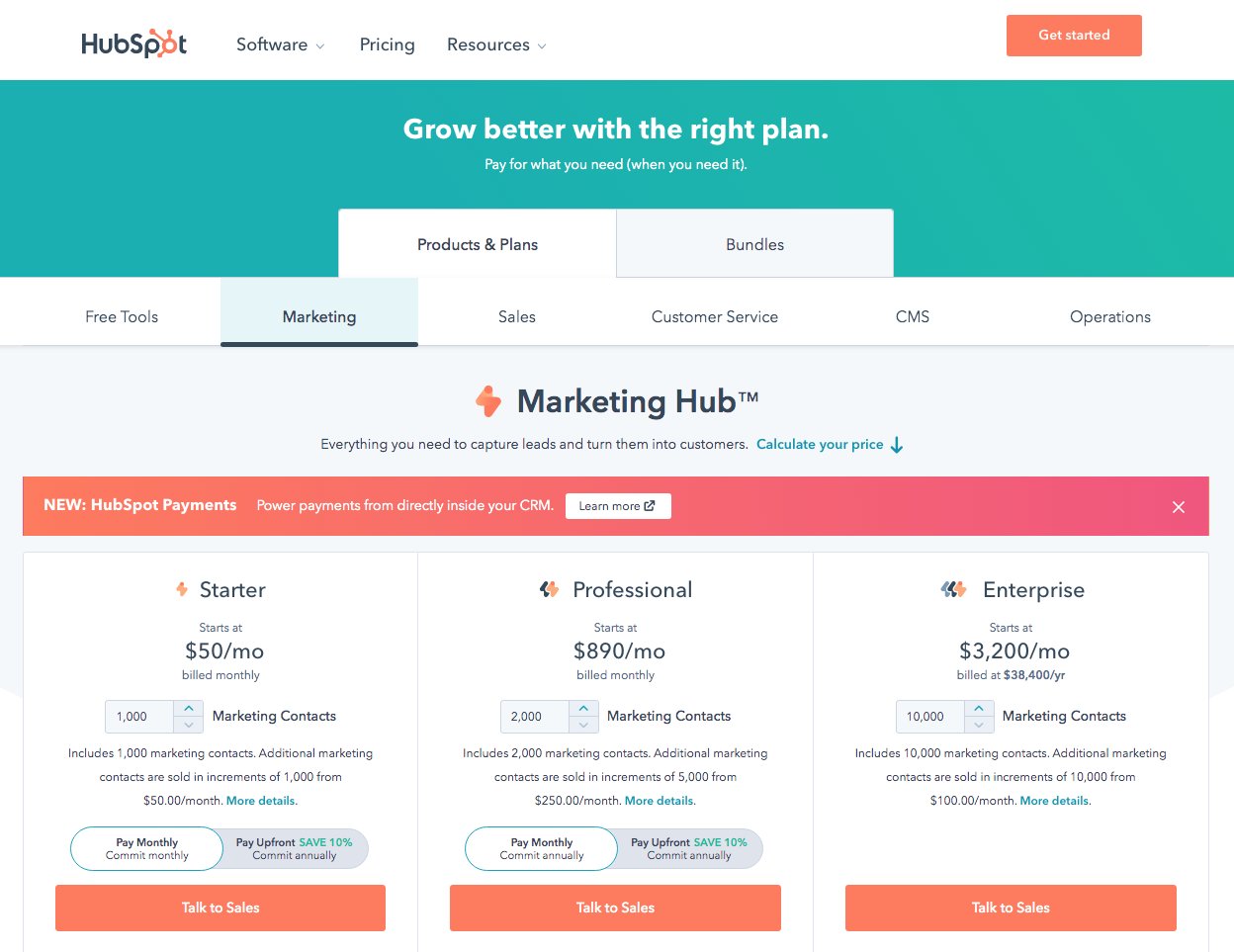
HubSpot uses value-based tiered pricing catering to diverse businesses. Their prices reflect the platform's ROI in enhancing marketing, sales, and service, justifying costs through the value provided.
The essential component that enables value-based pricing is an effective value proposition - a statement clearly conveying the unique benefits your product offers over competitors.
Some tips for communicating your value proposition:
- Storytelling: Share stories illustrating how your product solves problems for customers in relatable ways. Stories make the value tangible and memorable.
- Social proof: Include testimonials, case studies, and reviews showing real examples of the value delivered.
- Clear, concise messaging: Simplify the core benefits into straightforward language highlighted consistently across marketing materials.
For SaaS companies pursuing product-led growth marketing, value-based pricing is especially important because the product itself must demonstrate worth before a user ever talks to sales.
Case Study - Fyle
"Adopting a flexible pricing model allowed us to capture a broader market segment and increase our revenue by 25%."
Read the full Fyle case study →
What Are the Core SaaS Pricing Models?
There's no single "correct" model. The right choice depends on your product, your market, and how your customers derive value. Here are the four foundational models every SaaS team should understand.
Flat-Rate Pricing
Flat-rate pricing charges a single fixed recurring fee for unlimited access to the SaaS product.
This model helps customers budget with predictable, consistent costs. For SaaS companies, it provides reliable revenue streams. Eliminating usage-based fees reduces operational complexity for both parties.
The trade-off? This one-size-fits-all approach lacks flexibility to cater to varying customer needs and sizes. It also limits upsell opportunities as customer needs evolve.
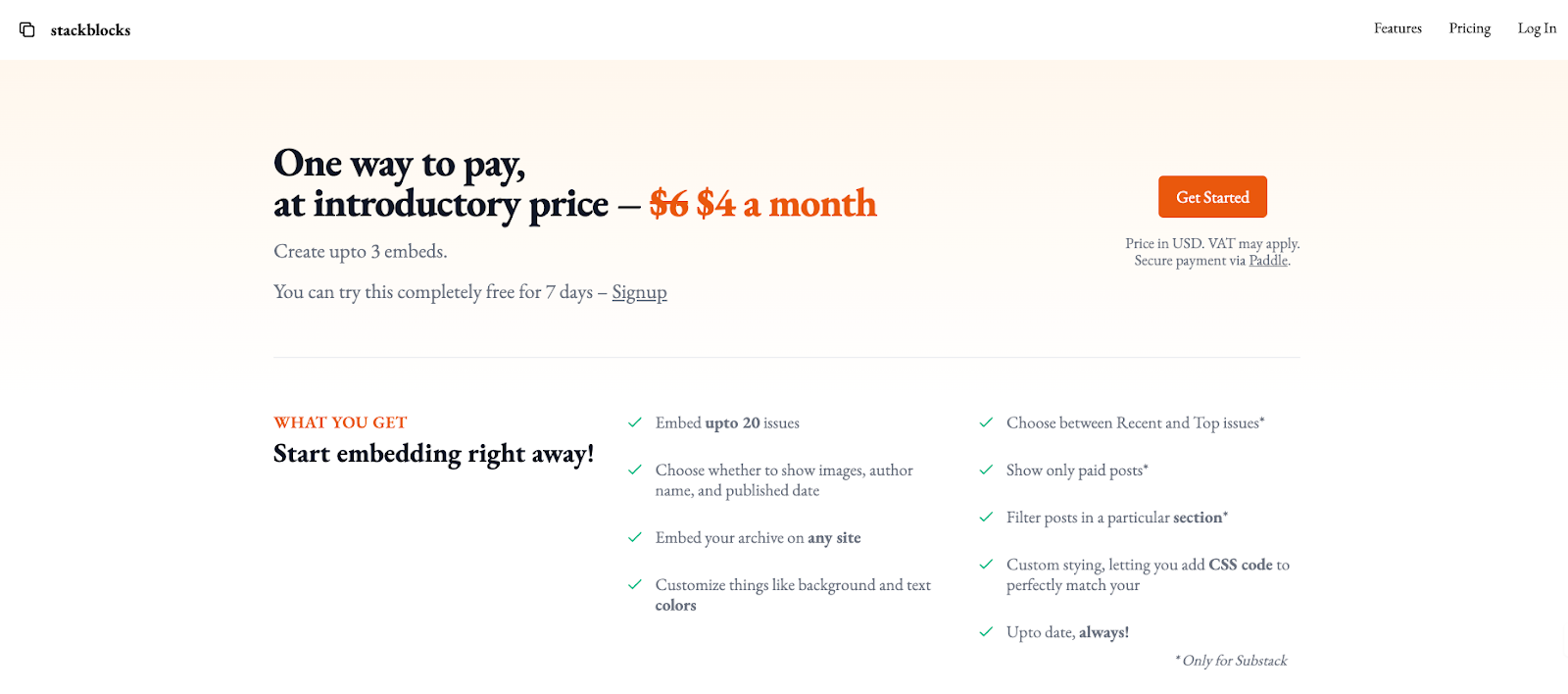
Example: Stackblocks offers its service at a flat rate of $4 per month.
Best for: Early-stage startups with a simple product and a narrow ICP. If you're still figuring out your SaaS go-to-market strategy, flat-rate can be a good starting point before you have enough data to segment.
Usage-Based Pricing
Usage-based pricing charges fees based on how much customers use the product. The more features or resources consumed, the more they pay.
38% of SaaS companies now bill based on actual usage, making this one of the fastest-growing models in the industry.
This model matches costs to value delivered. Customers only pay for what they use instead of overpaying for features they don't need. Providers earn higher revenue from power users.
The downside: unpredictably fluctuating costs make budgeting difficult for customers. Tracking detailed usage metrics and adapting billing systems also requires considerable operational investment.
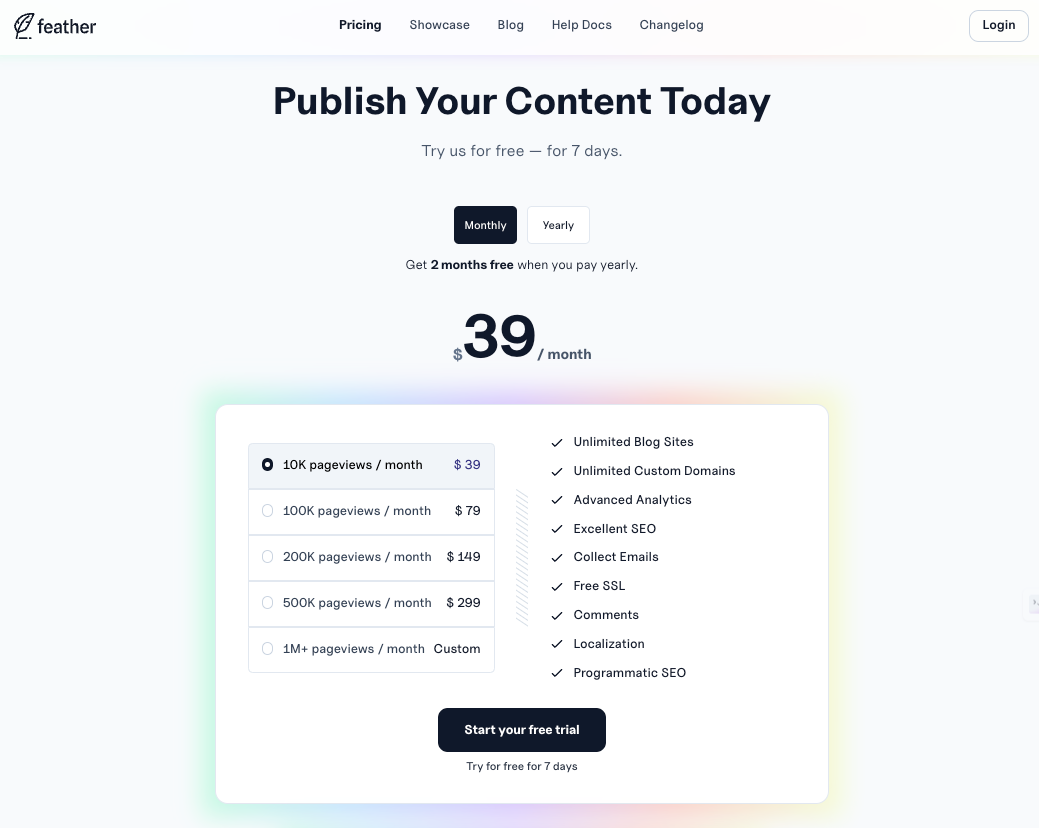
Example: Feather offers different pricing tiers based on the number of page views.
Best for: API-driven products, infrastructure tools, and any SaaS where customer value scales directly with consumption. Usage-based pricing best practices include setting clear usage thresholds and providing real-time dashboards so customers can predict their bills.
Tiered Pricing
Tiered pricing offers multiple pricing levels with varying features and services. Customers select the tier that aligns with their needs and budget.
This model caters to a diverse customer base. Premium tiers with more features target power users with a higher willingness to pay, while entry-level tiers attract price-sensitive customers. As needs evolve, tiered pricing incentivizes users to upgrade.
The challenge is in the design. Choosing which features to allocate at what price points requires careful consideration. Too many complex tiers may overwhelm customers and increase choice paralysis.
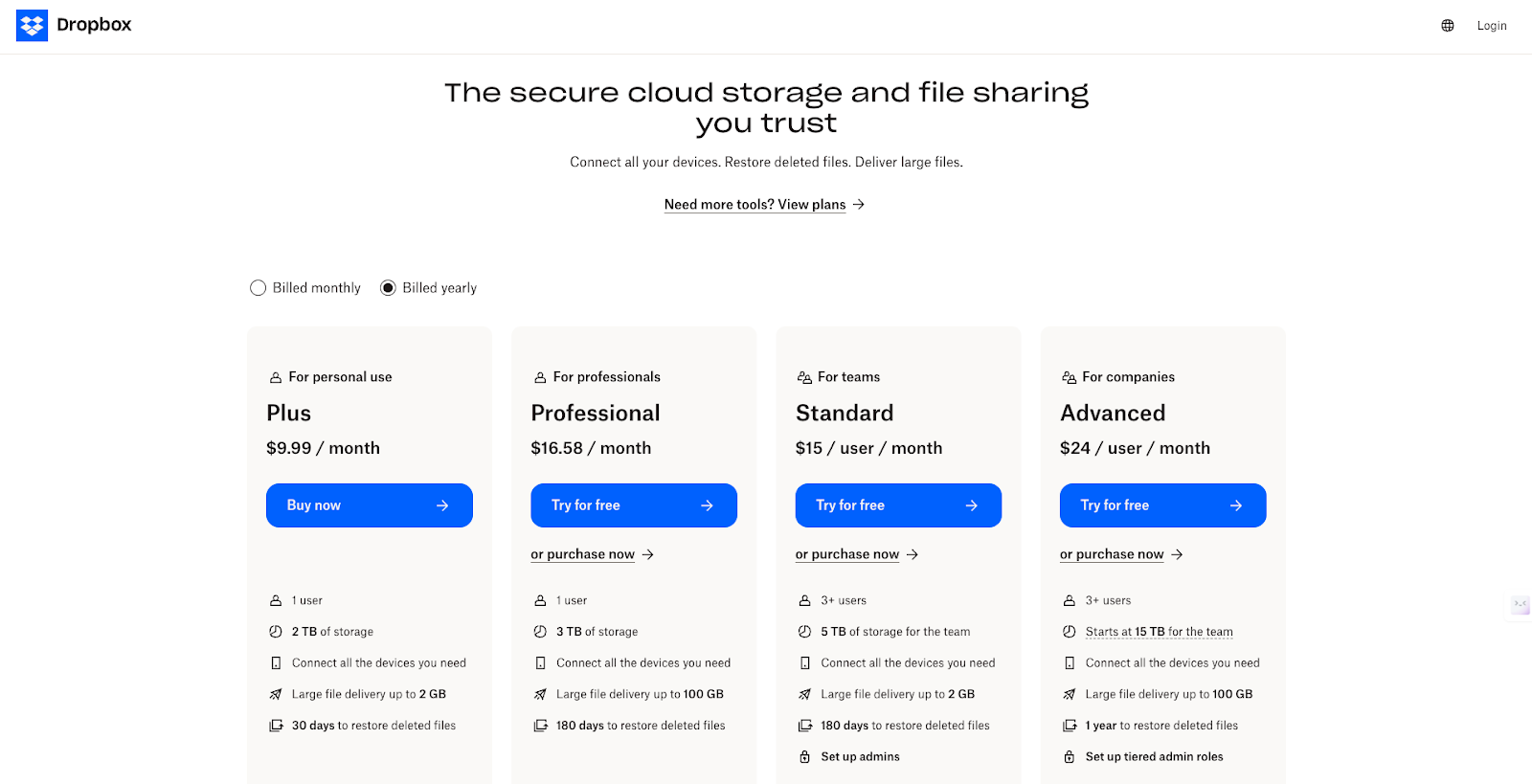
Example: Dropbox uses tiered pricing with storage capacity as the differentiator.
Freemium
Freemium pricing offers a free basic version of the product while charging for premium features and extra usage beyond predefined limits.
This model attracts users quickly by eliminating barriers to entry. The large user base acts as a pipeline for converting a percentage into paying subscribers. Typically 1-10% convert, but applied to a vast free user pool, this still generates sizable revenue.
The catch: supporting a massive cohort of free users strains infrastructure and resources. And the small conversion rate means you're missing monetization opportunities from the remaining 90%+ of users.
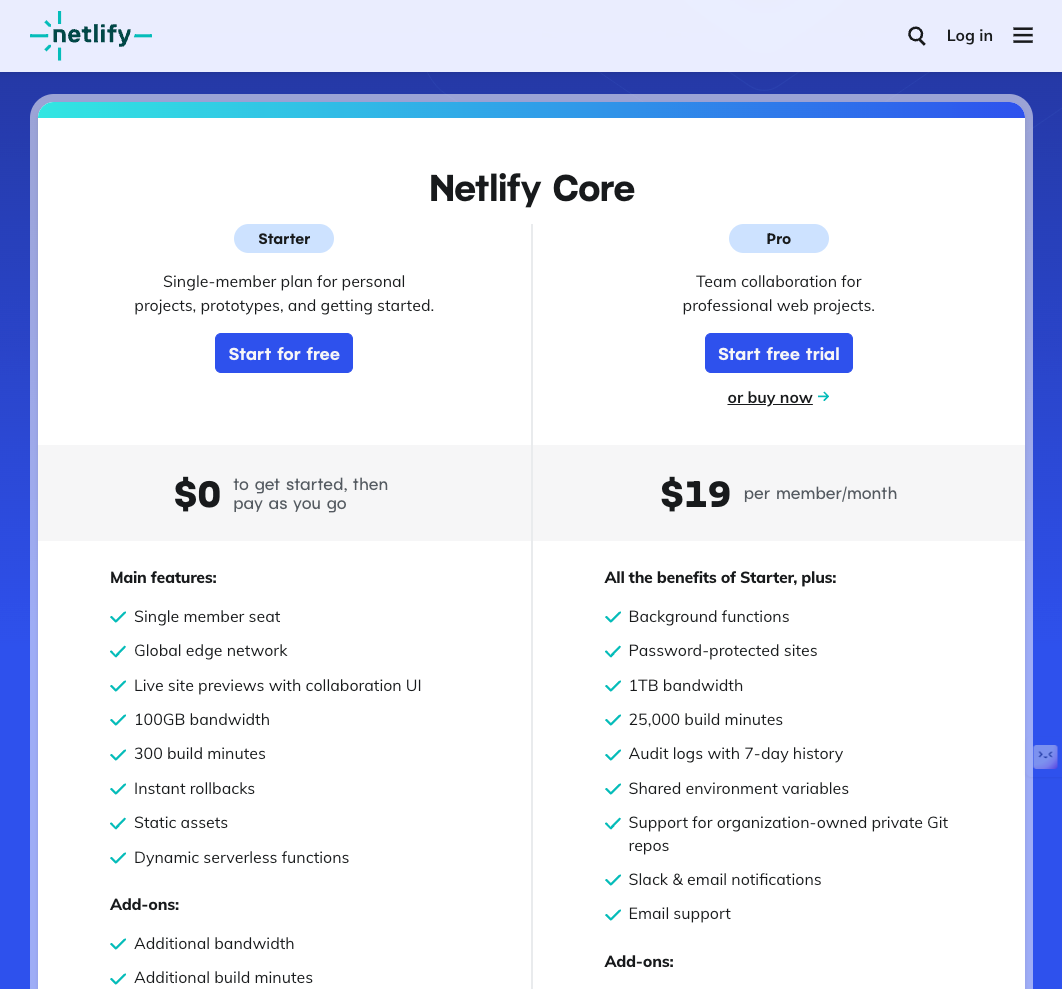
Example: Netlify employs the freemium model with a free tier for basic usage while paid plans enable additional member seats, more bandwidth, and extra build minutes.
Best for: Products with strong viral loops or network effects. If you're optimizing your freemium to paid conversion, the key is ensuring the free tier delivers enough value to hook users while clearly demonstrating what they're missing.
Per-Seat Pricing (Still Dominant, But Under Pressure)
Roughly 40% of software companies still use per-seat pricing, making it the most common model. But it's increasingly being challenged by hybrid approaches.
Per-seat works well when each additional user represents clear incremental value. But it creates friction for enterprise customers who want broad adoption without linear cost scaling. Many SaaS companies are now moving toward value-based seat pricing vs. pure headcount models, combining seats with usage thresholds or feature gates.
This is a common discussion in SaaS communities. Here's how founders on Reddit are thinking about it:
How Do You Approach Pricing Strategy for Your SaaS Product?
byu/Electrical_Rip_3 inSaaS
How Can Pricing Psychology Increase Conversions?
Pricing isn't purely rational. Buyers use mental shortcuts to evaluate plans. Understanding these shortcuts lets you present pricing in ways that guide decisions without misleading anyone.
The Anchoring Technique
Anchoring uses cognitive biases to present a mid-priced tier as the optimal choice between basic and premium plans.
This involves three elements:
- Anchor: The most premium, expensive option showcasing maximum features. This sets a high reference point.
- Hero: A mid-priced, moderately featured plan that appeals to most customers as a balanced option.
- Decoy: A basic, minimally featured plan designed to make the hero look like a strong deal.
By displaying the anchor first, you shape customer perceptions. The high-priced option contrasts against subsequent lower prices, and the hero appears like strong value for money.
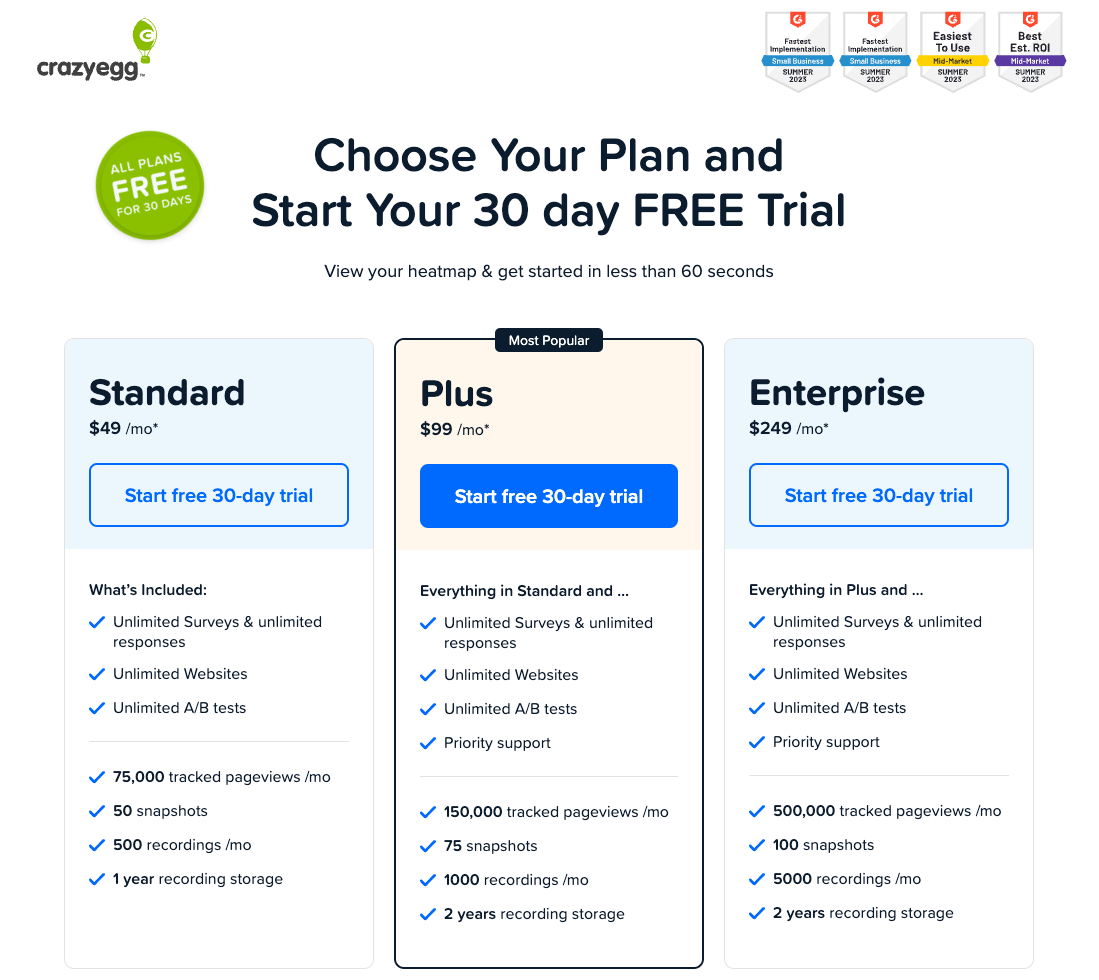
Crazy Egg employs this model well. The "Enterprise" plan serves as the anchor, while the "Plus" plan is positioned as the optimal value sweet spot. The "Standard" acts as an entry-level springboard.
Agency Insight
Across ~250 active B2B SaaS accounts, plans anchored around a clear "middle tier" (visibly highlighted and priced 1.7–2.3x above entry) convert 24–31% better on-plan than flat, non-anchored lineups, and drive ~18% higher ARPA without materially increasing trial-to-paid drop-off.
Transparent Pricing
Hiding or obscuring prices damages trust. According to a survey of 350 SMB IT companies, 54% of SMBs prefer simple pricing with transparent and all-inclusive details.
Transparent pricing means clearly showcasing all costs and fees upfront. This sets accurate expectations, demonstrates honesty, and enables customers to make fully informed purchase decisions.
It also helps in:
- Removing pricing surprises and confusion
- Supporting straightforward decision-making
- Attracting customers who value openness
- Offering competitive advantage against vendors who hide costs behind "Contact Sales" walls
Don't hide pricing details; showcase them. Treat it as an opportunity to demonstrate integrity. This is especially important for enterprise SaaS marketing, where procurement teams will scrutinize every line item regardless.
Strategic Pricing Adjustments
Strategic pricing adjustments involve deliberate changes to achieve specific business goals like boosting sales, entering new markets, or improving loyalty.
Some examples:
- Limited-time discounts: Offering reduced pricing for a short period creates urgency, prompting quick purchase decisions.
- Bundled offerings: Packaging products or services together at a lower price than individually. Bundles perceived as higher value make the purchase more enticing.
- Volume discounts: Reducing per-unit price for larger quantities encourages bulk purchases and longer commitments.
- Seasonal pricing: Adjusting pricing based on demand cycles, such as end-of-quarter enterprise deals.
These adjustments should be based on market research, customer behavior analysis, and competitive dynamics. Not gut feel.
How Should You Run Pricing Experiments?
More than 40% of SaaS companies never test their pricing. That's leaving revenue on the table. Pricing is not a set-it-and-forget-it decision; it's an ongoing process of experimentation and refinement.
Here's how to approach it:
1. Listen to customers continuously. Survey users, analyze behavior, and have direct conversations. This real-time feedback is invaluable for understanding willingness to pay and perceived value gaps. Tools like Wynter, UserTesting, and even simple in-app surveys can surface pricing friction points.
2. Test one variable at a time. Run structured pricing experiments frequently. Change the price point, the feature allocation, or the tier structure, but not all at once. Examine the data to uncover what resonates.
3. Stay agile with market conditions. Be ready to adapt pricing to competitive changes, new market entrants, or buyer behavior trends. The SaaS landscape moves fast, and your pricing should move with it.
4. Use competitive analysis as input, not gospel. Understanding how competitors price gives you context, but copying their model rarely works. Your value proposition is different; your pricing should reflect that.
This is a topic that generates real debate among SaaS founders:
How do you figure out pricing strategy for your SaaS product?
byu/Appropriate_Arm_9889 inEntrepreneurRideAlong
Agency Insight
In pricing experiments across our client base, full "big bang" price overhauls (new tiers + new metrics + higher price points at once) generate more short-term revenue lift, but they are 2.5x more likely to spike churn. Incremental changes - one variable at a time, every 3–6 months - produce smaller single-move gains but compound into 20–28% higher net revenue over 18 months with significantly lower churn volatility.
What Common Pricing Mistakes Should You Avoid?
Most SaaS pricing failures aren't about choosing the wrong number. They're about choosing the wrong framework or failing to iterate. Here are the mistakes we see most often.
1. Pricing based on cost, not value. Your infrastructure costs have nothing to do with what a customer will pay. A tool that saves an enterprise $500K annually is worth far more than your AWS bill.
2. Too many tiers. Choice paralysis is real. Three to four tiers is the sweet spot for most B2B SaaS products. More than that, and you're making the buyer's job harder.
3. Ignoring the pricing page as a conversion asset. Your pricing page is one of the highest-intent pages on your site. Treat it with the same rigor you'd apply to a landing page for conversions.
4. Never raising prices. SaaS price inflation is running at 8.7% year-over-year. If you haven't raised prices in two years, you're effectively giving yourself a pay cut.
5. Copying competitor pricing without understanding your own value metric. Your value metric - the unit of measurement that grows as customers succeed (users, API calls, revenue managed) - should drive your pricing structure. Competitors may have a completely different value metric.
This connects directly to understanding your SaaS growth metrics. If you're not tracking ARPA, expansion revenue, and net revenue retention alongside pricing changes, you're flying blind.
What Can We Learn From SaaS Pricing Success Stories?
Real-world examples show how pricing strategy directly drives growth. These are documented outcomes from companies that got pricing right.
Slack: Positioning for Indispensable Value

Slack introduced a freemium model that gave users a taste of team messaging. To access premium features like unlimited search and cross-platform integrations, Slack clearly communicated the productivity gains.
This positioning made Slack indispensable for efficiency-focused teams. Its pricing aligned with its role as a collaboration hub.
The result? Over 200,000 paid teams and 32.3 million daily active users as of 2024.
Slack's approach is a textbook example of SaaS pricing strategy for product-led growth: let the free tier prove value, then make the upgrade path obvious and compelling.
Canva: Eliminating Pain Points With Simplicity

Canva recognized users were intimidated by complex, costly design software. It eliminated these pain points with a simple pricing strategy.
Offering core features free, Canva enabled anyone to design with ease. For advanced functionality, paid tiers scaled to users' evolving needs. By tackling the barriers of high cost and steep learning curves, Canva made itself indispensable.
Today, Canva empowers over 130 million monthly active users, including 16 million paying subscribers.
Case Study - Helpshift
"Helpshift saw a 30% increase in customer retention after implementing a tiered pricing strategy."
Read the full Helpshift case study →
How Do You Build a Pricing Strategy That Scales?
The best SaaS pricing strategies aren't static. They evolve with your product, your market, and your customers. Here's a framework for building pricing that compounds over time.
Step 1: Define your value metric. Identify the unit of measurement that grows as customers succeed. For a CRM, it might be contacts managed. For an analytics tool, it might be events tracked. Your pricing should scale with this metric.
Step 2: Map your customer segments. Use the segmentation framework above to identify two to four distinct buyer groups. Understand their willingness to pay, their primary use cases, and their budget constraints.
Step 3: Design three to four tiers. Each tier should serve a specific segment. Use the anchoring technique to guide buyers toward your hero plan. Make the feature differentiation between tiers clear and logical.
Step 4: Test before you launch. Run pricing experiments with a subset of new signups. Measure conversion rate, ARPA, and churn for each variant. Don't roll out changes to your entire base until you have statistically significant data.
Step 5: Review quarterly. Set a calendar reminder to review pricing performance every quarter. Look at competitive moves, customer feedback, and your own unit economics. Adjust incrementally.
For SaaS companies building their go-to-market strategy, pricing should be a core pillar, not an afterthought.
B2B SaaS pricing discussions on Reddit consistently reinforce this iterative approach:
B2B Pricing strategy guidance
byu/Puzzleheaded_Rub_754 inSaaS
Key Takeaways
- Start with your value metric, not your costs. The unit of measurement that grows as customers succeed should drive your entire pricing structure.
- Segment before you price. Different customer groups have different willingness to pay. One-size-fits-all pricing always leaves money on the table.
- Use psychology ethically. Anchoring, transparency, and strategic adjustments guide buyer decisions without manipulation.
- Test incrementally, not all at once. Change one variable at a time every three to six months. Big-bang overhauls spike churn.
- Review pricing quarterly. Markets evolve, competitors move, and your product changes. Your pricing should keep pace.
- Your pricing page is a conversion asset. Treat it with the same optimization rigor as your highest-performing landing pages.
- If pricing strategy feels overwhelming, get expert help. TripleDart is an AI-native SaaS marketing agency that builds and runs full-funnel inbound GTM engines for B2B Tech and SaaS companies. We act as your extended GTM team, combining senior marketing expertise with AI-powered workflows to turn unpredictable marketing spend into predictable pipeline and revenue. We've helped 250+ SaaS companies align pricing, positioning, and marketing for measurable revenue growth. Book a call to discuss your pricing strategy.
Frequently Asked Questions
What's the most common SaaS pricing model in 2026?Per-seat pricing is still used by approximately 40% of software companies, but hybrid models combining seats with usage thresholds are growing fast. Usage-based pricing is now used by 38% of SaaS companies.
How often should I change my SaaS pricing?Review pricing quarterly, but only make changes when you have data to support them. Incremental adjustments every three to six months compound into significant revenue gains over 18 months.
Should I show pricing on my website or hide it behind "Contact Sales"?For SMB and mid-market products, show pricing. 54% of SMBs prefer transparent, all-inclusive pricing details. For enterprise products with complex configurations, a "Contact Sales" approach can work, but always provide a starting price range.
What's the biggest mistake in SaaS pricing?Never testing it. More than 40% of SaaS companies never run pricing experiments, and 55% never conduct pricing research. Even small tests can reveal significant revenue opportunities.
How does TripleDart help with SaaS pricing strategy?TripleDart is an AI-native SaaS marketing agency that builds and runs inbound GTM engines for B2B Tech and SaaS companies. We act as an extended GTM team, executing integrated programs across SEO, content, paid media, and RevOps, with full accountability for pipeline and revenue results. Our senior experts, combined with AI-powered workflows that enhance speed, quality, and performance, help SaaS companies align their pricing, positioning, and marketing strategy to drive conversions and predictable revenue growth. We bring data from 250+ SaaS accounts to inform pricing page optimization, tier structure, and go-to-market alignment. Reach out to our team to start the conversation.
Build a SaaS Pricing Strategy That Drives Revenue With TripleDart
Your pricing page is one of the highest-leverage assets in your entire marketing stack. It's where positioning, product value, and buyer psychology converge into a single decision point.
The companies that treat pricing as a living, testable, data-informed process consistently outperform those that set it once and move on. Whether you're an early-stage startup figuring out your first tier structure or a scaling SaaS company optimizing for enterprise customers, the principles are the same: know your value metric, segment your buyers, test incrementally, and never stop iterating.
If you need a partner to connect pricing strategy to marketing execution, TripleDart is an AI-native SaaS marketing agency that builds and runs full-funnel inbound GTM engines for B2B Tech and SaaS companies. Led by senior experts and enhanced by AI-powered workflows, we help you turn unpredictable marketing spend into predictable pipeline and revenue. Book a meeting and let's talk about what's working - and what's not - on your pricing page.



.webp)
.webp)
.png)


.png)


.webp)



.webp)

.webp)





%20(1).png)


.webp)
.webp)
.webp)



%20Ads%20for%20SaaS%202026_%20Types%2C%20Strategies%20%26%20Best%20Practices%20(1).webp)





.png)


.png)



.webp)


![Creating an Enterprise SaaS Marketing Strategy [Based on Industry Insights and Trends in 2026]](https://cdn.prod.website-files.com/632b673b055f4310bdb8637d/6965f37b67d3956f981e65fe_66a22273de11b68303bdd3c7_Creating%2520an%2520Enterprise%2520SaaS%2520Marketing%2520Strategy%2520%255BBased%2520on%2520Industry%2520Insights%2520and%2520Trends%2520in%25202023%255D.png)



.png)












.webp)



%20Agencies%20for%20B2B%20SaaS%20Compared%20(2026).webp)

.webp)
%20with%20Hubspot.webp)




.png)


.png)

.png)
.png)
.png)
.png)













.webp)

.webp)
.png)
.png)



.webp)


.png)















.webp)

![How to Measure AEO Success: 12 Metrics Beyond Clicks [2026 Framework]](https://cdn.prod.website-files.com/632b673b055f4310bdb8637d/6a0d664b326187e99b3d5960_6%20-%20The%20Ultimate%20Guide%20to%20Measuring%20AEO%20Success%20in%202026.png)
![7-Step Workflow for AEO-Ready Content [2026 Framework]](https://cdn.prod.website-files.com/632b673b055f4310bdb8637d/6a0d55ea88913ede1d3a7123_5%20-%20Workflows%20for%20Optimized%20AEO-Ready%20Content%20Creation.png)
.png)

![How to Structure Content for AEO and GEO [With Templates]](https://cdn.prod.website-files.com/632b673b055f4310bdb8637d/6a0c6a56eb700472e635ff33_1%20-%20How%20to%20Structure%20%20Content%20for%20AEO%20and%20GEO%20%20Summaries%20(2026).png)


.png)
.png)







.png)

.png)



%2520Agencies%2520(2025).png)

![Top 9 AI SEO Content Generators for 2026 [Ranked & Reviewed]](https://cdn.prod.website-files.com/632b673b055f4310bdb8637d/6858e2c2d1f91a0c0a48811a_ai%20seo%20content%20generator.webp)
.webp)
.webp)






.webp)