

.png)

.webp)
Key Takeaways
- Why it matters: 53.3% of website traffic comes from organic search; SEO ROI for B2B SaaS averages 702% when executed consistently.
- Strategy focus: Target high-intent keywords (competitor alternatives, best-of lists, use-case pages) that capture buy-ready traffic.
- Content approach: Map content to the buyer journey — BOFU (comparisons, alternatives), MOFU (how-tos, templates), TOFU (educational guides).
- Technical foundation: Site speed (LCP \< 2.5s), mobile optimization, schema markup, and proper indexing of product/solution pages.
- Authority building: Earn backlinks from SaaS blogs, directories, and review sites (G2, Capterra, TrustRadius).
- AI search readiness: Optimize for AI Overviews and LLM citations — 94% of B2B buying groups now use large language models during their purchase journey.
- Agency advantage: If you need a team that has done this across 50+ B2B brands, TripleDart — an AI-native SaaS marketing agency — can build and execute the full strategy.
You're not going to build a pipeline-generating SEO engine overnight. That's the honest starting point. But when you build it correctly, organic search becomes the kind of compounding growth machine that pays dividends for years. With organic search driving 44.6% of B2B revenue and AI Overviews rewriting how buyers discover software, the old playbook won't cut it anymore.
This guide walks through every step of building a SaaS SEO strategy that captures demand across Google, ChatGPT, and Perplexity in 2026. Let's get into it.
What Is SaaS SEO and Why Does It Matter in 2026?
SaaS SEO is a long-term organic growth strategy designed to increase a software company's visibility in search results for relevant, high-intent keywords. Unlike traditional SEO, it's product-led. Every piece of content connects back to how the software solves a specific problem.
The stakes in 2026 are different from what they were even a year ago. AI Overviews reduce organic CTR by 61% on affected queries. Ranking on page one isn't enough anymore. Your content needs to be structured so that Google's AI, ChatGPT, and Claude cite it directly.
Here's the upside, though. SEO leads hold a 14.6% close rate, making them 8x more likely to convert than outbound leads. For SaaS companies with long sales cycles and complex buyer journeys, that compounding organic traffic is the difference between predictable pipeline and constant ad spend anxiety.
What Makes a SaaS SEO Strategy Different From Regular SEO?
A SaaS SEO strategy is a tailored approach to search optimization built for software companies. The goal: drive qualified organic traffic, generate product interest, and convert visitors into demo signups, trials, or customers.
Three things set it apart:
- It's product-led. Content shows how the software solves problems, not just informs.
- It targets commercial-intent keywords. "{Competitor} alternatives," "best {software type} for {use case}," and integration-specific queries drive pipeline, not just pageviews.
- Conversion is baked into the strategy. Traffic alone isn't the goal — pipeline generation is.
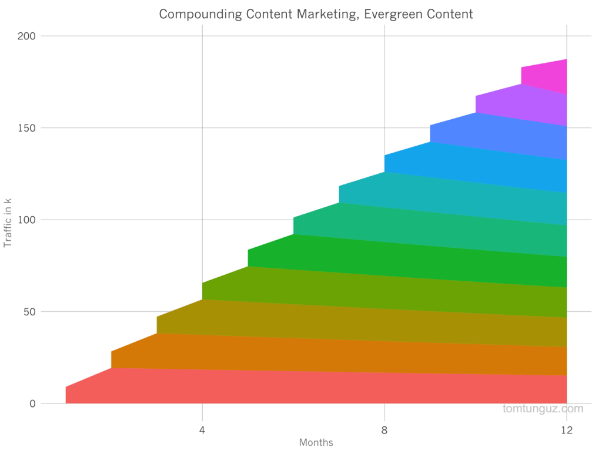
92% of marketers say their SaaS organizations treat content as a core business asset. That tracks. Content-led SEO compounds over time: a well-written evergreen post published today can still generate 18 views per day a full year later, based on Tomasz Tunguz's post-view decay model.
What Are the Key Elements of a Strong SaaS SEO Strategy?
Every effective SaaS SEO strategy rests on seven pillars. Miss one, and the whole structure underperforms.
1. ICP-Based Keyword Research
Don't chase high-volume keywords blindly. Focus on what your Ideal Customer Profile searches for — pain points, use cases, product categories, and integrations. This is the foundation of any B2B SaaS SEO strategy.
2. Bottom-of-Funnel (BOFU) Content
Pages like "{Competitor} Alternatives," "Best {Software Type} for {Use Case}," and "{Product} vs {Product}" capture buy-ready traffic and shorten the sales cycle. These are your highest-converting assets.
3. Programmatic SEO (pSEO)
Create scalable, templatized pages targeting feature-based keywords, industry verticals, and integration-specific queries. This lets you rank for hundreds of long-tail terms efficiently. Learn more about programmatic SEO for SaaS.
4. Technical SEO for Performance
Ensure fast page speed (target LCP under 2.5 seconds), mobile-first indexing compliance, and proper schema markup for product pages, FAQs, and how-to content. Technical SEO delivers an average ROI of 117% when prioritized correctly.
5. Content That Converts
You don't just educate. You lead users to take action via well-placed CTAs, demo forms, product visuals, and proof points within content. Every page should have a clear next step.
6. Strategic Link Building
Backlinks from relevant SaaS blogs, industry directories, product review sites, and guest posts boost authority and rankings. Focus on relationship-driven outreach over volume-based tactics.
7. Review Site Optimization
Actively manage your profiles on G2, Capterra, and TrustRadius. These platforms rank highly for competitor searches and "best software" queries. Complete your profile, encourage customer reviews, and respond to feedback.
Why Should You Invest in SaaS SEO Over Paid Channels?
SEO compounds. Paid ads don't. That distinction matters more than most SaaS teams realize.
SEO Scales Your Growth Exponentially
Content-led SEO for SaaS companies creates a compounding asset. One evergreen blog post can generate 150 views on day one and still pull in consistent traffic a year later. Multiply that across 200+ posts, and you're looking at 250k+ monthly readers — all without increasing spend.
Here's the actionable loop for a SaaS content strategy:
- Create high-quality content targeting relevant keyword clusters
- Promote via social channels to earn backlinks
- Monitor ranking improvements and organic traffic
- Optimize based on data, then repeat
SEO Lowers Your Cost Per Acquisition
PPC costs for SaaS average $3.33 per click. And those costs climb over time as your "most-likely-to-convert" audiences get exhausted.
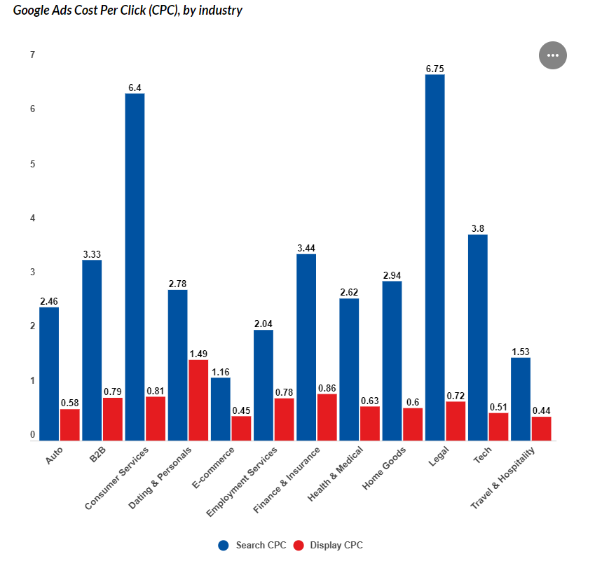
SEO works in the opposite direction. Even if cost per acquisition starts high, the compounding effects of organic growth bring it down over time. While paid CPA rises, SEO traffic balances it out — resulting in an overall lower blended CPA.
SEO Works Across Multiple Marketing Channels
SEO content doesn't live in a silo. The same blog post that ranks for a target keyword can be repurposed for email campaigns, social media, and paid amplification. Content promotion earns backlinks and drives referral traffic, creating a flywheel effect across your SaaS marketing channels.
SEO Creates Sustainable Long-Term Success
Unlike paid campaigns that stop delivering the moment you pause budget, SEO is an ongoing strategy. With the right approach and the right B2B SEO agency, you can see results from your SEO investment years after the initial work.
How Do You Build a Winning SaaS SEO Strategy Step by Step?
Here's the 11-step process we use across 50+ B2B SaaS accounts. Each step builds on the last.
Step 1: Set Specific, Measurable Goals
Vague goals like "increase traffic" won't get you anywhere. Set specific targets: "increase monthly conversions by 15" or "grow monthly recurring revenue by $50,000 in 6 months."
Alongside goals, define KPIs — organic traffic, search rankings, bounce rate, average session duration. These metrics give you a true picture of progress.
Step 2: Define Your Buyer Personas
A successful SEO strategy for SaaS requires knowing exactly who you're targeting. Two approaches work:
- Start from scratch: Define demographics, psychographics, professional status, pain points, buying behavior, and information sources.
- Analyze existing customers: Work with customer success, sales, and social teams to gather data about your most engaged users.
The better you understand your audience, the more relevant your content becomes. Learn more about crafting buyer personas.
Step 3: Identify and Analyze Search Competitors
Track both direct and indirect competitors. Direct competitors offer similar products. Indirect competitors solve the same problem differently.
For example, if you're a scheduling software company, Calendly and Doodle are direct competitors. HubSpot and Salesforce are indirect competitors — they offer scheduling as one feature among many.
Stack up insights on their tools, approach, latest updates, mistakes, what's working, and what's not.
This Reddit thread captures what practitioners are seeing in the field:
SEO strategies that actually move the needle for SaaS in 2026 (no fluff)byu/ inSaaS
Step 4: Analyze Competitor Content Strategy
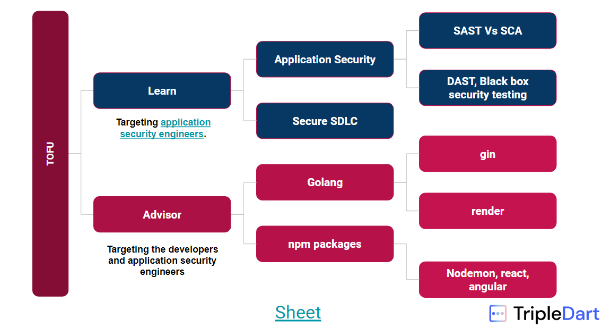
Dig into your competitor's website traffic, authority, backlinks, target market, and content types. Look at their mix of TOFU, MOFU, and BOFU content. Examine their eBooks, webinars, podcasts, infographics, and video content.
Step 5: Finalize Pillar Topics for the Next 6-12 Months
Use competitor analysis inputs to build your content roadmap. Identify the top funnel keywords in SaaS SEO strategy planning alongside bottom funnel tactics for conversion. This ensures you stay ahead of the competition with a balanced content mix.
Step 6: Build Your Keyword Universe
This is where most SaaS SEO strategies succeed or fail. Here's our keyword research process:
a. Identify Product Information — Learn the product's USP, features, and benefits. Identify search competitors for your target pages.
b. Identify Broad Themes — Consider the organic footprint of search competitors. Sort total keywords into broad themes and eliminate irrelevant ones.
c. Identify Keywords — Figure out all possible keyword variations. Remove duplicates and irrelevant terms.
d. Identify Subthemes and Pages — Combine synonymous keywords into groups. Analyze SERPs for each group to determine page splitting. Find long-tail and missing keywords.
e. Map Intent and Page Types — Ensure one page has one intent. Identify page types as pillar, child, or solution article.
f. Create Content Skeleton — Choose a content strategy based on page type. Identify topics covered by top-ranking pages. Find interlinking opportunities.
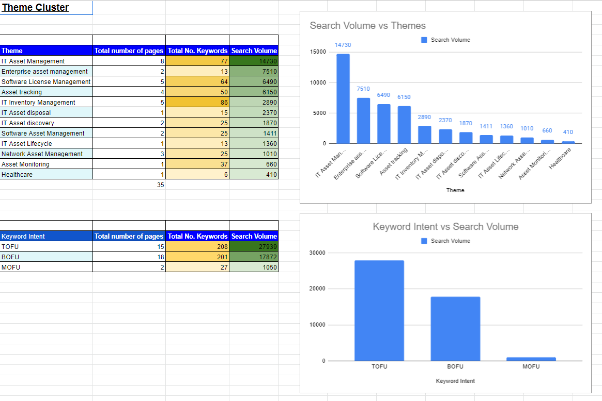
For a deeper dive, check our guide on SaaS keyword research.
Step 7: Audit Existing Content and Remove Underperformers
Sometimes less is more. A content audit boosts your site's overall health by removing low-quality, underperforming pages.
Prime Publishing ran a content audit on 3,000+ pages, removing about 15% of outdated content. The result? A 50% increase in traffic.
For every page, you'll have four options:
- Keep — Relevant, performing well
- Delete — No backlinks, no content worth saving
- Redirect — Has backlinks, content can be consolidated
- Update — Has backlinks, content can be improved
Learn more about running a SaaS content audit.
Step 8: Create a Pillar Cluster Content Strategy
Topic clusters organize your blog infrastructure. Instead of creating isolated posts for random keywords, you group related content around pillar pages connected by internal links.
Before clusters: Blog posts about everything are in one place — disorganized. Similar posts compete with each other in SERPs.
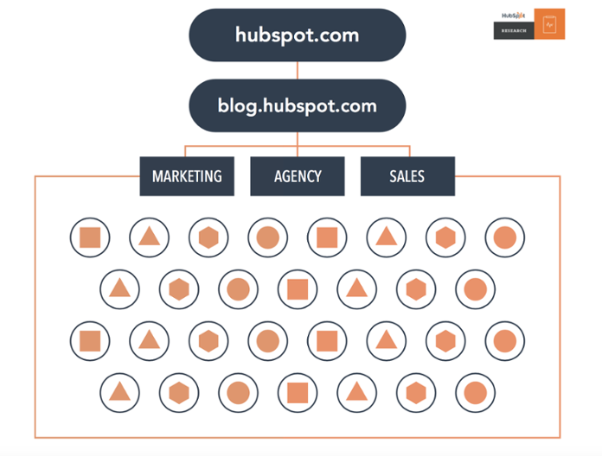
After clusters: Content is organized into specific topic areas, anchored by pillar pages and connected through internal links. Domain authority flows across the cluster, helping every post rank.
For a detailed walkthrough, see our guide on topic clusters for SaaS.
Step 9: Run a Technical SEO Audit
A technical audit makes your website search engine-friendly. Here's the checklist:
✅ Robots.txt ✅ Sitemaps ✅ HTML basic check ✅ Site Speed ✅ Mobile-First Indexing ✅ HTTPS Status code ✅ 3XX Chain - Legacy URL ✅ 4XX links ✅ Canonical tags ✅ Pagination ✅ Crawl budget ✅ JavaScript ✅ Manual Action check ✅ Index Coverage Check
Step 10: Optimize for AI Search and Voice SEO
This is the biggest change in 2026. Brands cited within AI Overviews achieve 35% higher organic CTR than brands that aren't cited. Here's how to optimize:
- Structure content for AI extraction: Use clear H2/H3 hierarchies, definition-style paragraphs, and comparison tables that LLMs can parse.
- Build third-party citations: Get mentioned on review sites, industry publications, and community forums like Reddit. AI models pull from these sources.
- Optimize for voice search: Use long-tail keywords, keep an FAQ section, and ensure mobile responsiveness. 27% of the global population uses voice search on mobile.
- Add schema markup: Improve content relevancy for both traditional search and AI answer engines.
For more on this, read our guide on answer engine optimization.
Step 11: Promote Content and Build Backlinks
Without backlinks, your content will struggle to rank for competitive keywords. Effective tactics include:
- Digital PR
- Guest posting
- Resource link building
- Unlinked brand mentions
- Broken link building
Learn more about SaaS link building strategies.
What Factors Determine the Right SEO Strategy for Your SaaS Business?
There's no one-size-fits-all SaaS SEO strategy. Seven factors shape yours:
Website Strength: Strong domain authority? Target high-difficulty keywords. New website? Start with low-difficulty, long-tail terms.
Industry: High-search-volume industries need demand capture strategies. Low-search-volume industries need demand creation and brand awareness content.
Competition: High competition requires aggressive monitoring of competitor moves. Understand their content strategy and find gaps.
Target Market: Local, regional, or international? Each requires different technical setups, URL structures, and keyword strategies. See our guide on international SEO for SaaS.
Website Type: New sites with low visibility should prioritize quality over quantity and target low-difficulty keywords. Sites with tech issues need to fix errors before scaling content.
Business Goals: Brand awareness, traffic, leads, or sales? Each goal requires different keyword targeting, content types, and promotion strategies.
Budget and Resources: A small business with limited resources should focus on quality content and priority keywords. Larger enterprises can pursue broader, more aggressive strategies.
This Reddit discussion captures what early-stage founders are finding:
Is SaaS SEO actually worth the effort when you're early…
How Do You Measure SaaS SEO Success and Track ROI?
Tracking the right metrics separates SaaS companies that scale from those that stall. Here's what to monitor:
- Organic traffic growth — Month-over-month and year-over-year trends
- Keyword rankings — Position tracking for target terms across Google and AI search
- Conversion rate from organic — Demo requests, trial signups, and form fills from SEO traffic
- Share of voice — Your visibility relative to competitors for core keyword clusters. One case study showed content refresh increased share of voice by 440% in just three months.
- AI citation tracking — Monitor whether your brand appears in ChatGPT, Claude, and Perplexity responses
- Cost per acquisition from organic — Compare against paid channels to demonstrate ROI
Use Google Search Console, GA4, Ahrefs, and dedicated AI SEO tools to build a complete picture. For a full framework, see our SEO tracking guide.
How Can TripleDart Help You Build a SaaS SEO Strategy That Drives Pipeline?
Your SEO strategy is the key driver of growth — the sooner you act on it, the better.
A solid B2B SEO strategy decreases cost-per-acquisition, increases ROI, drives high organic traffic, and boosts sign-ups. Your SEO approach feeds into paid search, SaaS content marketing, demand generation, and overall company direction.
That's where TripleDart comes in. As an AI-native SaaS marketing agency, we've built SEO strategies for 50+ B2B brands — from early-stage startups to enterprise companies like Sprinklr, Freshworks, and Plivo. Our team handles everything from ICP-based keyword research and technical SEO audits to AI search optimization and link building.
The results speak for themselves: Glean saw a 275% increase in organic clicks, and Meegle achieved a 1,429% increase in blog traffic working with us.
Book a call to discuss how we can drive qualified organic traffic to your SaaS business.
FAQs
What is a SaaS SEO strategy?
A SaaS SEO strategy is a tailored approach to search optimization designed for software companies. It focuses on driving qualified organic traffic, generating product interest, and converting visitors into trials, demos, or customers by targeting high-intent keywords and building topical authority across the buyer journey.
How long does it take to see results from SaaS SEO?
SaaS SEO typically shows initial ranking improvements in 3-4 months, with meaningful traffic and lead generation results appearing between 6-12 months. The timeline depends on domain authority, competition level, content velocity, and technical foundation. Unlike paid ads, SEO compounds over time — delivering increasing ROI as content matures.
What keywords should SaaS companies target for SEO?
Focus on high-intent keywords that capture buy-ready traffic: "{competitor} alternatives," "best {software type} for {use case}," "{product} vs {product}" comparisons, and feature/integration-specific queries. Balance BOFU keywords (for conversions) with MOFU/TOFU content (for awareness and nurturing).
How much does SaaS SEO cost?
SaaS SEO investment varies: in-house teams cost $8K-$15K/month (salaries + tools), while agencies range from $3K-$15K/month depending on deliverables. ROI typically reaches 702% for consistent programs. Most SaaS companies see positive ROI within 9-12 months. See our SaaS SEO budget strategy for detailed breakdowns.
Should SaaS companies optimize for AI search engines like ChatGPT?
Yes. With 94% of B2B buying groups using LLMs during their purchase journey, optimizing for AI citations is no longer optional. Structure content with clear definitions, comparison data, and schema markup. Build third-party mentions on review sites and community forums. Brands cited in AI Overviews see 35% higher organic CTR.
How does TripleDart help with SaaS SEO strategy?
TripleDart is an AI-native SaaS marketing agency that builds and executes full-stack SEO strategies across 50+ B2B accounts. We handle ICP-based keyword research, competitor analysis, content strategy and production, technical SEO, AI search optimization, and link building. Our clients include companies like Glean (275% organic click growth) and Meegle (1,429% blog traffic increase). Book a strategy call to see how we can help your SaaS company grow.



.webp)
.webp)

.png)


.png)




.webp)





.webp)







%20(1).png)


.webp)
.webp)
.webp)





%20Ads%20for%20SaaS%202026_%20Types%2C%20Strategies%20%26%20Best%20Practices%20(1).webp)







.png)


.png)





.webp)


![Creating an Enterprise SaaS Marketing Strategy [Based on Industry Insights and Trends in 2026]](https://cdn.prod.website-files.com/632b673b055f4310bdb8637d/6965f37b67d3956f981e65fe_66a22273de11b68303bdd3c7_Creating%2520an%2520Enterprise%2520SaaS%2520Marketing%2520Strategy%2520%255BBased%2520on%2520Industry%2520Insights%2520and%2520Trends%2520in%25202023%255D.png)



.png)















.webp)




%20Agencies%20for%20B2B%20SaaS%20Compared%20(2026).webp)

.webp)
%20with%20Hubspot.webp)







.png)


.png)

.png)
.png)
.png)
.png)

















.webp)

.webp)
.png)
.png)



.webp)


.png)




















.webp)

![How to Measure AEO Success: 12 Metrics Beyond Clicks [2026 Framework]](https://cdn.prod.website-files.com/632b673b055f4310bdb8637d/6a0d664b326187e99b3d5960_6%20-%20The%20Ultimate%20Guide%20to%20Measuring%20AEO%20Success%20in%202026.png)
![7-Step Workflow for AEO-Ready Content [2026 Framework]](https://cdn.prod.website-files.com/632b673b055f4310bdb8637d/6a0d55ea88913ede1d3a7123_5%20-%20Workflows%20for%20Optimized%20AEO-Ready%20Content%20Creation.png)
.png)

![How to Structure Content for AEO and GEO [With Templates]](https://cdn.prod.website-files.com/632b673b055f4310bdb8637d/6a0c6a56eb700472e635ff33_1%20-%20How%20to%20Structure%20%20Content%20for%20AEO%20and%20GEO%20%20Summaries%20(2026).png)


.png)
.png)









.png)


.png)




%2520Agencies%2520(2025).png)

![Top 9 AI SEO Content Generators for 2026 [Ranked & Reviewed]](https://cdn.prod.website-files.com/632b673b055f4310bdb8637d/6858e2c2d1f91a0c0a48811a_ai%20seo%20content%20generator.webp)



.webp)
.webp)









.webp)














.avif)