.png)


Key Takeaways
- Brand mentions correlate 3x more strongly with AI visibility than backlinks (0.664 vs. 0.218), meaning most teams are optimizing for the weaker signal.
- Owned content controls less than 10% of citation sources for even the most dominant brands; third-party mentions drive the rest.
- YouTube has the strongest correlation with AI visibility (~0.737) of any single platform, making it the highest-priority citation source for most B2B brands.
- Reddit generates massive citation volume through organic community discussion, not marketing campaigns, with breadth across hundreds of discussions being key.
- Citation ecosystems compound over time; every legitimate mention in a trusted source makes the next citation more likely.
The Uncomfortable Math That Changes Everything
Here is a number that should reframe your entire SEO strategy.
Ahrefs analyzed 75,000 brands and found that brand mentions correlate 3x more strongly with AI visibility than backlinks. The correlation coefficient for brand mentions is 0.664. For backlinks, it is 0.218.
Read that again. The signal you have been optimizing for decades is now the weaker one.
If you spend 90% of your effort on owned content and 10% on external mentions, you are optimizing for roughly 10% of the signal that actually moves AI visibility.
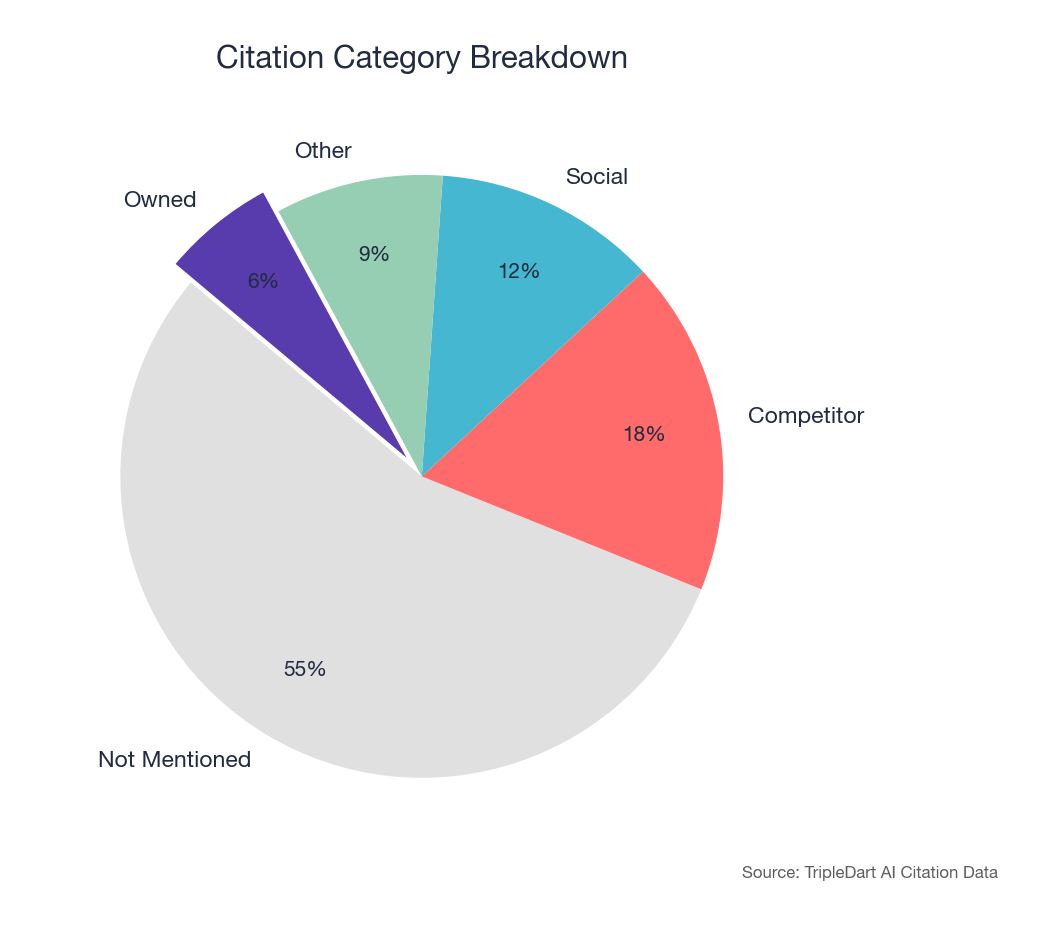
Most marketing teams pour their resources into blog posts, landing pages, and product pages. When we analyzed the citation ecosystems behind brands with strong AI visibility, we found that owned content controls less than 10% of the picture. For some brands, it is under 2%.
The rest comes from third-party mentions. Reddit threads. YouTube tutorials. G2 reviews. Wikipedia entries. LinkedIn posts. These external sources are the primary driver of whether AI platforms trust your brand enough to recommend it.
This is the moment the journey shifts. You walked in thinking "I need to optimize my website." You are about to walk out thinking "I need to build an ecosystem."
And here is the thing about ecosystems: they compound. Every legitimate mention in a trusted source makes the next citation more likely. The brands winning AI visibility today did not build their presence in a quarter.
They started early, built broadly, and let compounding do its work. We will come back to this idea throughout the article because it is the single most important concept in third-party brand strategy.
Why External Sources Matter More Than Your Website
Even the most dominant brand in our data controls less than 10% of its citation sources through owned content. For a mid-market platform, owned content accounts for under 2% of citations. That means over 98% of what AI platforms "know" about that brand comes from external sources.
If you are only optimizing your own website, you are optimizing a sliver of the picture.
Consider a B2B SaaS brand we track. They have 192,000 total citations. Only 0.4% come from owned content. Social accounts for 5.2%. The rest? Third-party dominated. That is the norm, not the exception.
The breakdown follows a consistent pattern across every brand ecosystem we have tracked:
That last row is the most sobering. For brands in challenger positions, over 70% of category queries do not mention them at all. Your third-party ecosystem is how you close that gap
.
And here is another data point that should alarm you: a brand we track sees 14% competitor citation share in its landscape. That means competitors are being mentioned in 14% of the queries where this brand should be showing up. When competitors dominate your citation landscape, you cannot content-market your way out. You need external voices speaking on your behalf.
So where do these external signals come from?
Competitive Citation Share: Who Gets Credit in Your Category
When AI platforms respond to queries in your category, citations split between you, your competitors, and neutral third parties. Here is how that split looks across our monitored brands.
Tier 1: The High-Volume Citation Platforms
Three platforms consistently generate the highest raw citation volume for B2B SaaS brands. These are your foundation. Without volume, compounding has nothing to build on.
YouTube
YouTube is the top citation source for nearly every brand we track. Tutorial videos, product demos, and technical walkthroughs generate citations that AI platforms retrieve for "how to" and "best tool for" queries.
Ahrefs data confirms this at scale: YouTube mentions show the strongest correlation with AI visibility across all platforms, at approximately 0.737. That is higher than any other single platform. The implication is clear. If you are ignoring YouTube, you are ignoring the highest-correlated signal in the entire AI visibility landscape.
For instance, one email security brand we track earns over 1,700 YouTube citations. A fintech company we track earns over 2,800. These are not vanity numbers. They are retrieval signals that directly influence whether AI platforms mention these brands in buyer-intent queries.
Reddit deserves special attention. The fintech company we track has over 4,000 Reddit citations from more than 1,500 unique URLs. That is not a handful of viral posts. It is a broad, organic presence across hundreds of discussions.
The email security brand follows the same pattern with over 1,500 Reddit citations from 644 unique URLs. The breadth matters as much as the volume. AI platforms do not just count how often you are mentioned. They weigh how many distinct sources mention you. A brand discussed in 1,500 separate Reddit threads sends a fundamentally different trust signal than one mentioned 1,500 times in a single thread.
For now, understand the data: Reddit generates massive citation volume, and that volume comes from organic community discussion, not marketing campaigns.
LinkedIn is strongest for B2B brands in payments and enterprise software. One fintech company we track earns over 2,800 LinkedIn citations, driven by executive thought leadership and original data shared under named profiles.
The key insight here is that LinkedIn citations come from people, not pages. Named executive profiles publishing original research and industry commentary generate the citations AI platforms retrieve. Company page posts rarely achieve the same effect.
Tier 2: Authority and Credibility Sources
Volume is the foundation. But AI platforms also weigh credibility signals that carry disproportionate authority. These platforms may generate fewer raw citations, but each citation carries outsized weight in the AI trust calculation.
Wikipedia
Wikipedia entries serve as institutional credibility markers. AI platforms use Wikipedia as a baseline trust signal when deciding whether to cite a brand. If your brand does not have a Wikipedia presence, you are missing a credibility input that competing brands benefit from.
Think of Wikipedia as a prerequisite, not a growth channel. It will not drive massive citation volume. But its absence can quietly cap your AI visibility ceiling.
GitHub
GitHub carries heavy weight for developer-adjacent brands. Technical credibility established through open-source contributions and documentation gets picked up by AI platforms answering developer-oriented queries.
If your product serves developers, GitHub is not optional. If it does not, move on to the next signal.
G2 and Review Aggregators
G2 matters because Claude retrieves review content directly for recommendation queries. When a buyer asks "Which tool should I use for X?", G2 profiles and reviews are among the first sources AI platforms pull from.
One cautionary finding from the e-signature space: the category leader's own domain generated over 1,300 citations in a challenger brand's competitive landscape. When your competitor's website generates more citations in your category than any third-party platform, you are fighting an uphill battle on brand content alone. Third-party mentions become your equalizer.
Partner Ecosystem Mentions
One citation lever many brands overlook is their partner ecosystem. Integration partners, resellers, technology alliance pages, and co-marketing content all generate third-party citations that AI platforms treat as independent trust signals.
When a partner mentions your brand on their website, in their documentation, or in a joint case study, that citation carries weight precisely because it comes from an independent domain. Brands with robust partner ecosystems benefit from a built-in citation network that compounds over time without requiring direct content creation effort.
If you have 20 integration partners and none of them mention your brand on their websites, you are leaving free citations on the table.
The Social Citation Layer
Social citations as a percentage of total citations might look small, ranging from about 2% to 5% across the brands we track. But those percentages are misleading.
Social citations disproportionately appear in the most commercially valuable AI answers: the ones where buyers ask "which tool should I use" or "what do people think about X." These are purchase-intent queries, and social proof is exactly what AI platforms look for when generating recommendations.
There is also a dark side. When a brand's social presence skews negative, AI platforms pick up that signal too. For example, one HR tech company with low social citation share also carries heavily negative customer support sentiment. The two are connected. AI platforms do not just count mentions. They read them.
This connects directly to the compounding effect we discussed earlier. Positive social citations compound positively. Negative ones compound just as reliably in the opposite direction. Managing your social sentiment is not just a brand exercise. It is an AI visibility exercise.
Negative Mention Management: The Threat Most Brands Ignore
Let us talk about what happens when your third-party ecosystem works against you.
A restaurant tech brand we work with has 13% negative sentiment across its mention landscape. That is not a minor blemish. When AI platforms aggregate sentiment across Reddit threads, G2 reviews, and social mentions, a 13% negative signal becomes part of the brand's retrieval profile. AI does not forget. It indexes.
Here is what negative mentions do to your AI visibility:
- They shape recommendation framing. Claude may surface your brand with qualifiers like "some users report issues with..." or "mixed reviews suggest..." That framing shifts buyer perception before they ever visit your site.
- They create competitor openings. When your brand carries negative sentiment, AI platforms are more likely to recommend alternatives in the same response. Your negative mention becomes your competitor's positive citation.
- They compound just like positive mentions. A cluster of negative G2 reviews feeds into Reddit discussions, which feed into AI training data, which shapes future AI responses. The feedback loop is real.
What you can do about it:
- Monitor sentiment across platforms. Track not just mention volume but mention quality on Reddit, G2, Trustpilot, and social channels. A tool like Slate can surface this data at the brand level.
- Respond to negative reviews publicly. AI platforms index review responses. A thoughtful reply to a one-star G2 review becomes part of the citation record and softens the negative signal.
- Fix the underlying product issues. This is obvious but bears repeating. A brand with 500 genuine positive reviews will outperform a brand with 5,000 blog posts and poor customer sentiment. Product experience feeds directly into AI visibility.
- Build positive volume to dilute negative signals. You cannot delete negative mentions. But you can increase the ratio of positive to negative by generating more genuine positive citations across YouTube, Reddit, and review platforms.
The goal is not zero negative mentions. That is unrealistic. The goal is a sentiment ratio where positive signals overwhelm negative ones in the AI retrieval profile.
Breaking the Negative Sentiment Cycle
- Identify the root cause. Pull your AI sentiment data and categorize negative mentions by theme: pricing, support, product limitations, or onboarding.
- Fix the operational issue first. If customers complain about support response times, improve response times before creating content about it.
- Then create content that addresses it directly. Publish a transparent pricing page, a self-service troubleshooting library, or an updated onboarding guide.
- Monitor the feedback loop. Check AI responses monthly to see if sentiment shifts.
The Consumer Reviews Path: Product Experience as a Citation Engine
One consumer marketplace we tracked achieved a 28% mention rate with over 74% positive sentiment. They did not build this through content marketing. They built it through consumer reviews and forum discussions.
This matters because it demonstrates a path to strong AI visibility that does not require a massive content team. The approach was product-first: build an experience worth talking about, then make it easy for customers to talk about it. The reviews and discussions became the citation ecosystem organically.
For B2B brands, the lesson is not "get more reviews." It is that product experience and customer satisfaction feed directly into AI visibility. A brand with 500 genuine positive reviews will outperform a brand with 5,000 blog posts and poor customer sentiment. This is compounding in action. Every positive product experience has the potential to become a citation that makes the next citation more likely.
Building Your Reddit Presence: The Data Case
Reddit is the most actionable channel for most B2B SaaS brands. The citation volume we see across brands (hundreds to thousands of unique Reddit URLs generating thousands of citations) did not come from Reddit marketing campaigns. It came from years of users discussing these products in relevant subreddits.
The numbers tell the story:
- The fintech company we track: 4,000+ citations from 1,500+ unique URLs
- The email security brand: 1,500+ citations from 644 unique URLs
- Breadth across hundreds of distinct discussions, not concentrated in a few posts
This breadth is what makes Reddit uniquely valuable. AI platforms interpret wide distribution across many discussions as organic trust. A few high-performing posts will not replicate the signal that hundreds of genuine mentions create.
To build Reddit citations:
- Identify your subreddits. Find 5 to 10 communities where your buyers discuss problems your product solves.
- Participate as practitioners, not marketers. Answer questions directly. Share methodology. Reference your product only when it is genuinely the best answer.
- Use real employee names. Company accounts get ignored. Named individuals with post history get cited.
- Play the long game. Reddit citation volume compounds over months, not days.
Promotional posts from company accounts do not generate the kind of citations AI platforms retrieve. Genuine participation from knowledgeable individuals does.
Reddit Micro-Goals for Your First 90 Days
- Identify 5 to 10 subreddits where your ICP asks buying questions. Monitor daily.
- Contribute 3 to 5 genuinely helpful answers per week. No product links. Just expertise.
- Target: 30 substantive contributions in 90 days. Measure by tracking whether your brand starts appearing in AI responses for category queries.
Building Your YouTube Presence
YouTube is the top citation source for most B2B brands we track. With a 0.737 correlation to AI visibility (the highest of any platform), it deserves serious investment. The content that earns citations falls into clear categories:
- Technical tutorials that solve specific problems
- Product comparisons with honest assessments
- Implementation walkthroughs with screen recordings
- Expert interviews with named practitioners
You do not need production quality. You need information density. A 10-minute screen recording that shows exactly how to configure DMARC records will outperform a polished 3-minute brand video every time.
The compounding effect is especially strong on YouTube. A tutorial published today continues generating citations for years. AI platforms re-crawl YouTube content regularly, and videos that accumulate views, comments, and engagement over time become increasingly authoritative citation sources.
YouTube Micro-Goals for Your First 90 Days
- Publish 2 to 4 technical tutorial or walkthrough videos per month. Keep them under 15 minutes.
- Include full transcripts with timestamps. AI platforms extract text from transcripts, not audio.
- Target: 8 to 12 videos in 90 days covering your top product use cases and common questions.
Platform Comparison: Where to Invest
Here is how the major citation platforms stack up across the dimensions that matter:
The "so what" of this table: YouTube and Reddit should be your top two investments for most B2B SaaS brands. YouTube has the highest correlation. Reddit has the broadest organic distribution. G2 offers the fastest path to appearing in buying-intent AI responses. Everything else is a credibility multiplier.
Your Priority Framework
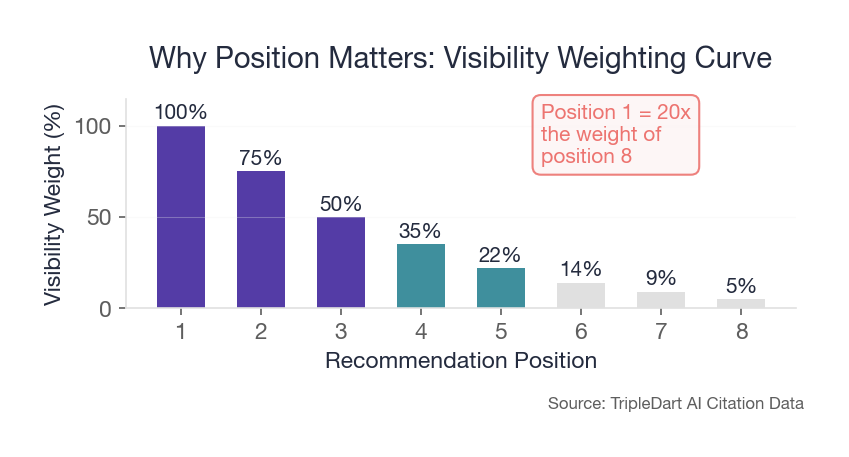
Based on the data across every brand ecosystem we have analyzed, here is the order we recommend:
- Reddit (highest unique URL breadth). Start with genuine community participation. Target 2 to 3 helpful posts per week in relevant subreddits. The compounding flywheel starts here.
- YouTube (highest raw volume and strongest correlation). Publish technical tutorials and product walkthroughs. Aim for weekly. Remember: 0.737 correlation. No other platform comes close.
- G2 and review sites (direct retrieval by Claude for recommendation queries). Complete every profile field. Maintain 15+ new reviews per quarter. Respond to all reviews, especially negative ones.
- Wikipedia and authority sources (trust signals). Ensure your brand's Wikipedia page is accurate and current. Contribute to GitHub if you are developer-adjacent.
- LinkedIn (strong for B2B, especially payments and enterprise). Publish original data and thought leadership under named executive profiles.
- Partner ecosystem (independent domain signals). Ensure integration partners mention your brand in their documentation and marketing materials.
Monthly Mention Building Cadence
Use this template to systematically build your third-party citation ecosystem:
Week 1: Reddit + YouTube Foundation
- Identify and join 5-10 target subreddits
- Answer 3-5 questions with genuine, helpful responses
- Publish 1 technical tutorial or product walkthrough on YouTube
- Audit your G2 profile for completeness
Week 2: Reviews + LinkedIn
- Send review request emails to 10 recent customers (targeting G2, Trustpilot, or Capterra)
- Publish 1 LinkedIn post under a named executive profile with original data or insight
- Continue Reddit participation (3-5 helpful responses)
- Respond to any new reviews (positive and negative)
Week 3: Authority + Partners
- Audit your Wikipedia page for accuracy (or assess eligibility if you do not have one)
- Reach out to 2-3 integration partners about co-marketing content or documentation mentions
- Publish 1 YouTube video
- Continue Reddit participation (3-5 helpful responses)
Week 4: Monitor + Adjust
- Run a sentiment audit across Reddit, G2, and social channels
- Review citation volume changes from previous month
- Identify which platforms are generating the most new citations
- Plan next month's focus based on gaps
- Continue Reddit participation (3-5 helpful responses)
Monthly minimums: 12-20 Reddit contributions, 2-4 YouTube videos, 10+ review requests sent, 2 LinkedIn posts, 2-3 partner outreach touchpoints.
The Compounding Effect: Why Starting Now Is the Strategy
We have referenced compounding throughout this article. Now let us put the full picture together.
Brands with growing third-party ecosystems compound that growth over time. AI platforms learn from their own retrieval patterns. Every new mention adds to your retrieval profile, making the next citation more likely. A YouTube tutorial gets cited by Claude. That citation drives more viewers. Those viewers discuss the product on Reddit. Reddit threads become new citation sources. The flywheel accelerates.
The brands dominating AI visibility today did not build their ecosystems in a quarter. They reflect years of sustained presence across YouTube, Reddit, G2, and technical communities.
If your current strategy is 90% owned content and 10% external, flip that ratio. The citation data demands it.
Citation compounding does not show up in your Q1 report. That is not a bug. That is why your competitors have not started yet. By the time the results are visible, the moat is already built.
What This Means for Your Strategy
Your website is your home base, but Claude does not spend most of its time there. The mention strategy that works is built across platforms where buyers and communities actually discuss products.
Remember the Ahrefs data we started with: brand mentions correlate 3x more strongly with AI visibility than backlinks (0.664 vs 0.218 across 75,000 brands). That is not a marginal difference. That is a fundamental shift in where marketing effort should go.
Pick two platforms from the Tier 1 list. Build a real presence there. Measure what moves. Systematic beats frantic every time.
How to Activate Your Partner Ecosystem for AI Mentions
- Ask partners to include your brand in their integration documentation.
- Co-create case studies with partners. Joint case studies get published on both domains, doubling the citation surface.
- Request inclusion in partner directories and marketplace listings with your canonical brand description.
- Contribute guest content to partner blogs.
Build Your Brand Mention Ecosystem with TripleDart
Building a third-party citation ecosystem that drives Claude visibility requires a systematic, data-informed approach. At TripleDart, we have analyzed citation ecosystems across dozens of B2B SaaS brands. We know which platforms move the needle, how to prioritize effort, and how to measure what is actually compounding.
Whether you need a full mention-building strategy, a Reddit and YouTube playbook, or a sentiment audit across your citation landscape, our team can help you build the ecosystem that AI platforms trust.
Book a meeting with our team to start building the citation ecosystem your brand needs.
Frequently Asked Questions
Why do external sources matter more than my website?
Claude's citations reflect training data weighted toward third-party sources. Your website is one data point. Reddit, G2, and YouTube are treated as more neutral signals. Ahrefs data across 75,000 brands confirms that brand mentions (0.664 correlation) matter far more than backlinks (0.218) for AI visibility.
Which platforms should I prioritize?
Tier 1: YouTube (0.737 correlation, highest of any platform), Reddit (broadest organic distribution), LinkedIn (strongest for B2B enterprise). Tier 2: Wikipedia, GitHub, G2. Also consider your partner ecosystem as a citation lever.
How do I build Reddit presence without astroturfing?
Answer technical questions genuinely and let brand mentions occur naturally. Reddit communities and Claude both detect promotional content. The fintech company we track built 4,000+ citations from 1,500+ unique URLs through organic community discussion, not marketing campaigns.
What is the most underestimated citation source?
YouTube. Most B2B SaaS brands ignore its citation potential. Claude pulls from video transcripts. Ahrefs data shows YouTube mentions have the strongest correlation with AI visibility at approximately 0.737.
How long does it take to build meaningful Reddit presence?
Three to six months of consistent, genuine participation. Reddit rewards history, and Claude reads Reddit. The compounding effect means your first three months of effort may show modest results, but months four through twelve accelerate dramatically.
Can negative reviews on G2 hurt my Claude performance?
Yes, and more than most brands realize. Claude reads sentiment, not just volume. A brand like the restaurant tech company we track with 13% negative sentiment sees that negativity reflected in how AI platforms frame its recommendations. Respond to negative reviews publicly and fix the underlying issues. AI platforms index your responses too.
How do partner ecosystem mentions help AI visibility?
Integration partners, resellers, and technology allies mention your brand on independent domains. AI platforms treat these as independent trust signals. If you have 20 partners and none mention you on their websites, you are leaving free citations on the table.



.webp)
.webp)
.png)


.png)


.webp)




.webp)

.webp)






%20(1).png)


.webp)
.webp)
.webp)



%20Ads%20for%20SaaS%202026_%20Types%2C%20Strategies%20%26%20Best%20Practices%20(1).webp)






.png)


.png)





.webp)


![Creating an Enterprise SaaS Marketing Strategy [Based on Industry Insights and Trends in 2026]](https://cdn.prod.website-files.com/632b673b055f4310bdb8637d/6965f37b67d3956f981e65fe_66a22273de11b68303bdd3c7_Creating%2520an%2520Enterprise%2520SaaS%2520Marketing%2520Strategy%2520%255BBased%2520on%2520Industry%2520Insights%2520and%2520Trends%2520in%25202023%255D.png)




.png)













.webp)


%20Agencies%20for%20B2B%20SaaS%20Compared%20(2026).webp)

.webp)
%20with%20Hubspot.webp)







.png)


.png)

.png)
.png)
.png)
.png)














.webp)

.webp)
.png)
.png)



.webp)


.png)


















.webp)

![How to Measure AEO Success: 12 Metrics Beyond Clicks [2026 Framework]](https://cdn.prod.website-files.com/632b673b055f4310bdb8637d/6a0d664b326187e99b3d5960_6%20-%20The%20Ultimate%20Guide%20to%20Measuring%20AEO%20Success%20in%202026.png)
![7-Step Workflow for AEO-Ready Content [2026 Framework]](https://cdn.prod.website-files.com/632b673b055f4310bdb8637d/6a0d55ea88913ede1d3a7123_5%20-%20Workflows%20for%20Optimized%20AEO-Ready%20Content%20Creation.png)
.png)
![How to Structure Content for AEO and GEO [With Templates]](https://cdn.prod.website-files.com/632b673b055f4310bdb8637d/6a0c6a56eb700472e635ff33_1%20-%20How%20to%20Structure%20%20Content%20for%20AEO%20and%20GEO%20%20Summaries%20(2026).png)


.png)
.png)








.png)

.png)




%2520Agencies%2520(2025).png)

![Top 9 AI SEO Content Generators for 2026 [Ranked & Reviewed]](https://cdn.prod.website-files.com/632b673b055f4310bdb8637d/6858e2c2d1f91a0c0a48811a_ai%20seo%20content%20generator.webp)


.webp)
.webp)








.webp)